ALIEN PEOPLE by Fedor Oralov at Stolen Space and House Objets
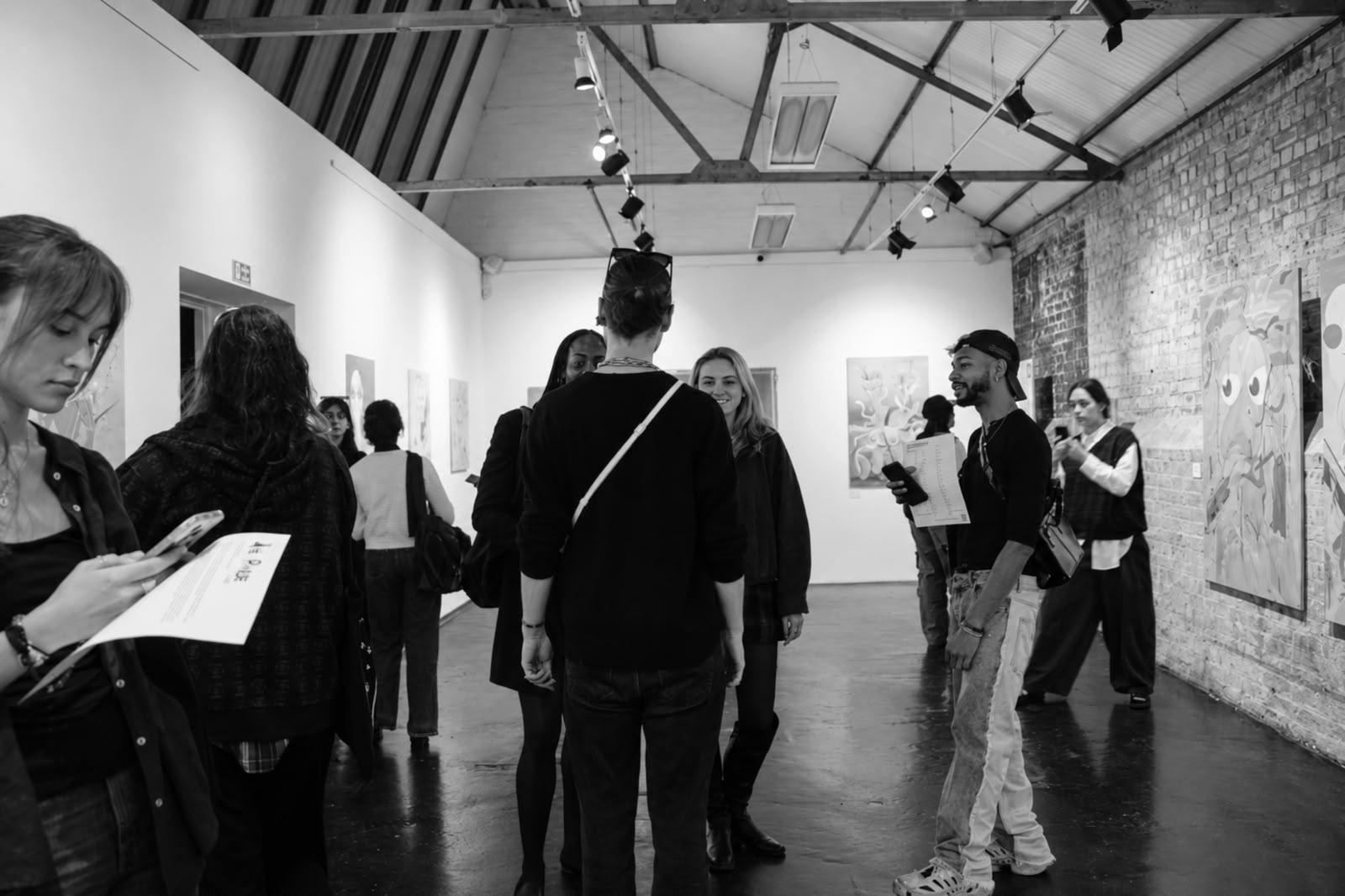
On 6 October, curated by Arina Baburskova, Fedor Oralov's first solo exhibition ALIEN PEOPLE had its opening. The event took place at the Stolenspace Gallery and was brought to Galleria Objets for another three days, until 11 Octber.
Fedor Oralov, also known as i61, constructs artistic worlds through various types of practices, from painting to sound.
“I live in a small apartment, and all I do there is paint. I realised that this is what I live for, which is why I have brought my whole world there”, shared Fedor.
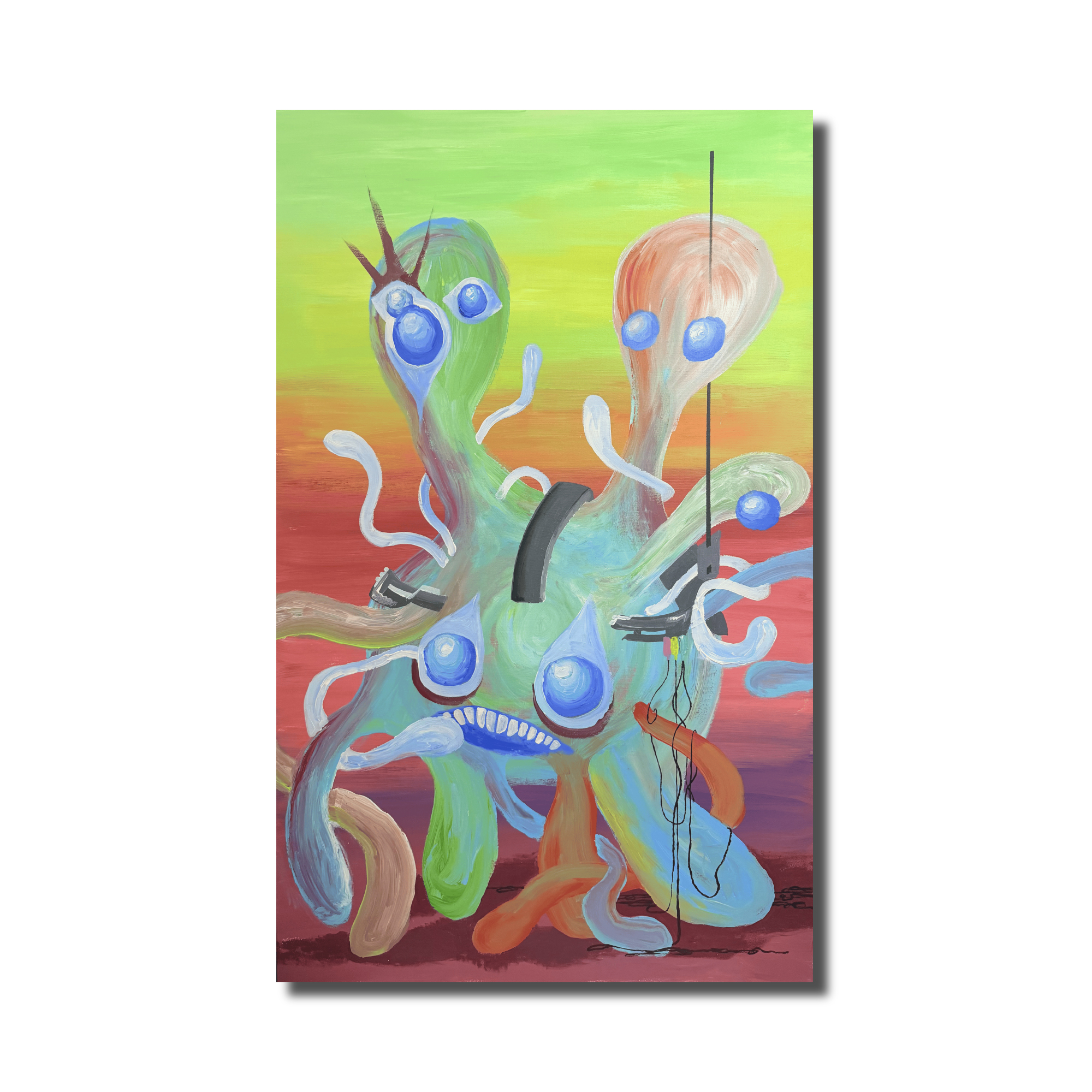
His latest series brings to the audiences a selection of larger acrylic paintings together with small-scale watercolours in a visual language drawing on contemporary surrealism, expressive figuration and fragmented symbolic forms.
Through his paintings, Fedor seeks to portray ‘strangers’ who are unable to forge connections with one another within society, conveying the concept of ‘alienation’ through the surrealistic depiction of them. The idea is personally valuable for Fedor: “It resonates with my personal view on the outside world”, said Fedor during the interview.
.jpg)
Once you step into the art space, the exhibition drags you into the mysterious world of the artist, letting visitors explore the feeling of ‘alienation’ when usual interpretation methods are not enough any more. Distorted images, the superimposition of shapes and symbols, and the tension between the recognisable and the incomprehensible are the basis of the very world of ‘unfamiliars’ created by Fedor.
As for the curatorial approach, rather than imposing a rigid narrative on the paintings, curator Arina allowed the works to coexist in a space where their meanings remain open to interpretation.
“Thanks to my academic background and standards, I saw in them a kind of ‘fresh surrealism’: Salvador Dali flowing into Chagall”, Arina shared, describing her first encounter with Fedor’s work.
Their collaboration, in turn, appeared to be successful: “We have a very similar vision for the project; that is probably why we work so well together”, she noted. For Arina, the exhibition is also an experimental step: “I am not fully familiar with the curatorial sphere myself, which is why these works and theme of ‘alienation’ strike a chord with me”.
Visually, the layering of figurative images, text and gestural brushstrokes may also be reminiscent of the work of Jean-Michel Basquiat, whose works convey realistic subjects and meanings through unusual and not always comprehensible figures.
One of the exhibited works, Author In The Crowd, features Fedor himself in a composition filled with gigantic faces, abstract forms and layers of hand-drawn symbols. The artist himself identifies with his characters: “I am also a stranger to someone, just as someone is a stranger to me”. However, unlike the alien creatures surrounding him, Fedor portrays himself as a recognisable human: “I decided it would be fun to stand out in my own world”, which explains his particularly personal approach to his art. The work can be interpreted as a reflection on the relativity of ‘alienation’, suggesting that being an ‘alien’ is not a fixed identity, but a position shaped by relationships with others.
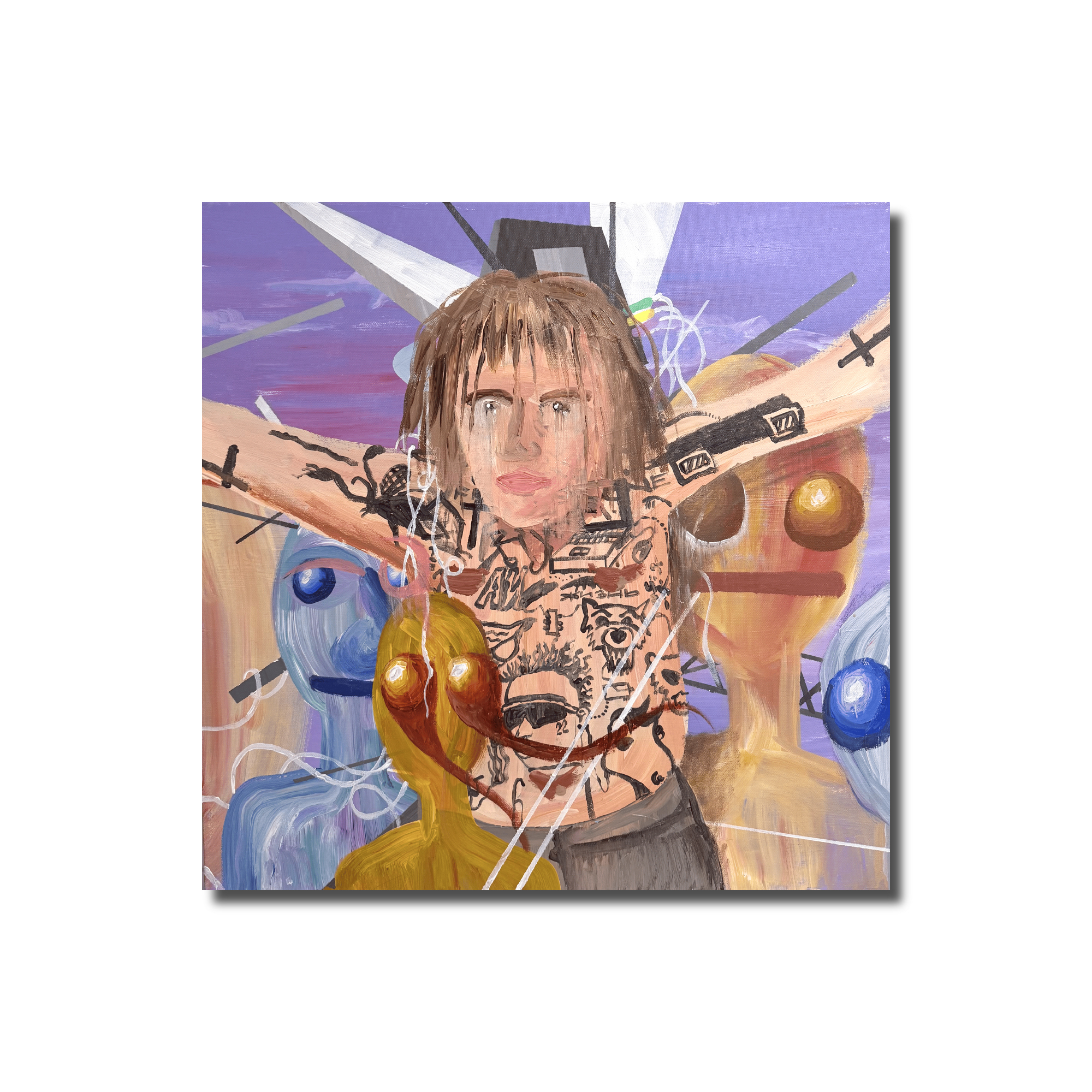
The curatorial concept of the exhibition is structured in a way that forms a series of encounters with various characters and visual contexts. Arina described the process of engaging with paintings as transformative: “With every interaction with the paintings, certain metamorphoses take place that alter one’s perception”.
The gallery creates a more formal setting for Fedor’s artistic world, yet at the same time captures the creative spirit, allowing the paintings to reveal themselves both individually and collectively. As Fedor himself remarked: “After being displayed in the gallery, everything has become, at the very least, more presentable” and “it is wonderful that visitors can become part of this world”.
On closer inspection of the paintings, one notices a contrast between the apparent simplicity of the characters (due to their cartoonish appearance) and the variety of symbols surrounding them. It is interesting that in each painting the characters have their own ‘nicknames’, as if the artist were trying to provide a clue to help interpret the plots.
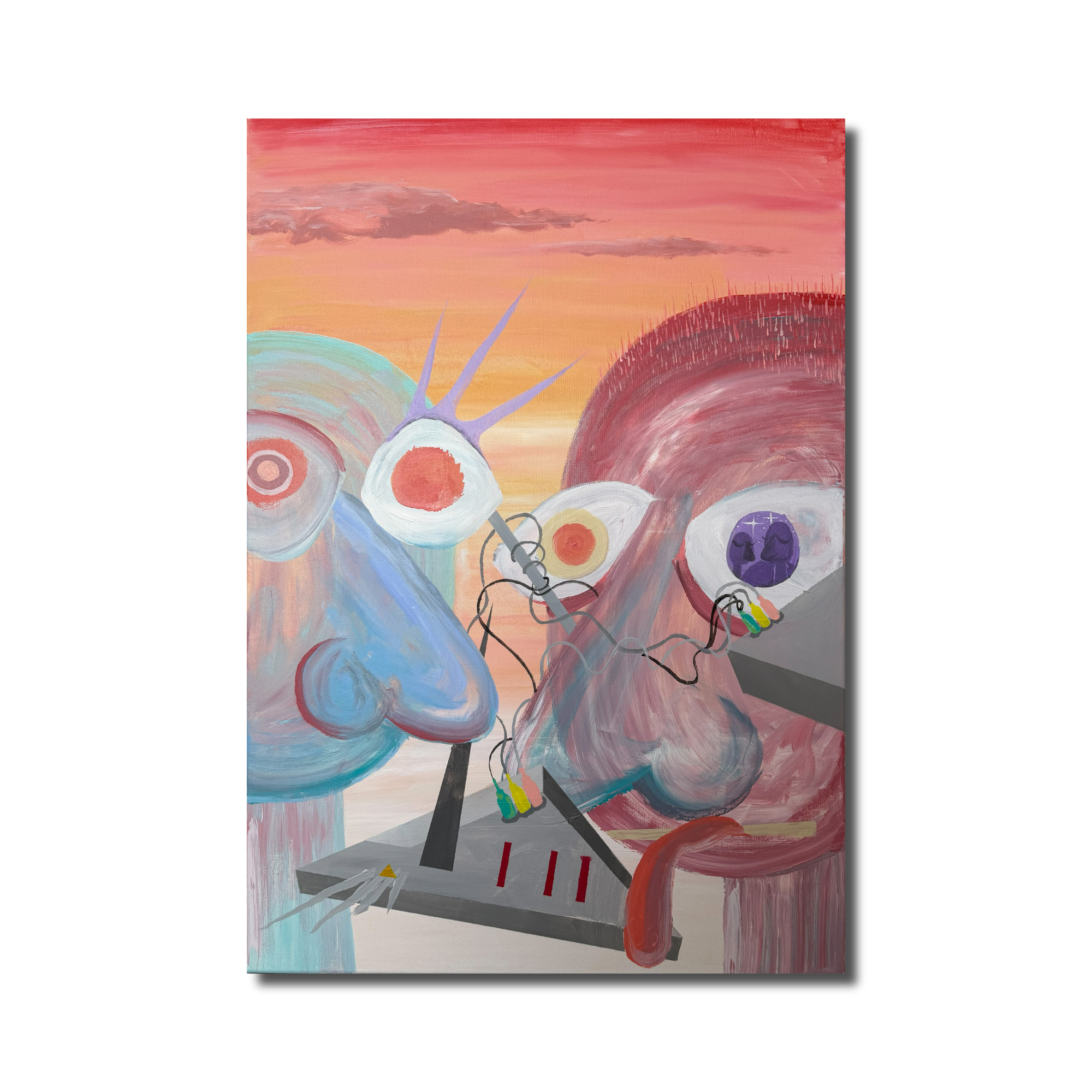
Furthermore, many of the paintings contain recurring details that open up yet another avenue for interpretation and connections between the narratives. For example, the pink, ghost-like alien creatures, or the distinctive large nose, which can be seen as a metaphor for the characters’ personality traits. This creates a special connection between the viewer and the artwork: the viewer is encouraged to look closely and find a detail that resonates personally. This experience reflects the exhibition’s broader exploration of the theme of alienation, suggesting that the complexity of understanding an image may be comparable to the complexity of fully understanding another person or, in the context of perceiving paintings, another person’s vision and interpretation.
The ALIEN PEOPLE exhibition is an extraordinary creative world that invites you to view it from a different perspective. Fedor’s paintings create a multiverse in which familiar human figures become unfamiliar or strange, whilst the boundaries between the character and the surroundings remain blurred and open to interpretation. The exhibition does not reduce potential contradictions to a single message, but rather allows the viewer to determine for themselves their place within the artist’s universe. As Fedor says: “Everyone will decide for themselves whether they remain a guest in my world”.
Image credits:
Fedior Oralov, One, 100x150, acrylic on canvas.
A photo from Alien People exhibition opening.
Fedior Oralov, Author in the Crowd, 70x70, acrylic on canvas.
Fedior Oralov, Companions, 70x100, acrylic on canvas.