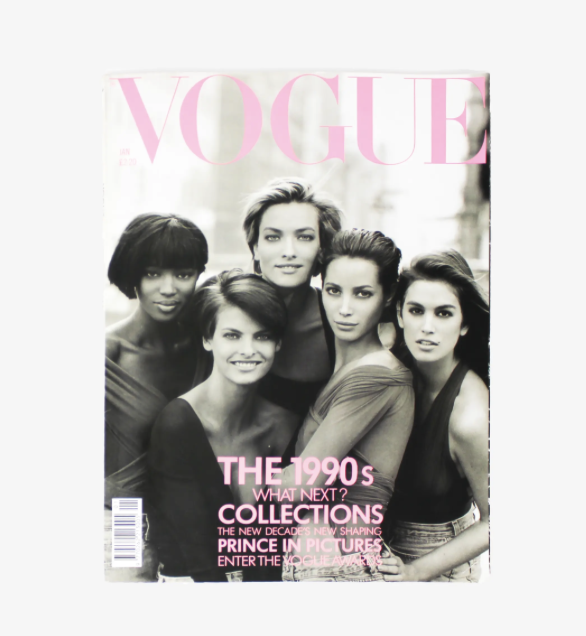
Archival Fashion: Why We Keep Looking Back
The most coveted items in fashion today are rarely new.
A dress from a 1990s catwalk, a forgotten pair of shoes, a jacket from an old collection: items once considered outdated are being given a new lease of life thanks to public interest. Contemporary designs clearly take inspiration from them; they are making a comeback on catwalks and red carpets, specialist shops and collectors sell them, at times, at exorbitant prices.
In the fashion industry, this is what is known as archival fashion. What makes it so valuable for brands’ development and our modern view on fashion?
Although fashion keeps moving forward, developing new trends and styling ideas, brands looking back at their own past remains relevant, and can become a trend in its own right, pushing brands further forward. Archives let the fashion world revisit bygone styles, drawing inspiration from what was once at the height of popularity, and tracing a brand's origins in a way that visibly shapes the sketches designers are preparing today.
This resurgence of interest has brought fashion houses' archives out of the shadows. Once seen mainly as repositories for out-of-fashion clothes, sketches, magazines and accessories, archives have become a creative force, a space for new ideas. Designers like Vivienne Westwood, Martin (Maison) Margiela, Yohji Yamamoto, Rick Owens, Demna Gvasalia (Balenciaga), draw inspiration from collections assembled decades ago, museums transform historical garments into cultural artefacts, and a new generation of collectors hunt for items that reflect a specific moment in fashion history. Archives serve as a testament to what people used to wear, what they championed, found scandalous, and how, over time, perceptions of beauty and the expression of identity through fashion have evolved.
**But what exactly turns a fashion piece into archival object?**
Here, the main difference to consider is between fashion archive and archival fashion. In its traditional sense, **a *fashion archive*** is a collection of garments and accessories preserved alongside the textiles, sketches, photographs and other documents that surround them. Fashion houses, museums, research institutions and private collectors all seek them out for a tangible piece of fashion history. In museums, archives become a source of historical and cultural value; in fashion houses, they form part of the creative legacy; for private collectors, they reflect a personal interest in a particular period or designer, as much a portrait of the collector as of the object.**** Archival fashion, on the other hand, refers to exact pieces of clothing from the collections that carry particular historical, cultural or creative significance and leaves a trace for the future development of brands or industry in general. For instance, a rare runway piece from the 1990s can therefore become archival fashion when its history, crafting process, or its influence gives significance beyond its age. In this sense, archival fashion's value is defined by the meaning a piece acquires over time and the ways in which it can be collected or reinterpreted today.
Although the definition might suggest that the crux of the matter is the age of the garments, in reality their significance lies in the story they embody: the designer who made it, the collection it belonged to, the cultural context it reflected, the technique used to make it, or the influence it had on what came after. An archive piece is a physical fragment of fashion's memory, through which a much broader story can be reconstructed. A sketch shows how the designer's concept evolved before it was realised; a photograph from the catwalk shows how the outfit was originally meant to be seen; a fabric sample holds a dyeing technique or texture that may otherwise have been lost. All of this goes beyond the garment itself, helping recreate the world around a particular collection.
An archival piece itself bears traces of its own history: its design choices may echo a particular era, its cut may reveal the designer’s character, and its details may link it to the cultural or social phenomena of the time, whether a design challenged established norms or became a symbol of them. In other words, a garment becomes a link between its original context and the way it is perceived by contemporary fashion, and it is precisely this that distinguishes archival fashion from mere outdated items.
The concept of preserving fashion predates the public's current interest in archive pieces. For several centuries, clothing was merely a utilitarian object, occasionally preserved for practical or social reasons: valuable pieces were passed down through generations, altered for changing trends, or kept as a symbol of status and wealth. Clothing itself was rarely regarded as a form of cultural history, though there were cultural reasons for preserving royal garments or religious and ceremonial vestments. That began to shift in the 20th century, as museums developed, and interest in the decorative and applied arts grew. Certain outfits became subjects of study alongside works of art, in a sense paintings brought to life through the real textures of fabric and gleaming buttons. These collections opened a new way of understanding the past, not only through what people drew or wrote, but through what they actually wore. An outfit could reveal changing notions of class, gender, labour, ceremony and beauty, making clothing a remarkably rich historical document.
The emergence of the modern fashion industry gave this a new direction. As haute couture houses evolved into established companies with a recognisable style, their garments came to signify more than individual examples of sartorial craftsmanship; they became a testament to the creative development of the house. Gradually, fashion houses developed their own spaces, preserving items that symbolised key moments in their history. As leading designers developed their own unique styles, individual designs became inseparable from the personalities of their creators, and the archive came to preserve not only what a house had created, but what it had come to represent. Iconic looks from the catwalks, experimental prototypes, signature silhouettes and garments associated with influential or ‘pioneering’ collections, such as Alexander McQueen's bumster trousers, or Yves Saint Lauren's momentous Le Smoking tuxedo, all of these were given special attention in terms of preservation.
This can be especially seen with Balenciaga, whose archives contain not only clothing pieces but also sketches, patterns, fabric samples, which become an evidence of Cristobal Balenciaga’s process of creation throughout decades, serving as a guide for shaping the brand’s signature approach. However, their recent history demonstrates just the opposite — how the brand consciously abandoned its DNA: under Demna’s leadership (2015-2025), the fashion house moved away from the traditional image associated with its founder, switching to more ‘volume-fashion’ and streetwear-style designs. In this sense, archives also became a contrast for a radically different brand’s identity to emerge.
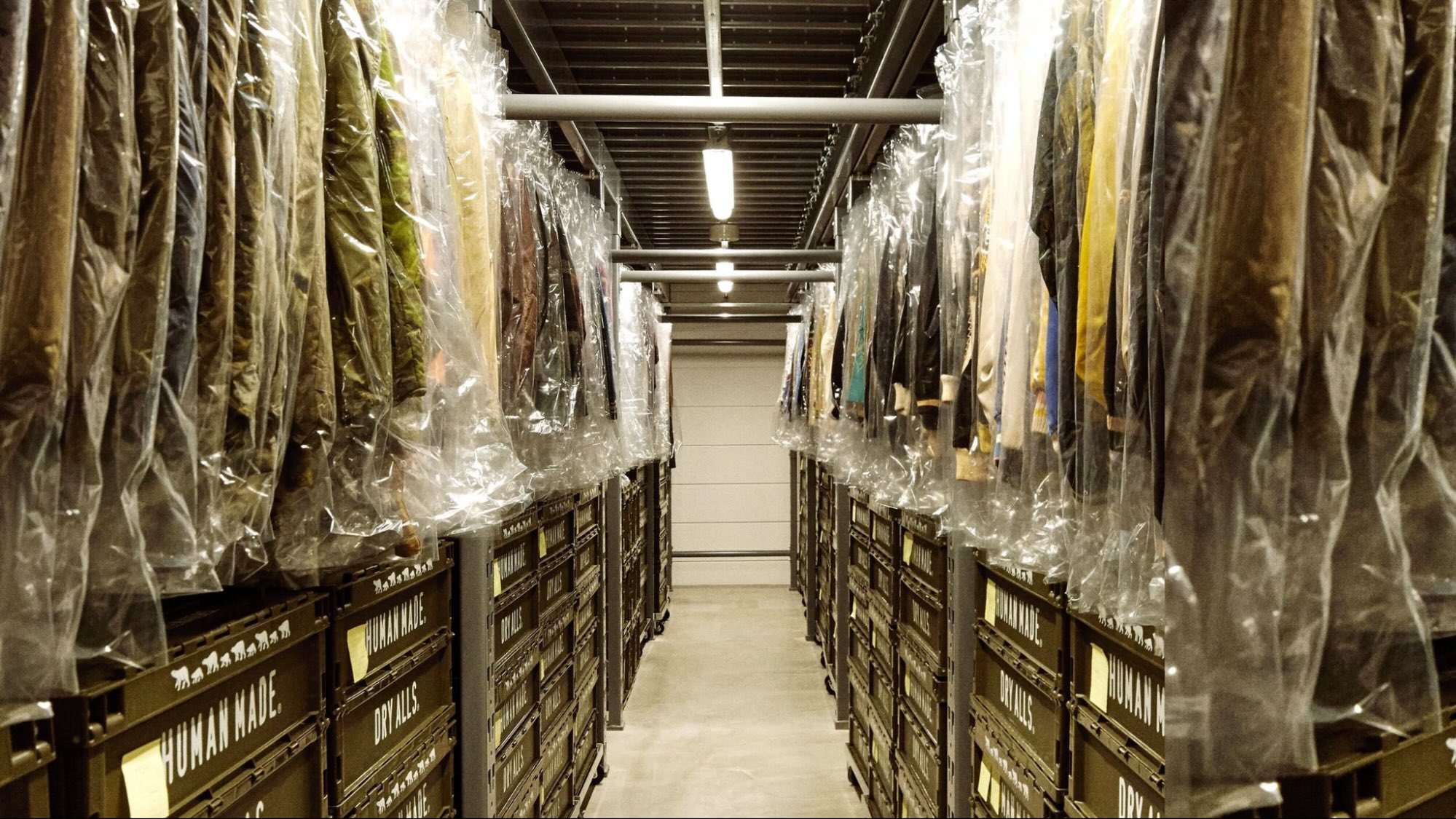
A different approach to archival fashion can be noticed in NIGO’s (Tomoaki Nagao) personal archival collection. Rather than preserving the legacy of any particular fashion house, this Japanese designer has spent decades collecting items that reflect the history of street-fashion, which include denim, American workwear, and even military jackets, as well as vintage BAPE clothing. In 2022, over 500 items from his collection were displayed at the Costume Museum in Tokyo within the ‘The Future Lies in the Past: NIGO’s Vintage Archive' exhibition, and in 2026 the exhibition ‘From Japan with Love’ at London’s Design Museum features already over 700 pieces collected throughout his 30-year experience. These collections are also particularly valuable due to their influence on NIGO’s own designs: his brand, HUMAN MADE, transforms details and silhouettes of these historical pieces into contemporary designs, like Yokosuka Jacket, proving how archival fashion can emerge from personal collecting.
By the second half of the 20th century, fashion had become part of cultural heritage, drawing the interest of museums, galleries and major exhibitions that began treating designers and their work as subjects worth serious consideration. Its scope expanded to include everything relating to the industry, invitations, press releases, magazine covers, cut-outs, and what was once considered ephemeral could now be studied as cultural heritage. Designers could look back at early collections for inspiration, museums could reinterpret historical garments for a new audience, and collectors could seek out items that had acquired new significance over time. The archive transformed from a place where fashion was kept safe into a place where it could be reborn.
Some items take on special significance because they embody stories that extend far beyond their original purpose.
Chanel's little black dress, launched in 1926, is one such example. As Gabrielle (Coco) Chanel herself said, such a dress “should be in every woman's wardrobe” for its simplicity, comfort and elegance. The dress shows how an archival item can become more than a preserved garment; it can become a symbol of an entire era in fashion. It became one of those designs that kicked off a new era in dress design and is now, perhaps, one of the most popular and widely used styles in contemporary fashion, appearing in various interpretations. Although there is no single definitive ‘original little black dress’, however, several versions are often presented in museums: for example, a Chanel’s 1926’ dress was donated to The Met Museum (New York) in 1965. Moreover, in 2006 Audrey Hepburn’s Givenchy little black dress, which can be considered as a prototype of Chanel’s design, from Breakfast at Tiffany’s was successfully sold at Christie’s for £410,000.
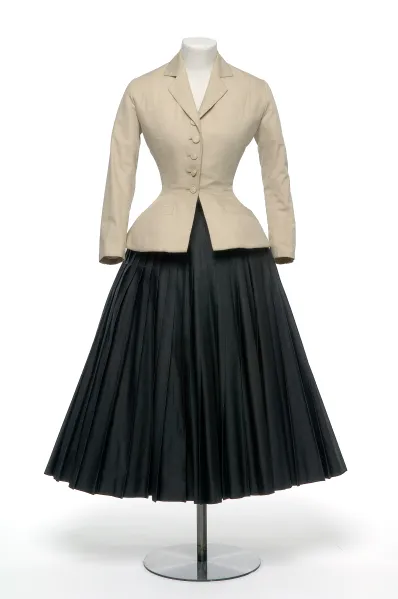
Dior takes a slightly different approach to its heritage. The house's archive is a set of silhouettes and motifs that evolve with the vision of each successive creative director. The Bar jacket, for instance, remains closely associated with Christian Dior's revolutionary 1947 New Look, which restored luxury to women, yet its meaning has never been definitively fixed: decades after its debut, the silhouette keeps reappearing in new iterations, more a designer's signature than a relic. Rather than recreate the past, the archive offers the chance to experiment with what a historical idea of postwar fashion and sculpted femininity might look like in the present. Even in 2025, the jacket made a comeback on the catwalk in a new interpretation during Jonathan Anderson’s debut show in Paris, not only emphasising the silhouette but also serving as a reminder of its historical significance. Unlike the Chanel dress, the Dior jacket has been preserved in its original form: it was added to the Metropolitan Museum of Art (New York) collection in 1958. In addition, the FIDM Museum (Los Angeles) holds a replica donated by the fashion designer Mark Bohan to Dior in 1981, but made using the original patterns, which makes it almost indistinguishable from the original version.
The interplay between past and present becomes more interesting still at Prada, where fashion is closely intertwined with scientific research, art and cultural history. Through the Fondazione Prada, the contemporary art centre Miuccia Prada established in Milan in 1995, and the house's wider engagement with contemporary culture, the archive can be seen less as a catalogue of iconic garments than as a source of inspiration. Prada's history is defined by a desire to challenge established notions of beauty, femininity and luxury. Here, the archive is not something reached for only when inspiration runs dry; it is part of an ongoing dialogue between fashion and culture.
The growing importance of archives also reflects a broader shift in how fashion is perceived today. In an industry built on constant novelty, consumers are increasingly drawn to items with a story behind them. Vintage clothing and archive pieces offer something a newly released collection can not: a sense of rarity, authenticity and a connection to a specific moment in time. Social media has amplified this, letting collectors, stylists and enthusiasts unearth little-known catwalk pieces and revive designs that might otherwise have been forgotten, while resale and vintage markets have turned past collections into sought-after commodities, with particularly rare pieces fetching extraordinary prices. There's also a growing appeal in wearing something with a history of its own, rather than simply showcasing the latest trend.
Archival fashion fits naturally into a broader desire for individuality and more conscious consumption: rather than constantly producing something new, fashion can find value in what already exists. The archive has become relevant not only because it preserves the past, but because it speaks to some of the industry's most pressing questions, around authenticity, sustainability, exclusivity and the endless pursuit of novelty.