Art as a Lifelong Pilgrimage
Wallace Chan: From the Microscopic, Building the Monumental
“To see a World in a Grain of Sand
And a Heaven in a Wild Flower,
Hold Infinity in the palm of your hand
And Eternity in an hour.”
— “Auguries of Innocence”, William Blake (written c. 1803, pub. 1863)
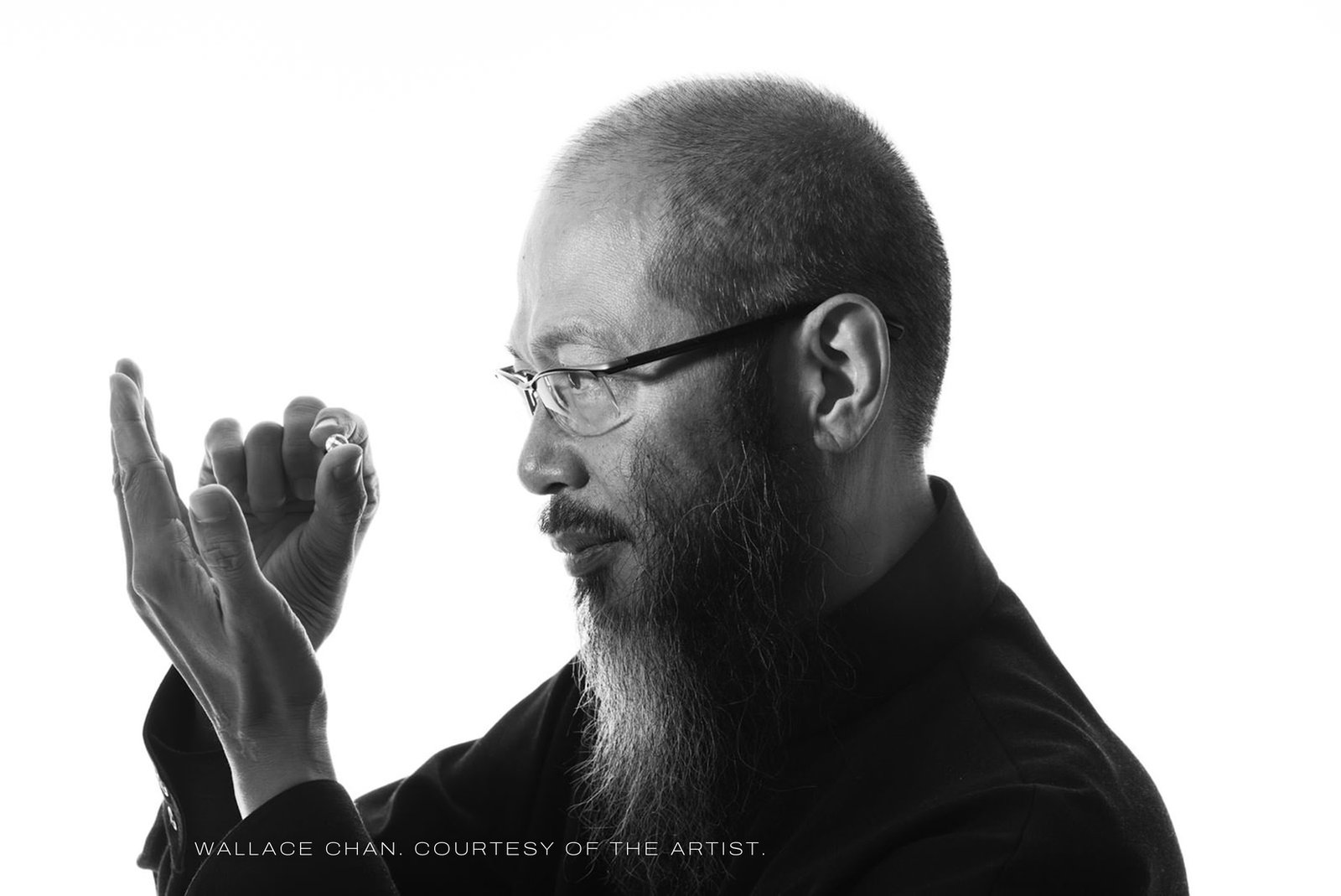
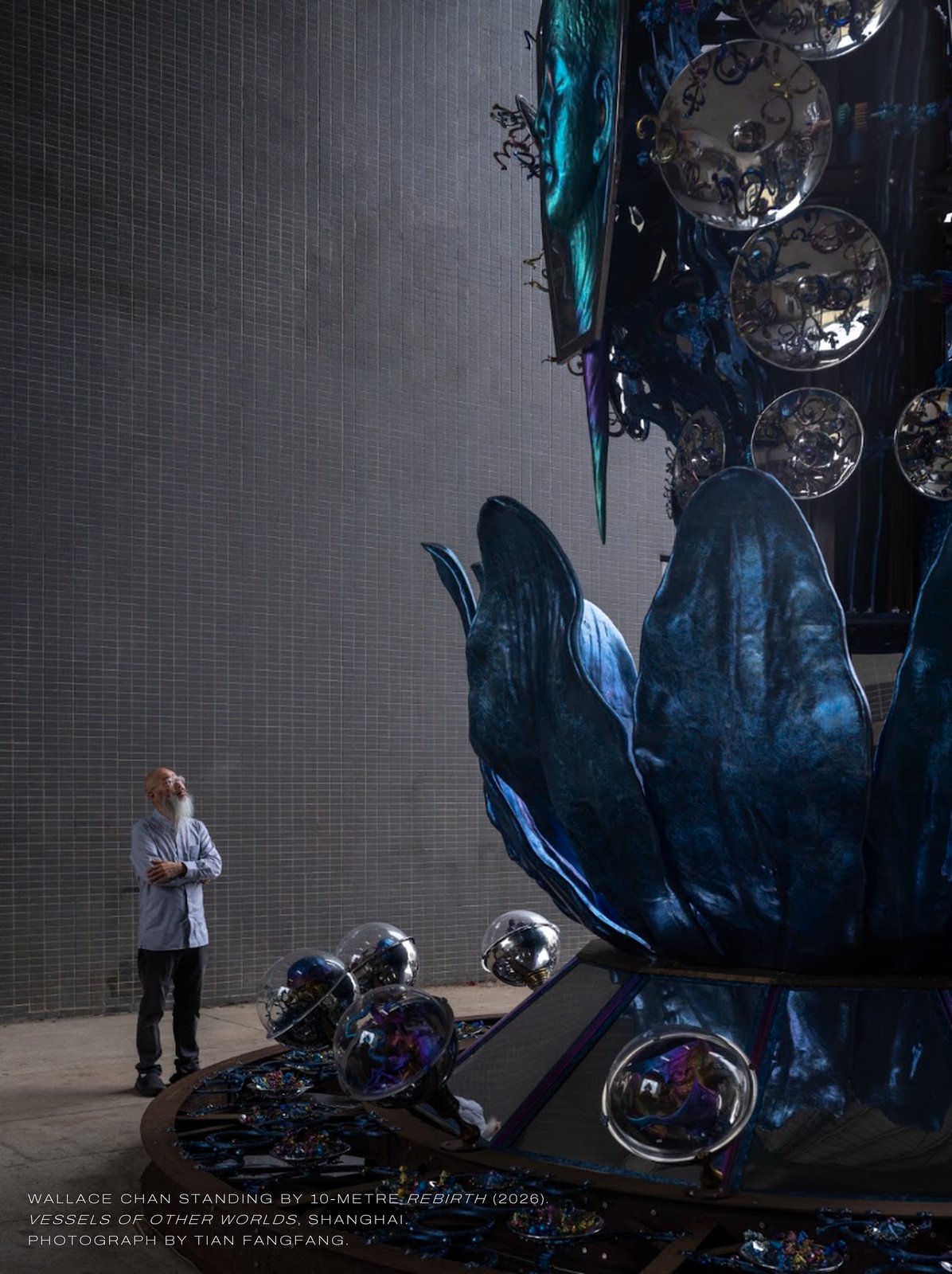
Turning seventy this year, Wallace Chan stands before Rebirth (2026), one of three monumental titanium vessels at the centre of his latest exhibition in Shanghai, with the curious eye of a man still looking at the world as if it were new. The sculpture rises ten metres above him; yet the journey that brought Chan to this scale began with things almost impossibly small: a gemstone.
The dual-site exhibition Vessels of Other Worlds, presented in Venice and Shanghai this year, might easily be read as the summit of a five-decade career. Beyond this accomplishment, however, we see an artistic journey still in motion. For Chan, art is a lifelong discipline of endurance, refinement and reflection. His conviction is simple: “I have always believed that art is a spiritual practice; it must stand the test of time and of the human hearts.”
This philosophy opens a more intimate question beneath the spectacle: how did a young carver, who once left school and embarked on an apprenticeship because of poverty, spend a lifetime turning the discipline of the hand into an artistic universe of monumental scale? Perhaps, the monumental is not the opposite of the minute; the two belong to the same continuum in the grander scheme of human civilisation.
In Chan’s words, “It is important to present new artistic perspectives to the world. I aspire to create works that represent not only the era of my lifetime, but also remain classic in history, inspiring generations that follow.” He explains, “When I work, I bear in my mind a timeline much, much longer than what this body of flesh and blood promises. When I am no longer here on this Earth, my works will continue to exist.”
Here is a man who has achieved international recognition and entered major museum collections, yet he continues to regard himself primarily as a maker.Rather than treating mastery as a destination, he sees art as a practice: something to return to, refine and begin again.
Vessels of Other Worlds — Venice and Shanghai
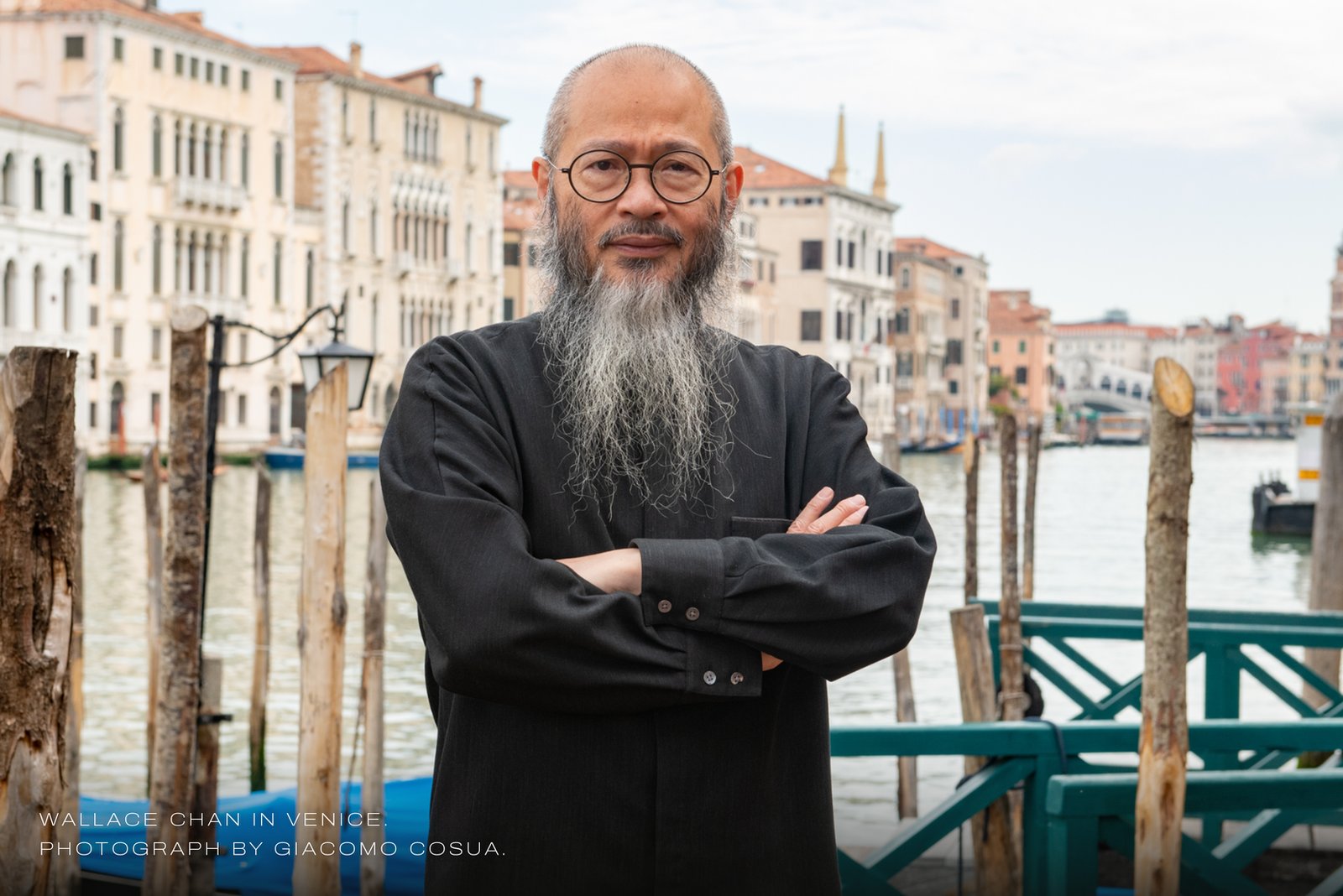
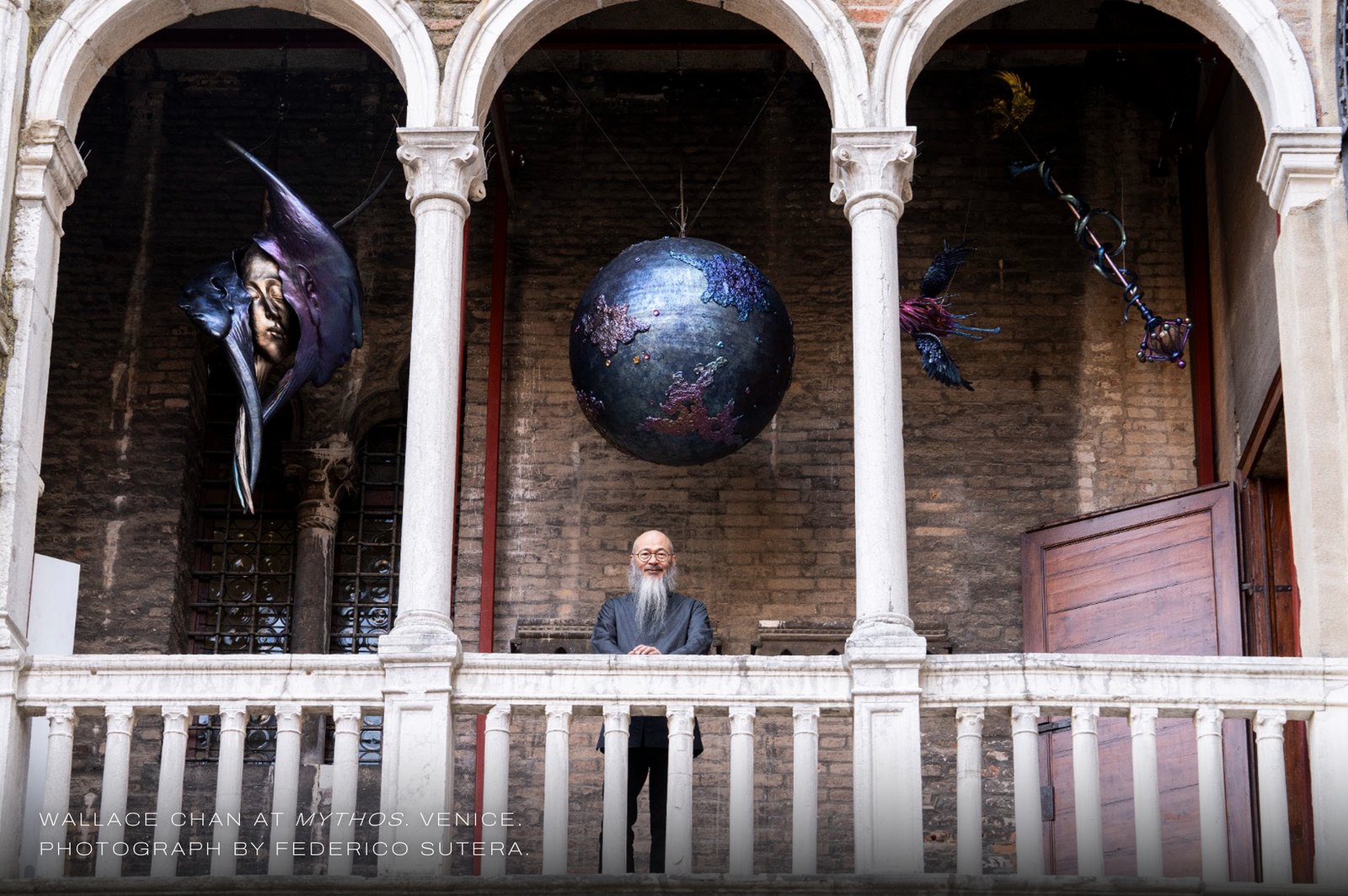
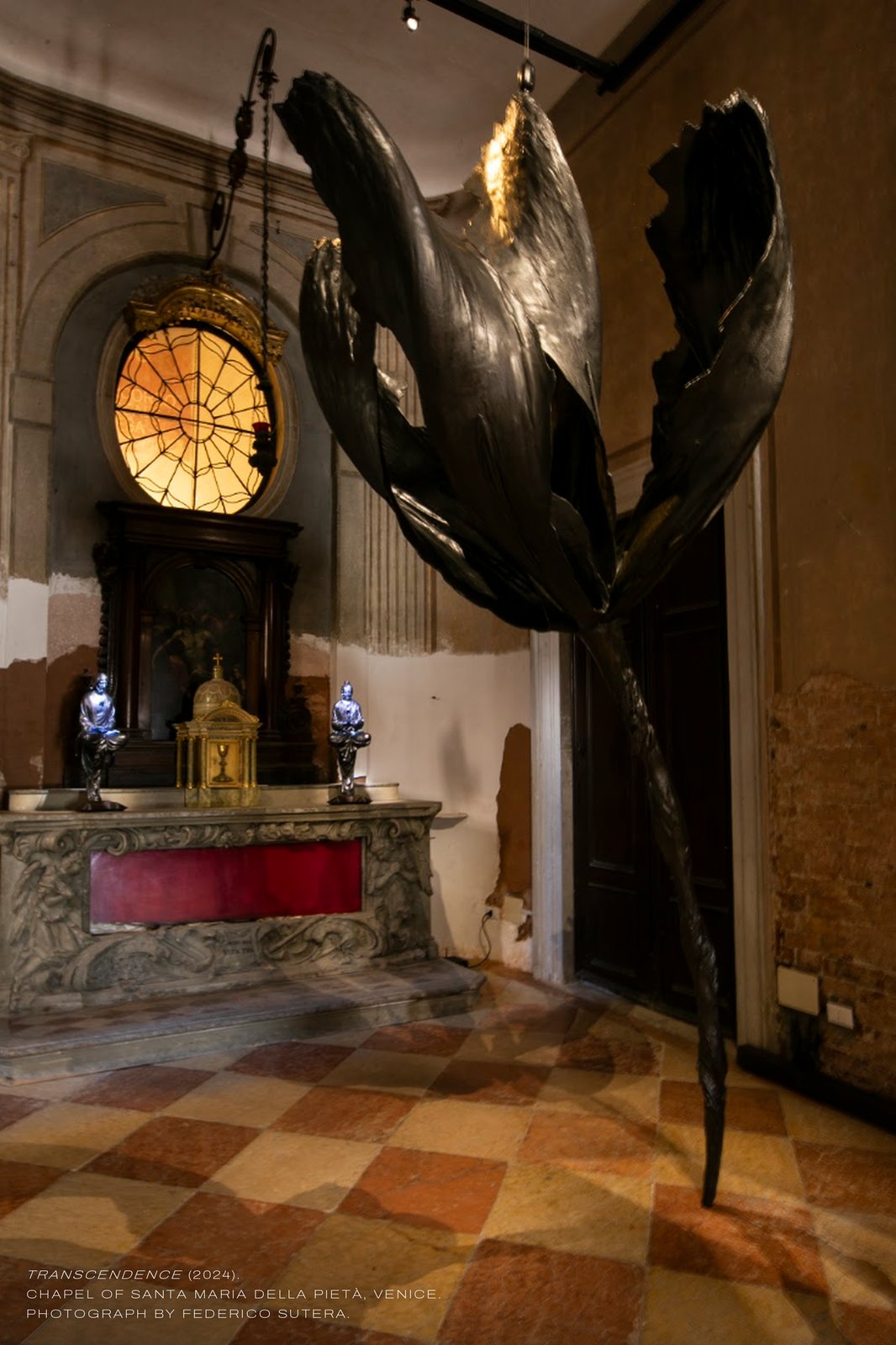
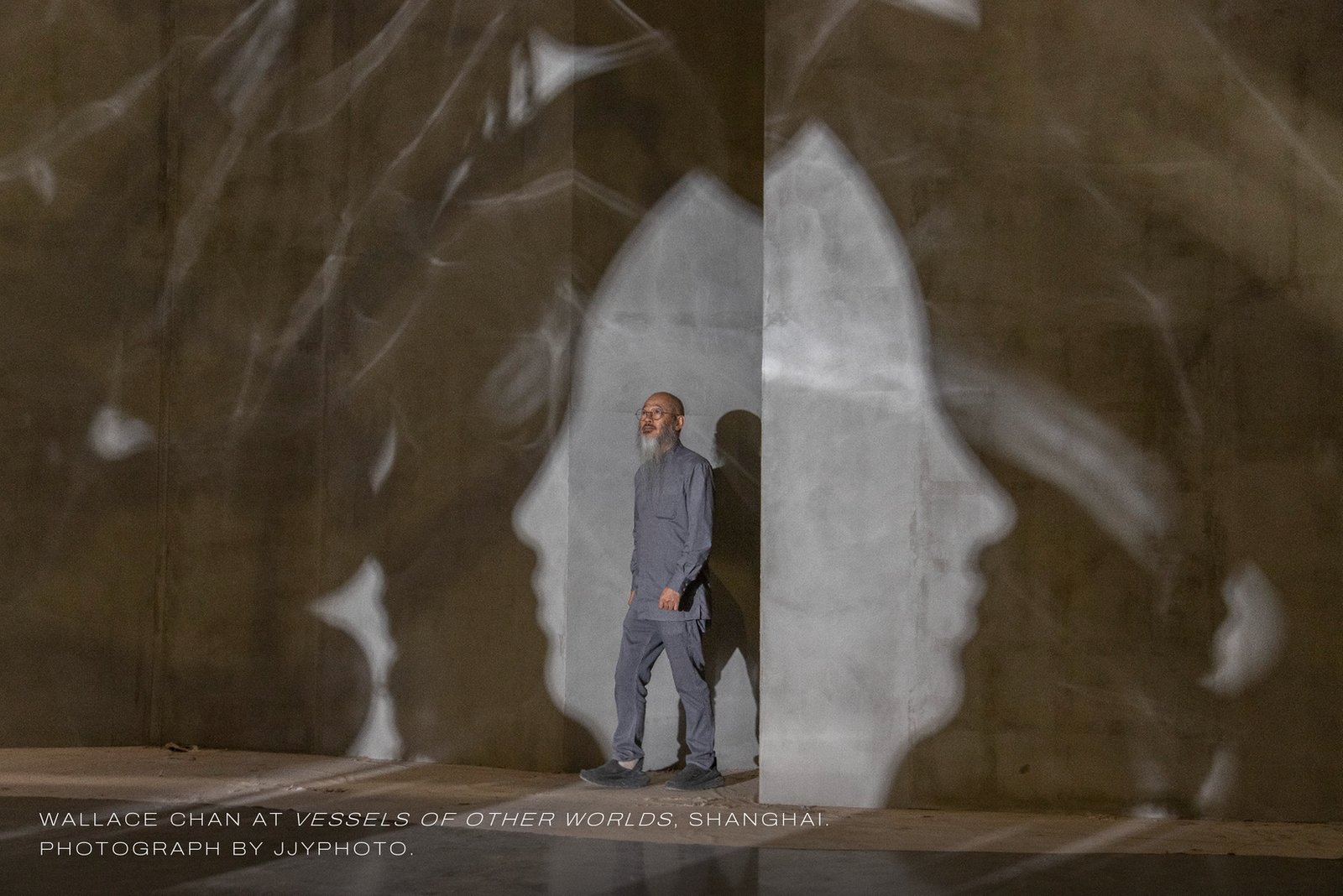
This year, Vessels of Other Worlds maps Chan's artistic pilgrimage in two cities, unfolding across six months. The exhibition at the Chapel of Santa Maria della Pietà in Venice (8 May–18 October) coincides with the 61st Venice Art Biennale and marks Chan's fourth return to the city as an exhibiting artist. In Shanghai, the Long Museum (West Bund) stages a survey of his practice spanning more than five decades, alongside three new monumental vessels (18 July- 25 October). He remarks, “This exhibition, for me, is an account of more than half a century of my engagement with materials, time, life and spirit.”
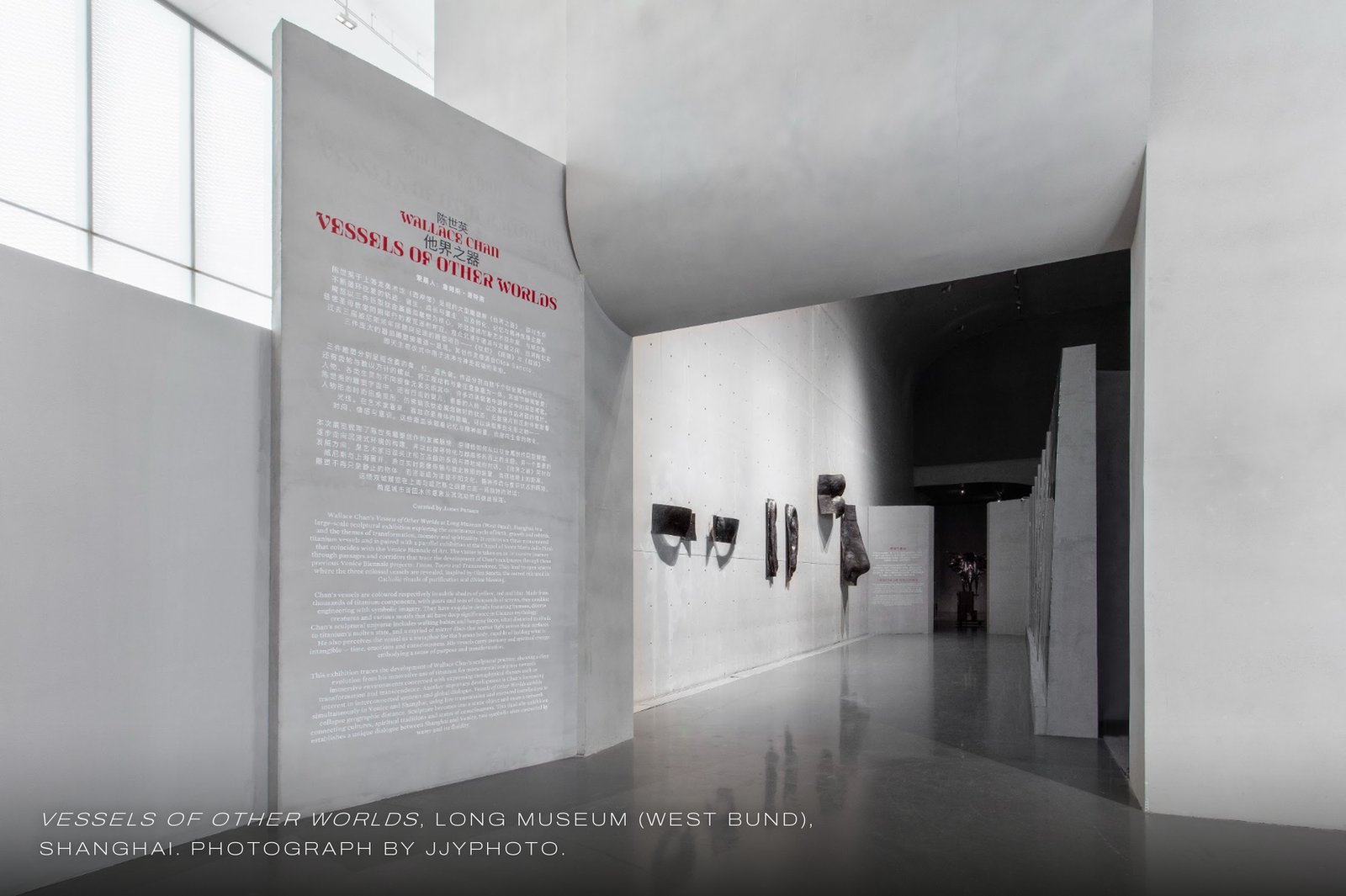
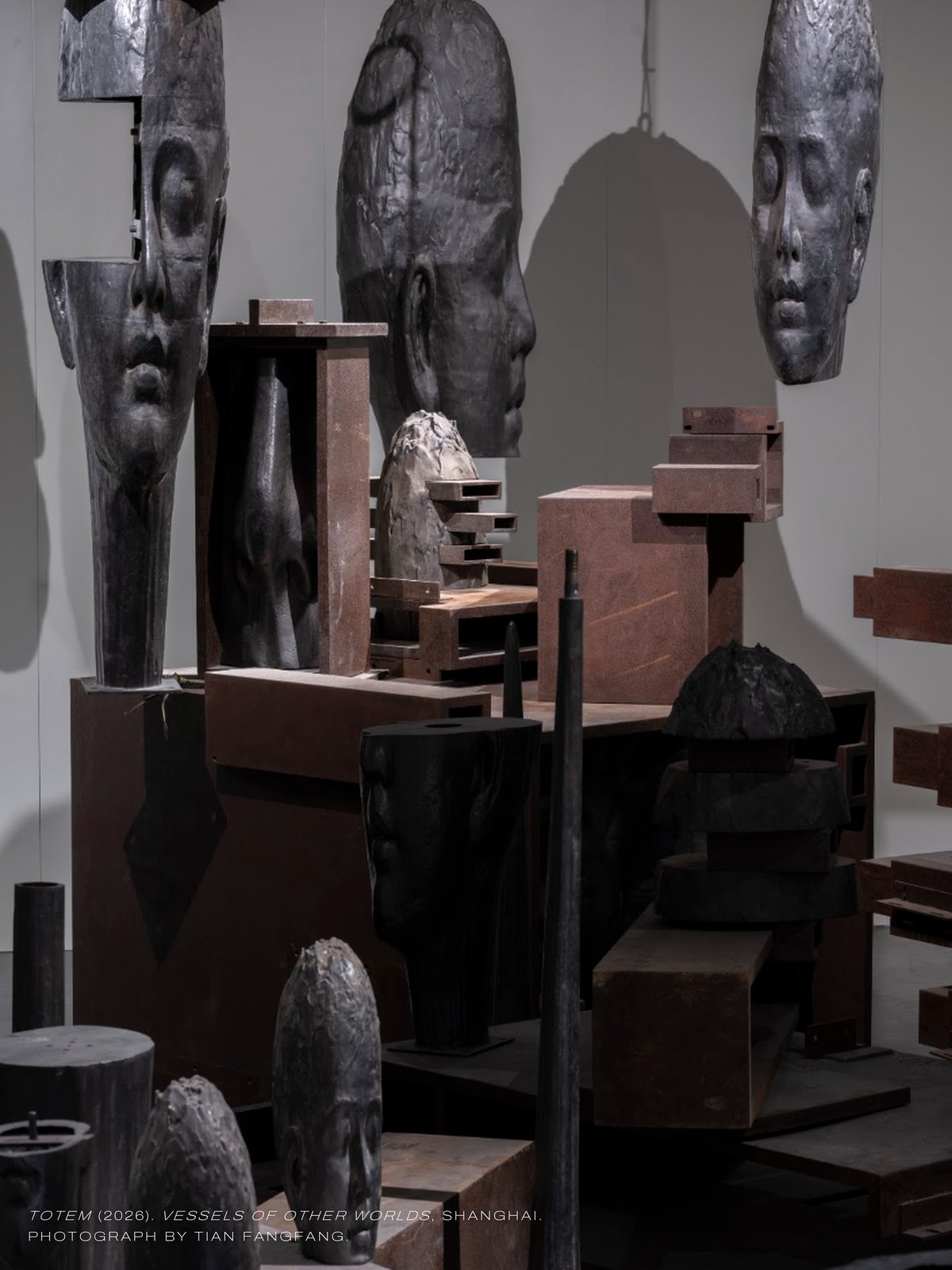
At the Long Museum, the visitor first encounters an almost archaeological procession through Chan's sculptural language. Enlarged titanium eyes, ear, nose and mouth confront us with how much of what we experience is shaped by the body and mind through which we perceive it. From there, the exhibition traces a compressed trajectory of Chan's sculptural making. Works and ideas from past exhibitions Titans (2021), Totem (2022), Transcendence (2024) and Mythos (2026), alongside recurring materials and motifs, lead visitors towards the three vessels at the heart of the exhibition.
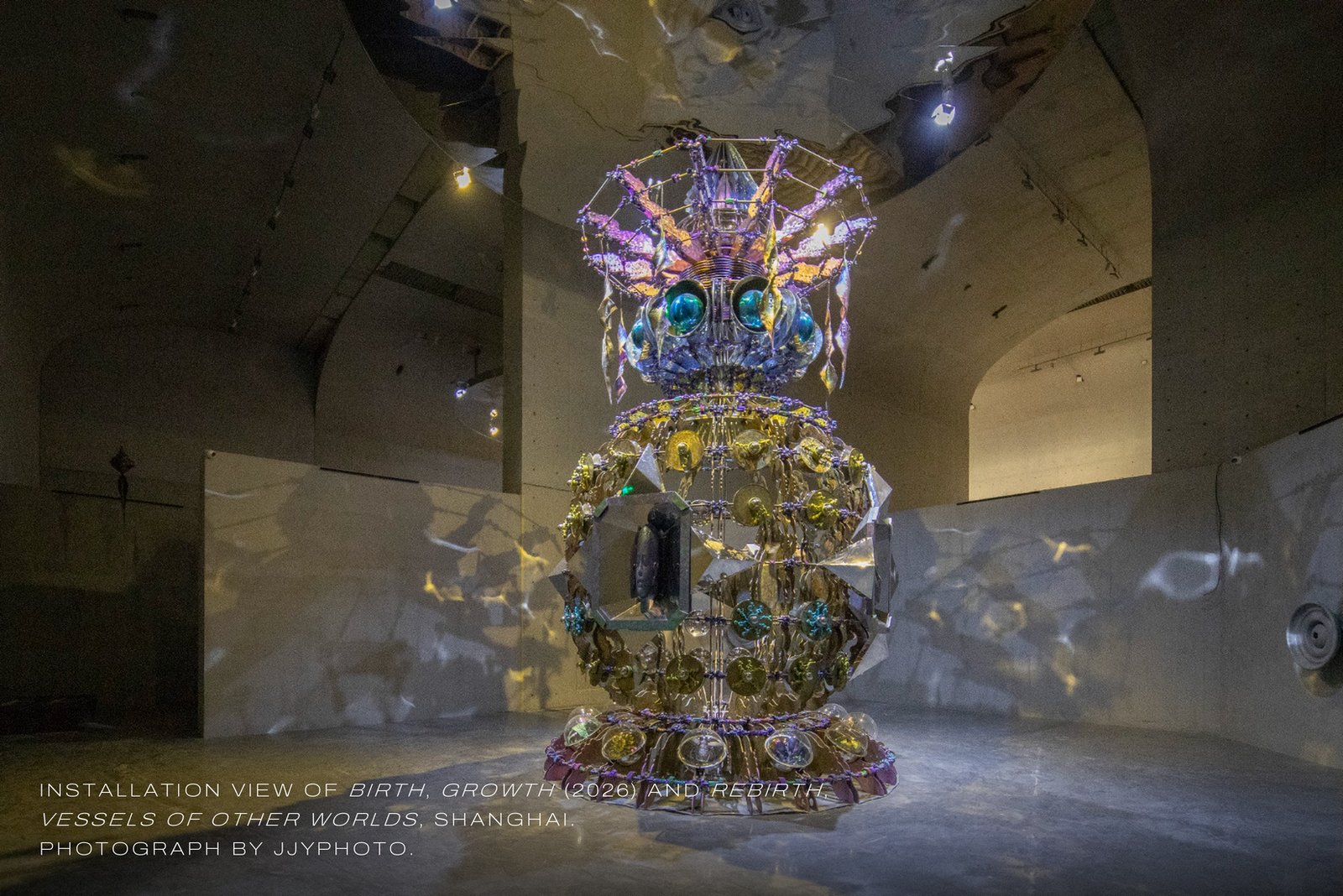
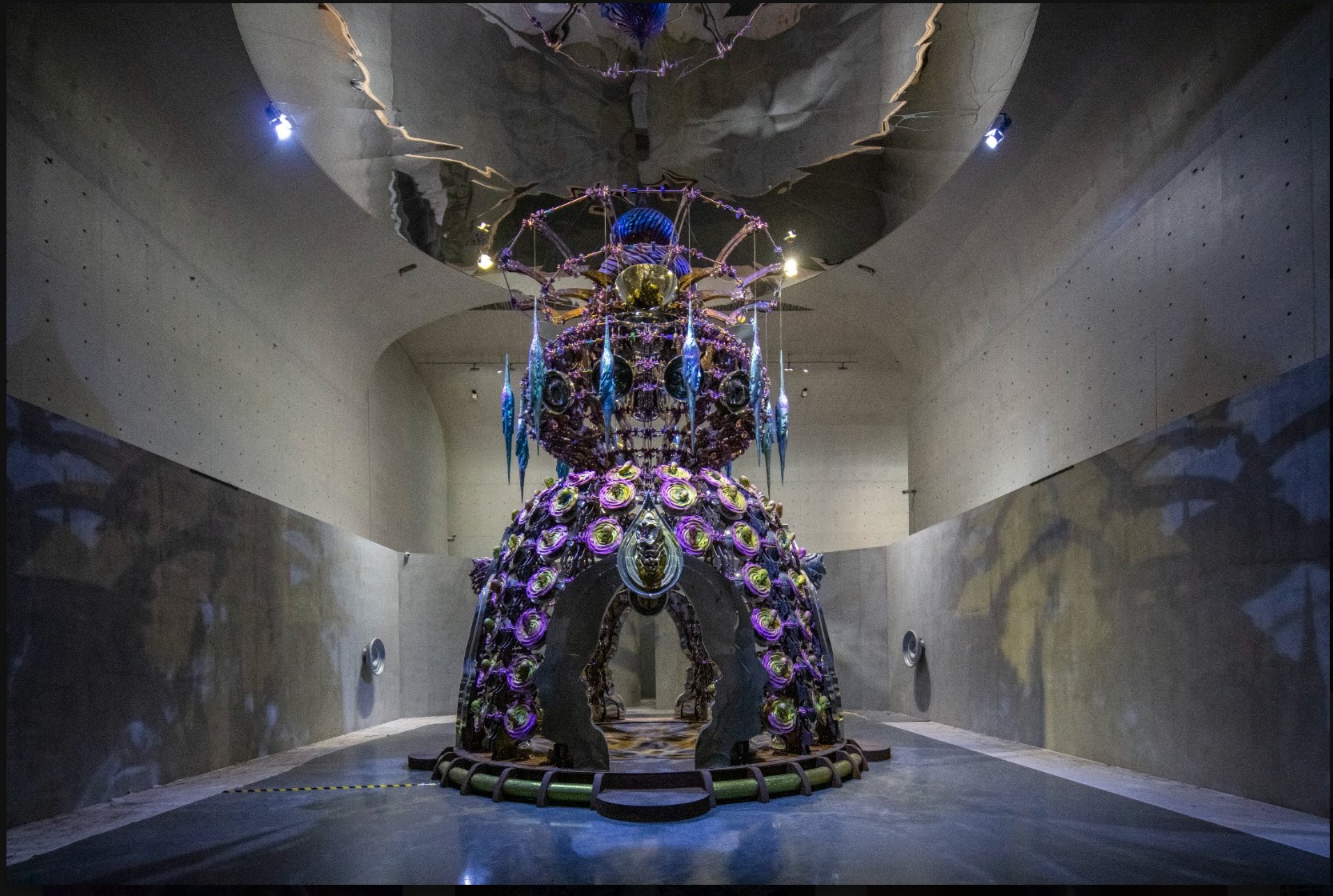
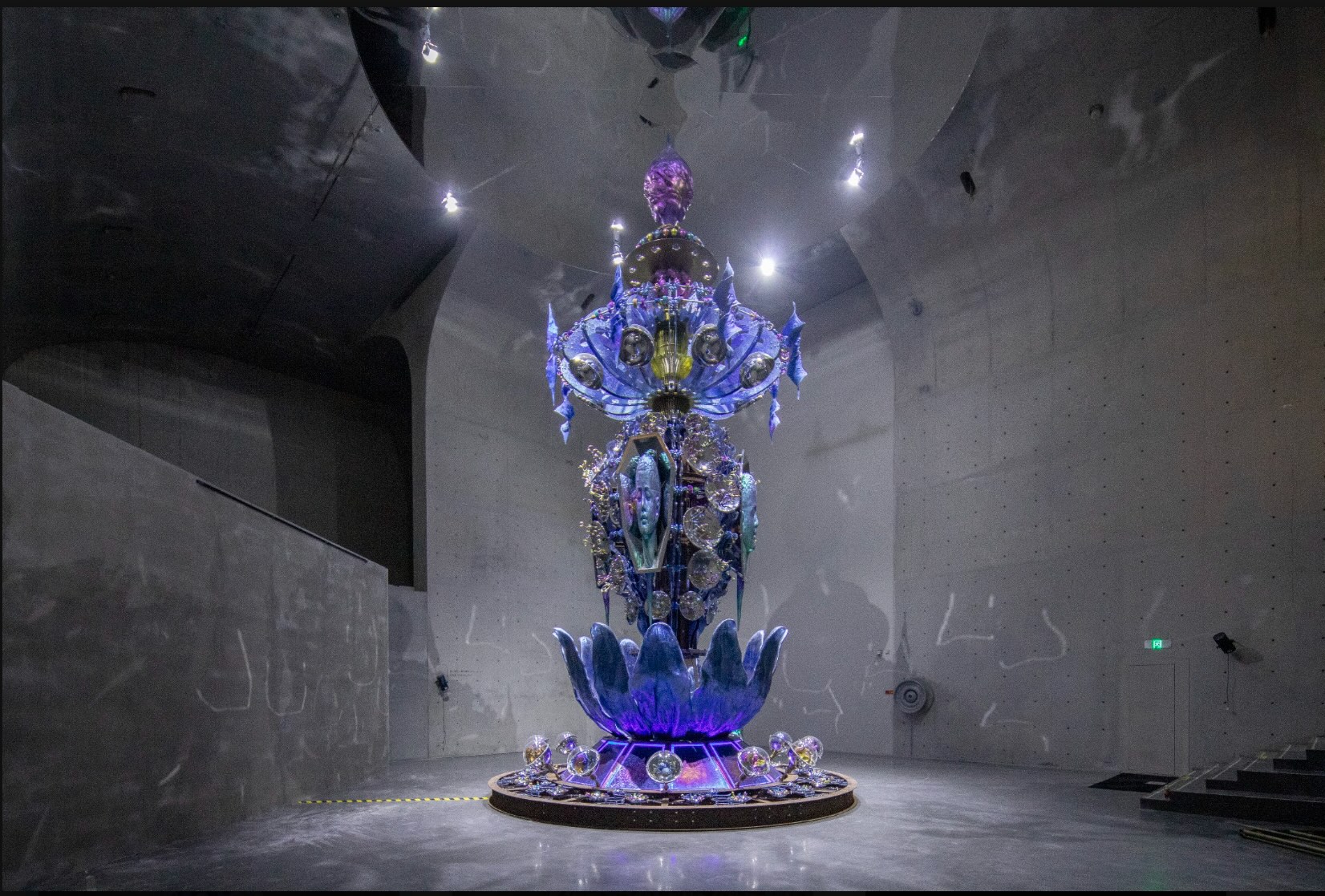
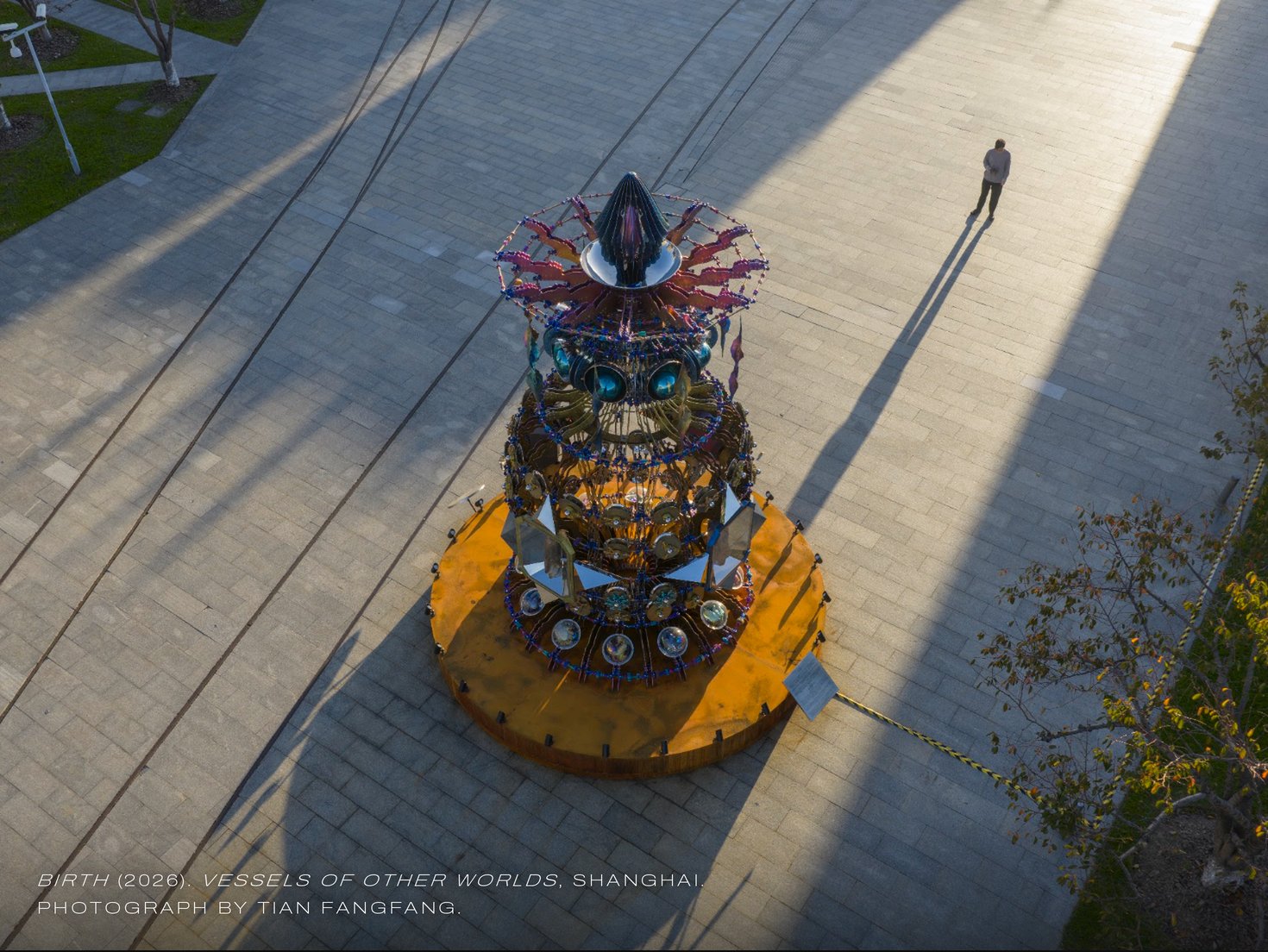
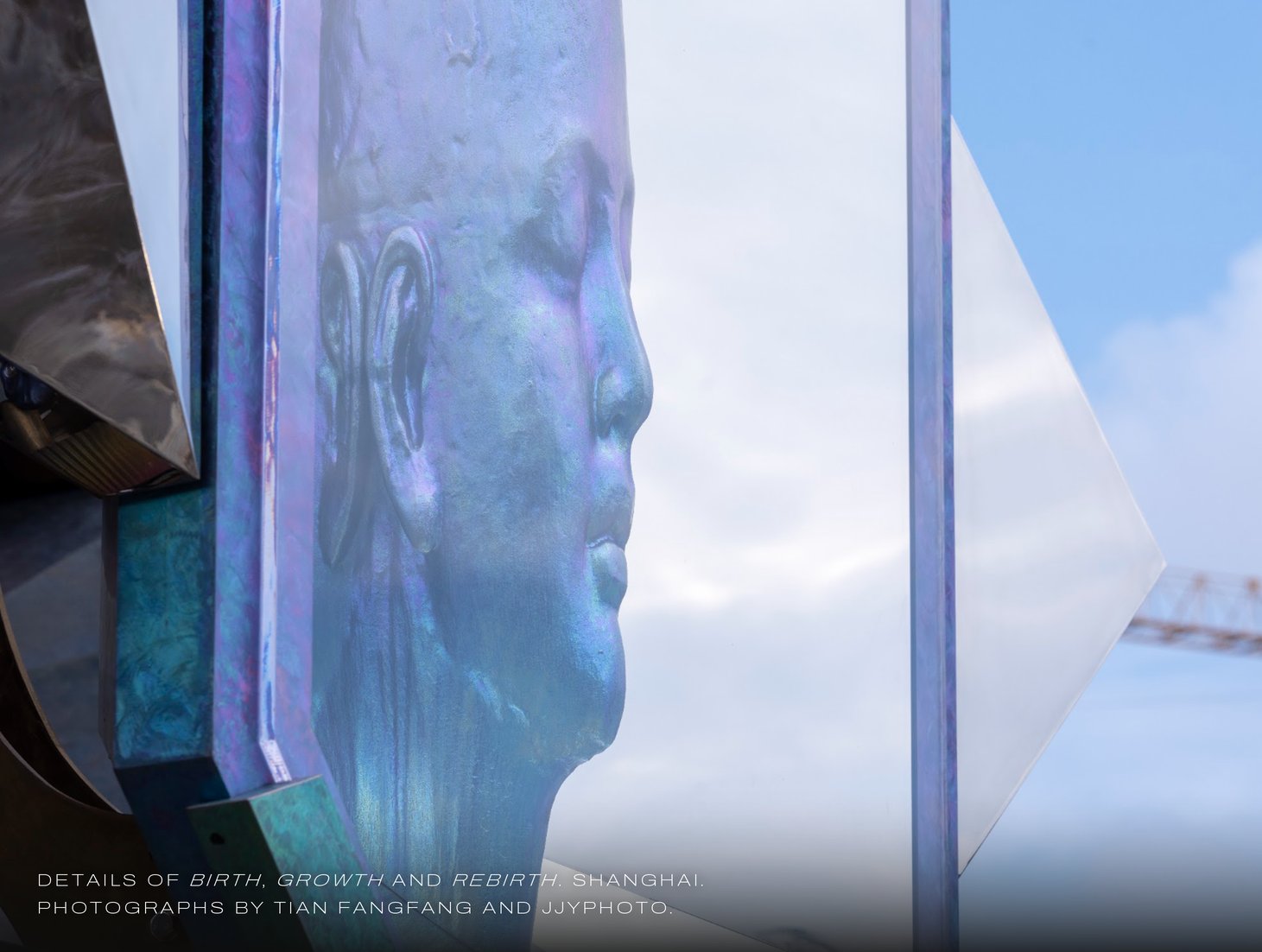
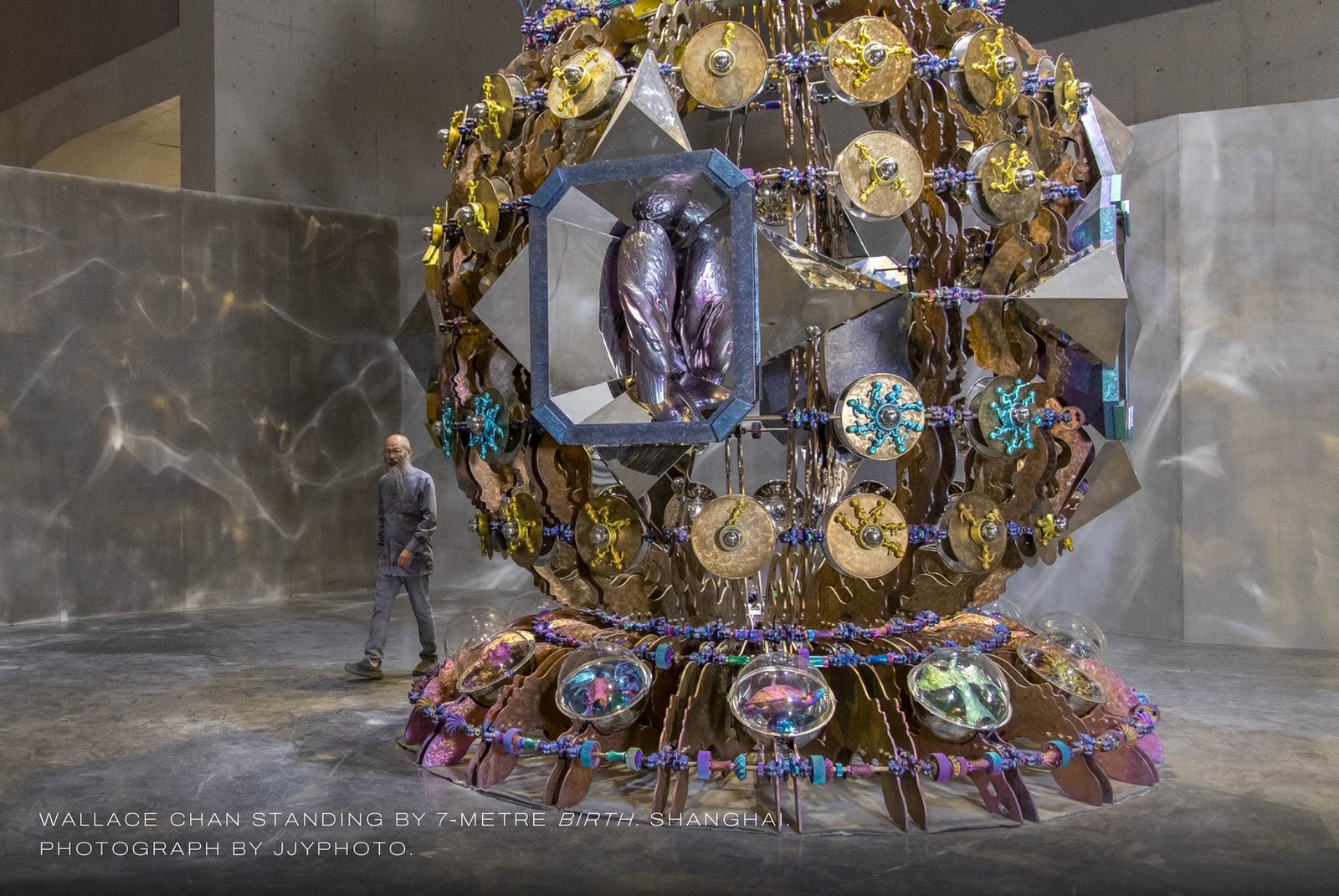
Birth, Growth and Rebirth (2026) rise seven, eight and ten metres respectively, each asserting its own architectural presence within the Long Museum.
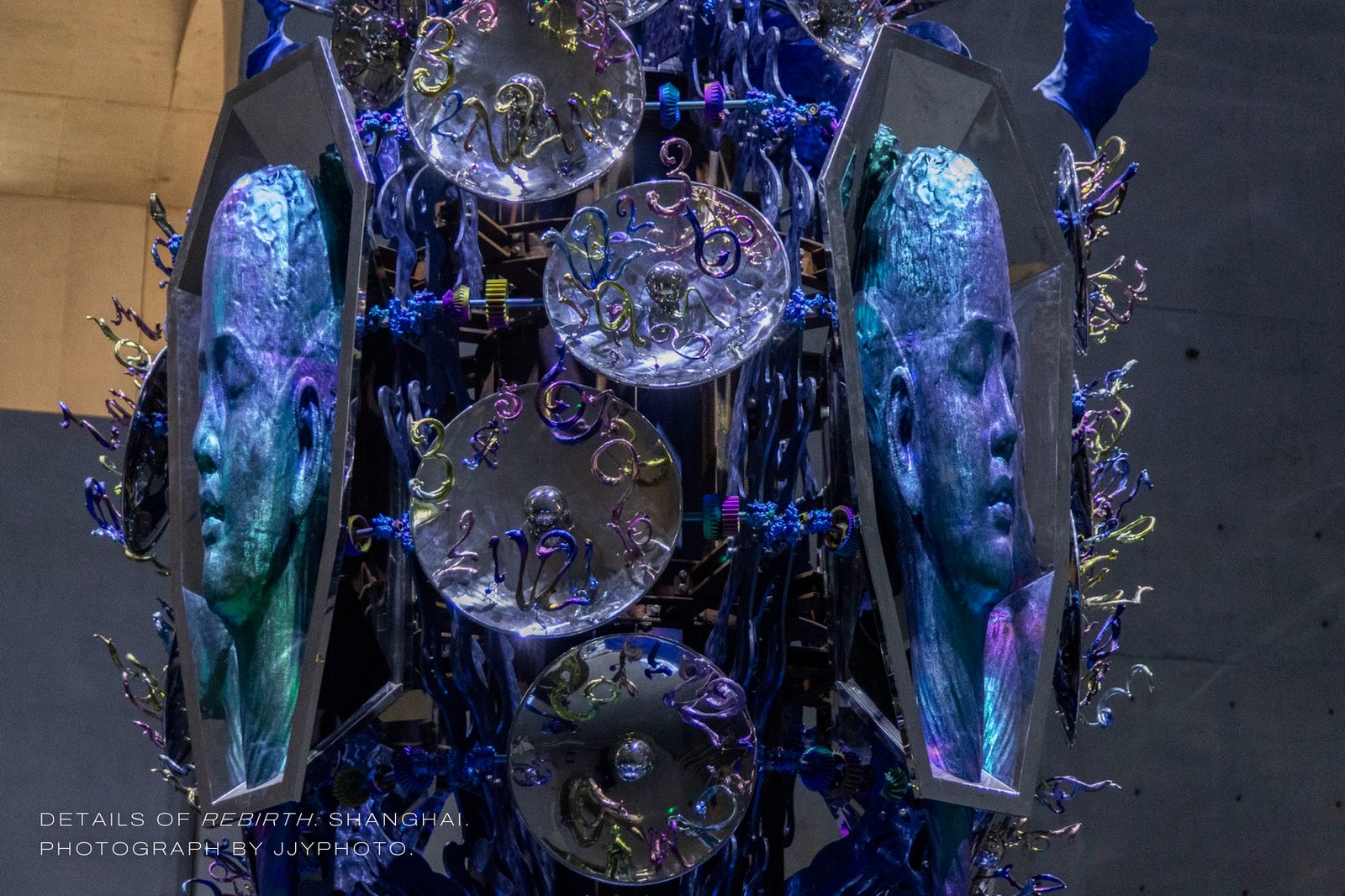
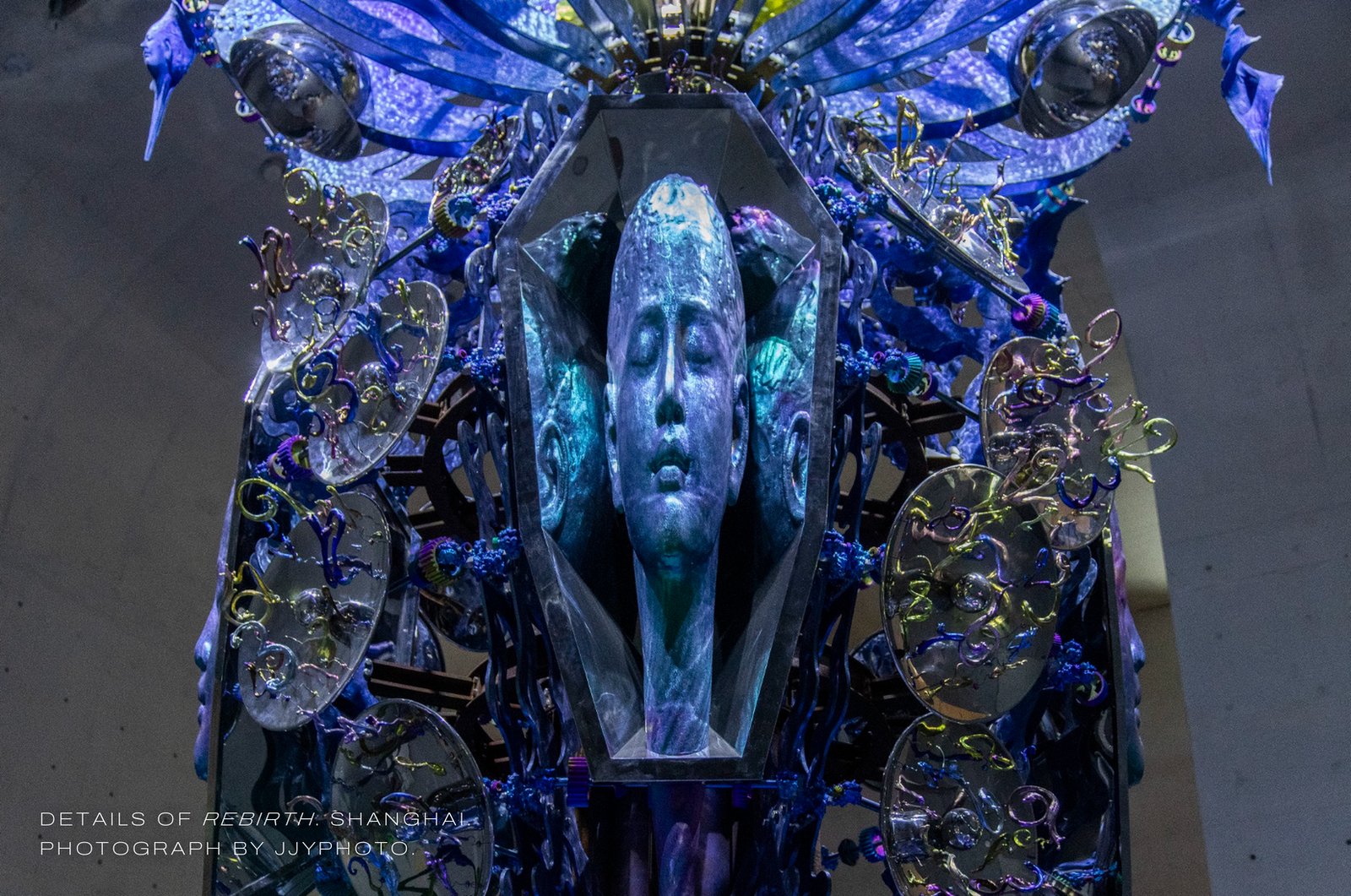
Birth unfolds as a meditation on existence as a web of connections, bringing together human figures, mechanical elements and gear-like systems. Visitors can turn the small wheels of life, setting baby figures into circular motion and becoming part of the work’s choreography. Growth carries this idea from the intimate to the inhabitable. Visitors enter its revolving interior, where mirrored surfaces catch and multiply light, bodies and reflections in a kaleidoscopic play. It is, in a sense, an architectural extension of the Wallace Cut: the optical intricacy once contained within a tiny carved gemstone is released into an immersive spatial experience. And then comes Rebirth. Clocks, dancing numerals, bell-like forms, human figures and mythological imagery gather into a structure that feels at once organic, mechanical and architectural. Here, Chan’s recurring fascination with cycles is no longer simply an idea but something the body encounters: time turns, forms return, and endings begin to resemble beginnings. Rebirth does not close the journey; it folds it back upon itself, suggesting that every ending contains the impulse for another beginning.
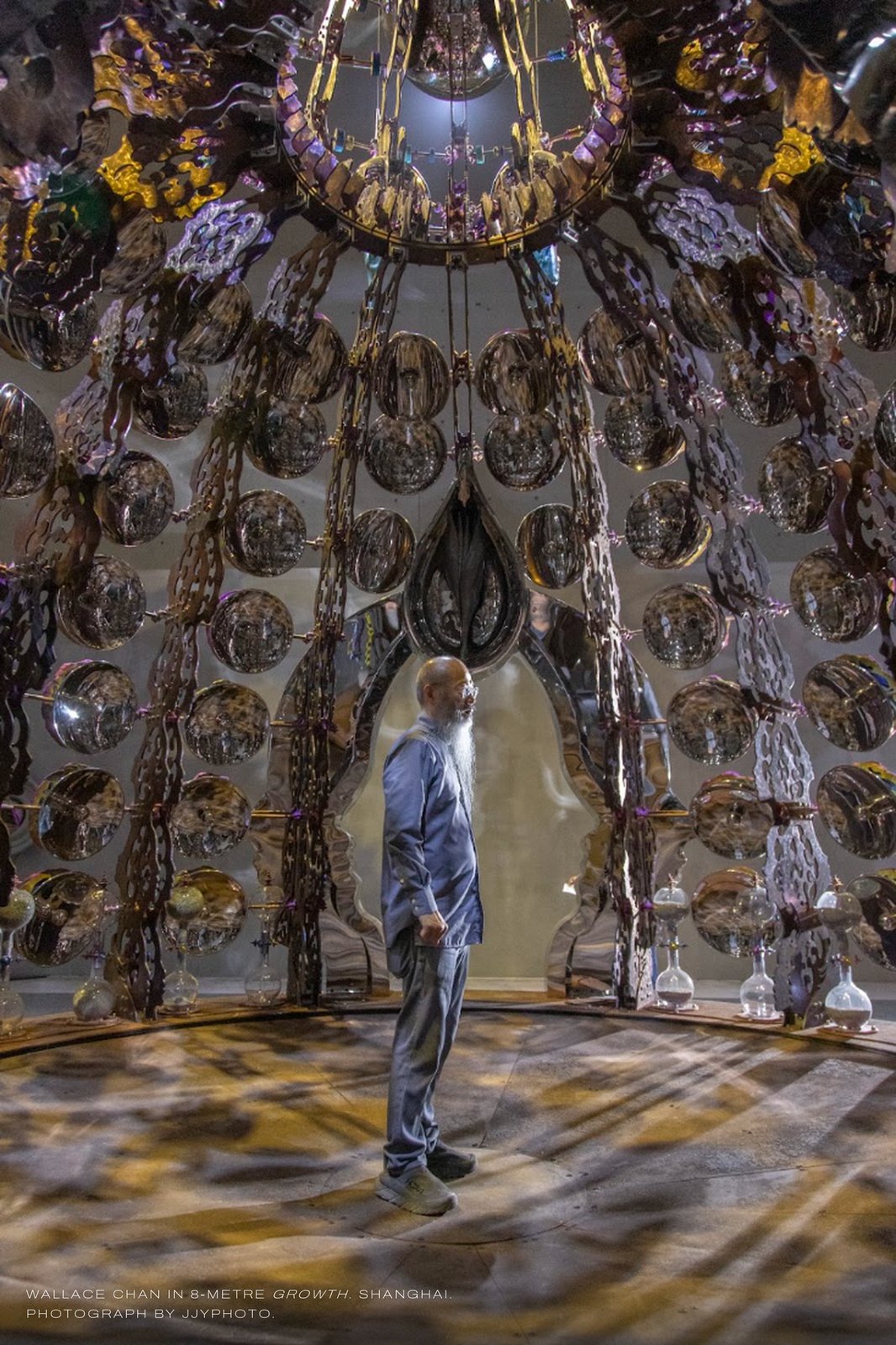
Seen together, the three vessels trace more than a progression in scale. They chart Chan’s way of thinking, from the smallest movement of a wheel or facet of a stone to structures that invite the human body inside them. The monumental, in his hands, is never simply a matter of size; it is the accumulated efforts of countless small acts of looking, carving, testing and imagining. The artist notes, “I build the monumental from the microscopic. To me, this is how the universe takes form: vast presences arise from the unseen and the minute. Stars are born from particles; mountains and rivers gather from dust; life grows from cells. My works, too, are slowly built into something greater than myself.”
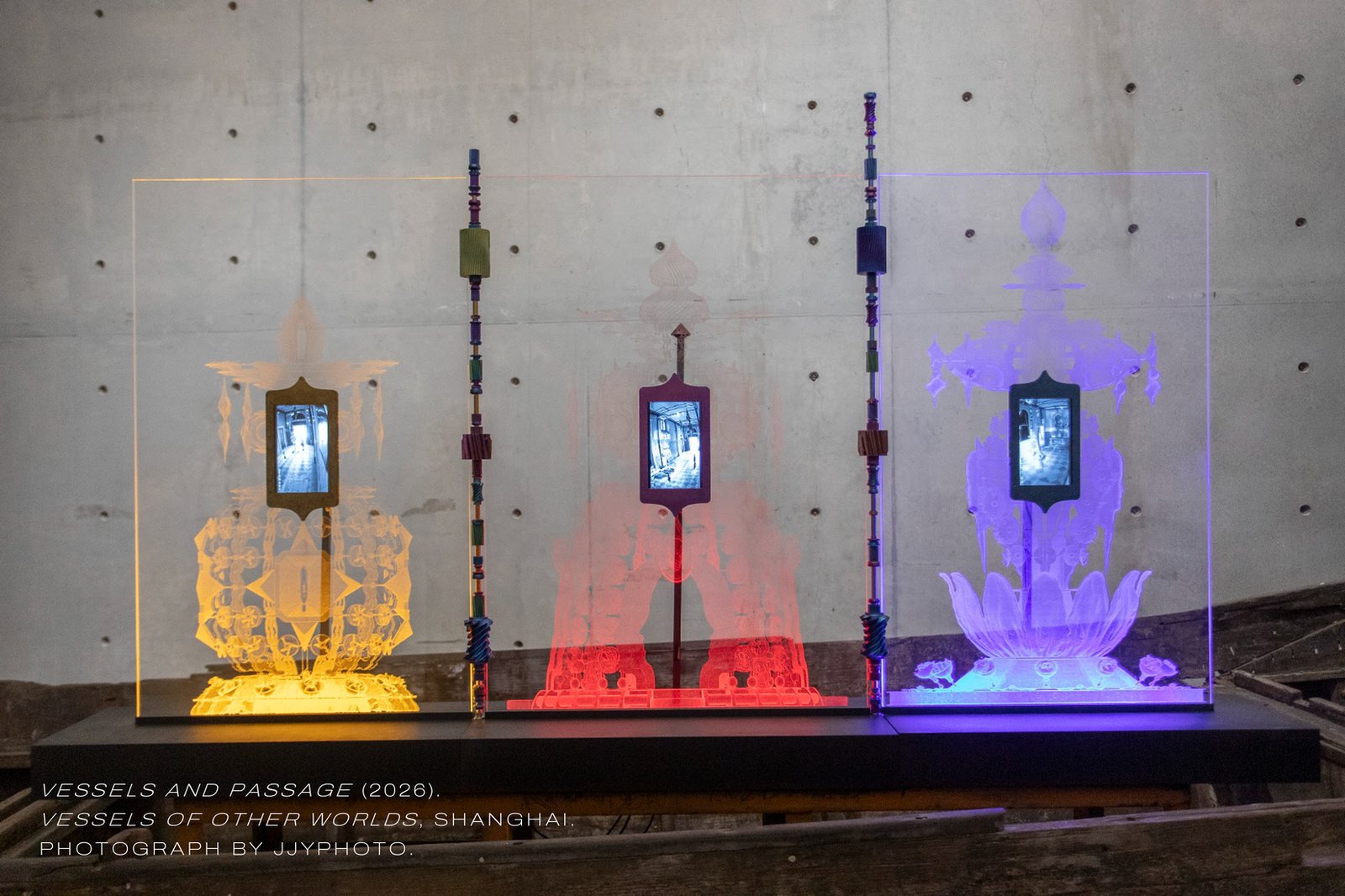
The dialogue between Venice and Shanghai extends this idea beyond geography. In Venice, three 1.5-metre-high versions of the vessels are displayed in the Chapel, while digital screens on the altar transmit live images of their colossal counterparts in Shanghai. At Long Museum, three screens placed on a boat sculpture return live images from the Chapel to Shanghai, creating a visual bridge between the two sites. James Putnam, curator of the 2026 exhibition and Chan's long-time collaborator, observes, “This exhibition traces not only the development of Wallace Chan's sculptural practice, but also his increasing interest in interconnected systems and global dialogue.” He explains, “Sculpture becomes less a static object and more a network connecting cultures, spiritual traditions and states of consciousness.”** The two cities become vessels themselves that carry the artist’s and visitors’ passage through materials, cultures and ways of seeing.
Making Worlds in Small Things
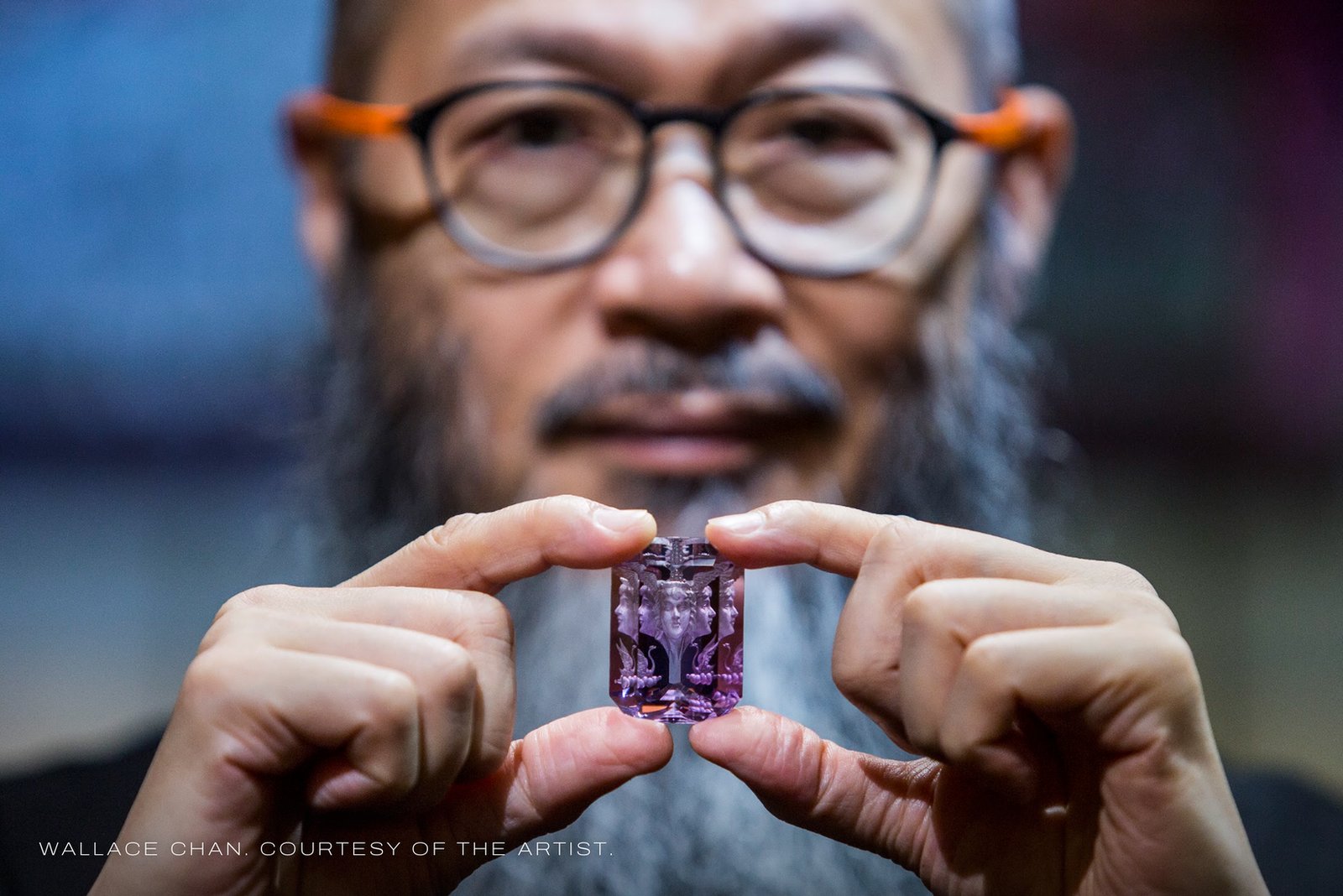
After the immensity of the vessels, the Shanghai exhibition brings us back to Chan’s roots in jewellery and carving, with a collection of smaller works, many never previously exhibited. At sixteen, after a short formal education and years of hardship, Chan entered a gemstone-carving workshop as an apprentice. His world was measured in minute distinctions — the surface of a stone, the behaviour of light, the precision of a cut — before his work acquired the scale by which the art world would come to recognise him. The artist has kept saying, “In the microscopic, there is no interior; in the monumental, there is no exterior.” The Wallace Cut, developed in 1987, offers perhaps the clearest expression of this philosophy. Through the calculated interplay of facets and reflections, Chan creates an illusionistic three-dimensional image that appears to inhabit the interior of a gemstone. The work is physically small, yet its visual world expands beyond the stone itself.
The spiritual dimension has always occupied a sacred place in the artist’s creative practice. He spent six months as a monk after completing the Great Stupa for Taiwan’s Foguangshan (the Buddhist Mountain) in 2001. The experience gave him a different way of understanding the multiple scales of self. “When I meditated as a monk, I kept seeing different versions of myself, big and small, appearing, disappearing, and reappearing. I tried to put my many selves back into my one self.” It became a moment when the physical discipline of making began to turn inward. To Chan, being “big” or “small” is not simply a question of physical proportion; it can also describe different states of self, consciousness and perception.
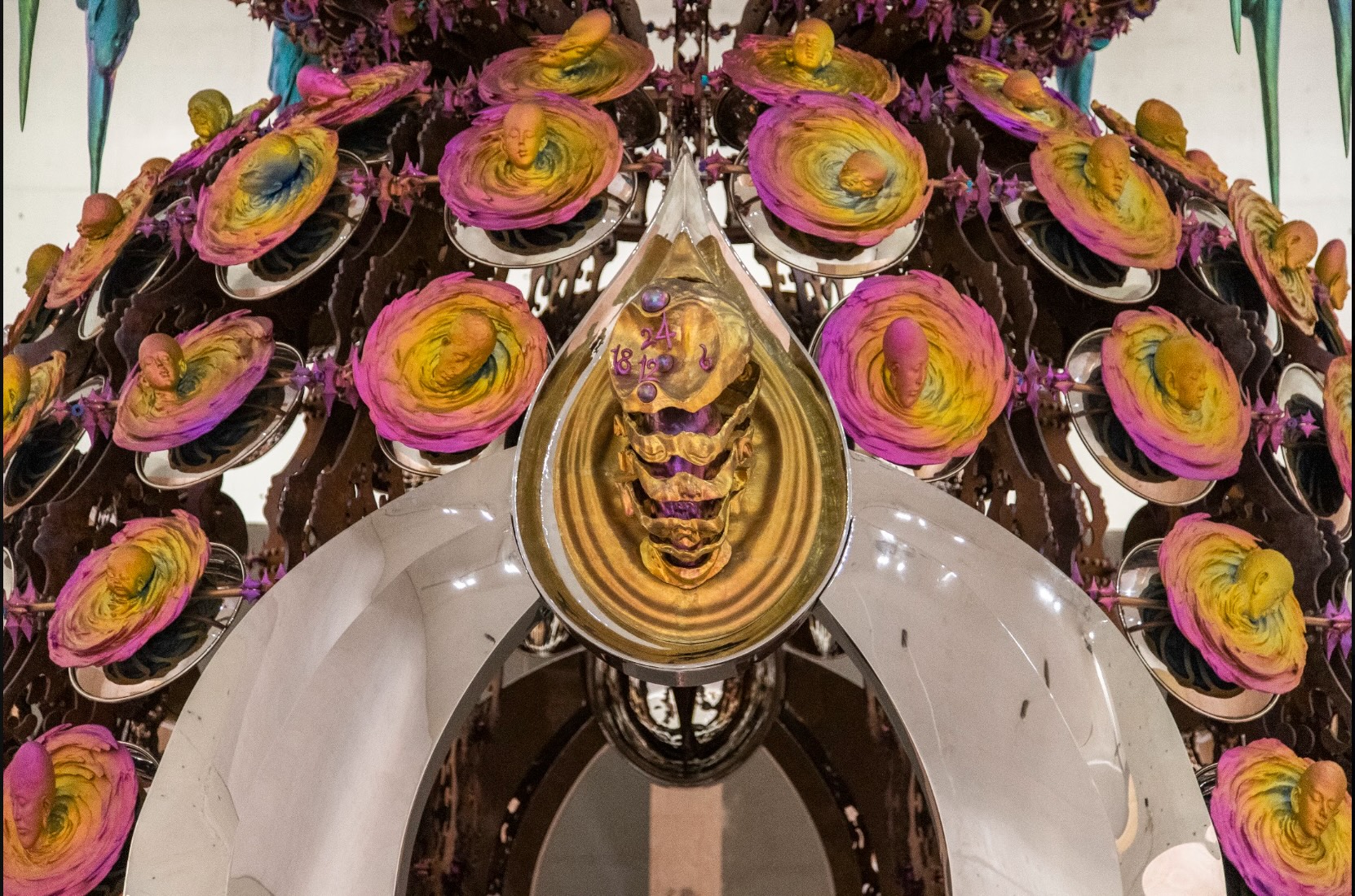
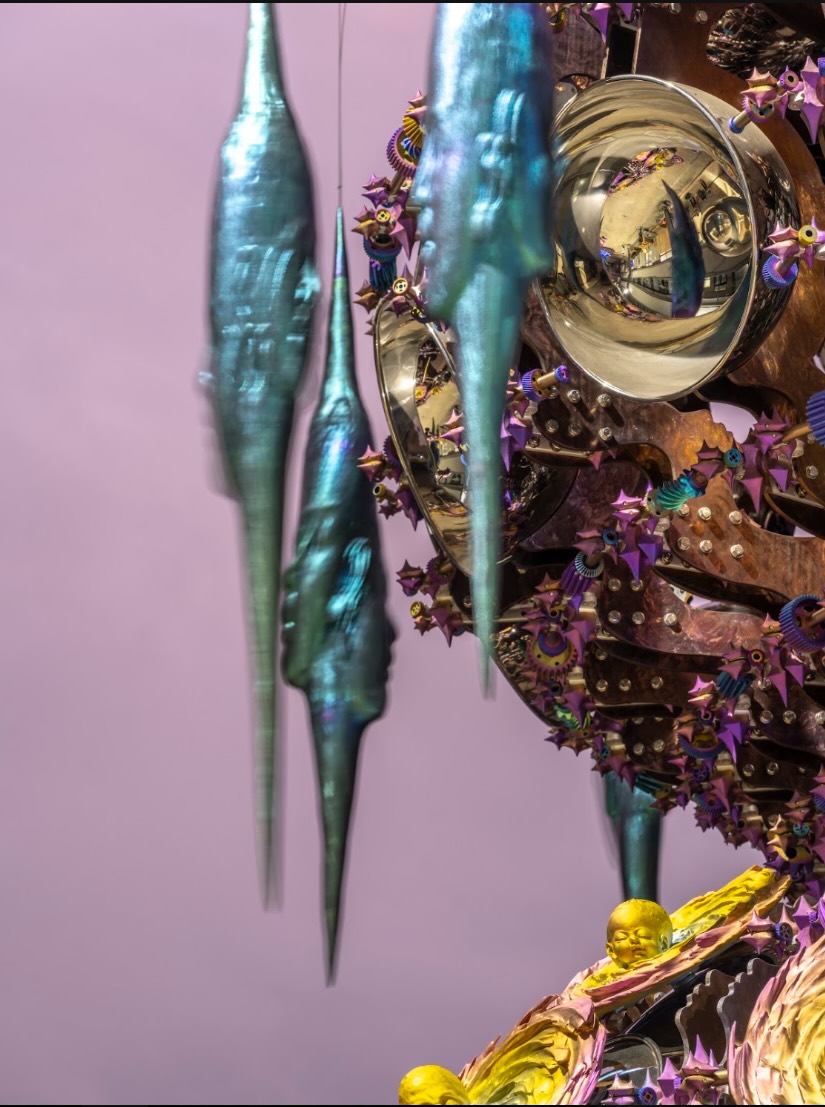
This is why the microscopic matters. It is where the monumental begins. Look again at the vessels in Shanghai and their apparent immensity becomes deceptive: their thousands of components contain the visual language Chan has developed through decades of close observation and making. The colossal does not erase the small. It carries it within itself.
The Mastery of Titanium
Curiosity has repeatedly taken Chan towards obsessive experiments with materials beyond the conventional boundaries of art. He reads about science, draws on Eastern and Western philosophies and religions, and allows ideas from outside his immediate discipline to shape his imagination. That curiosity eventually led him to titanium. He recalls, “I read about titanium in a newspaper article back in the early 2000s. It was about the pacemaker, a medical device for the heart. I was immediately intrigued.”
Titanium may sound an unlikely material for an artist whose practice had been rooted in delicate jewellery. Strong, light and notoriously difficult to manipulate, titanium does not behave like clay, wax or more familiar metals such as steel or iron that many artists invite into their works. For Chan, however, that challenge became precisely the attraction: could a material associated with strength be made to appear fluid?
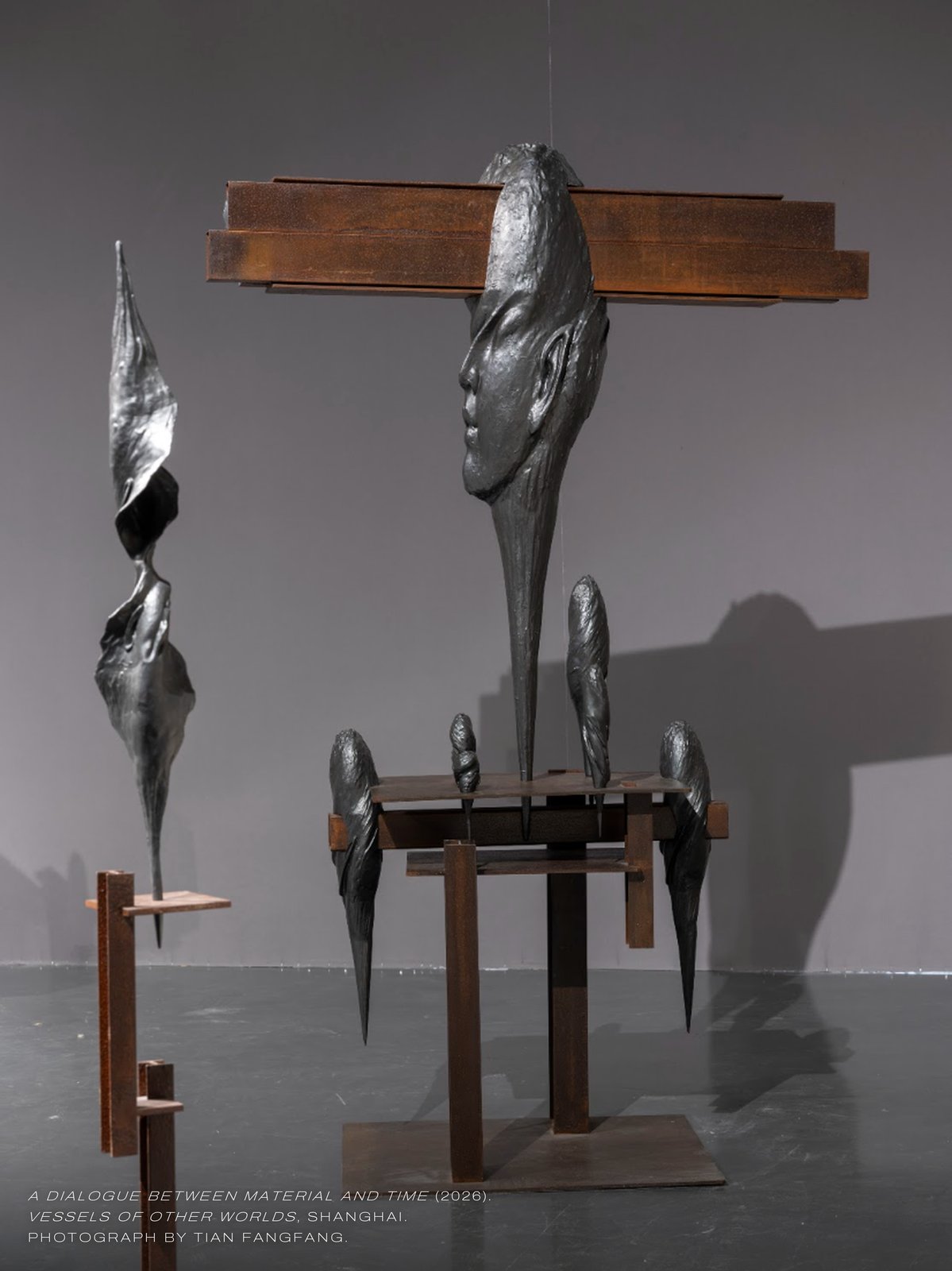
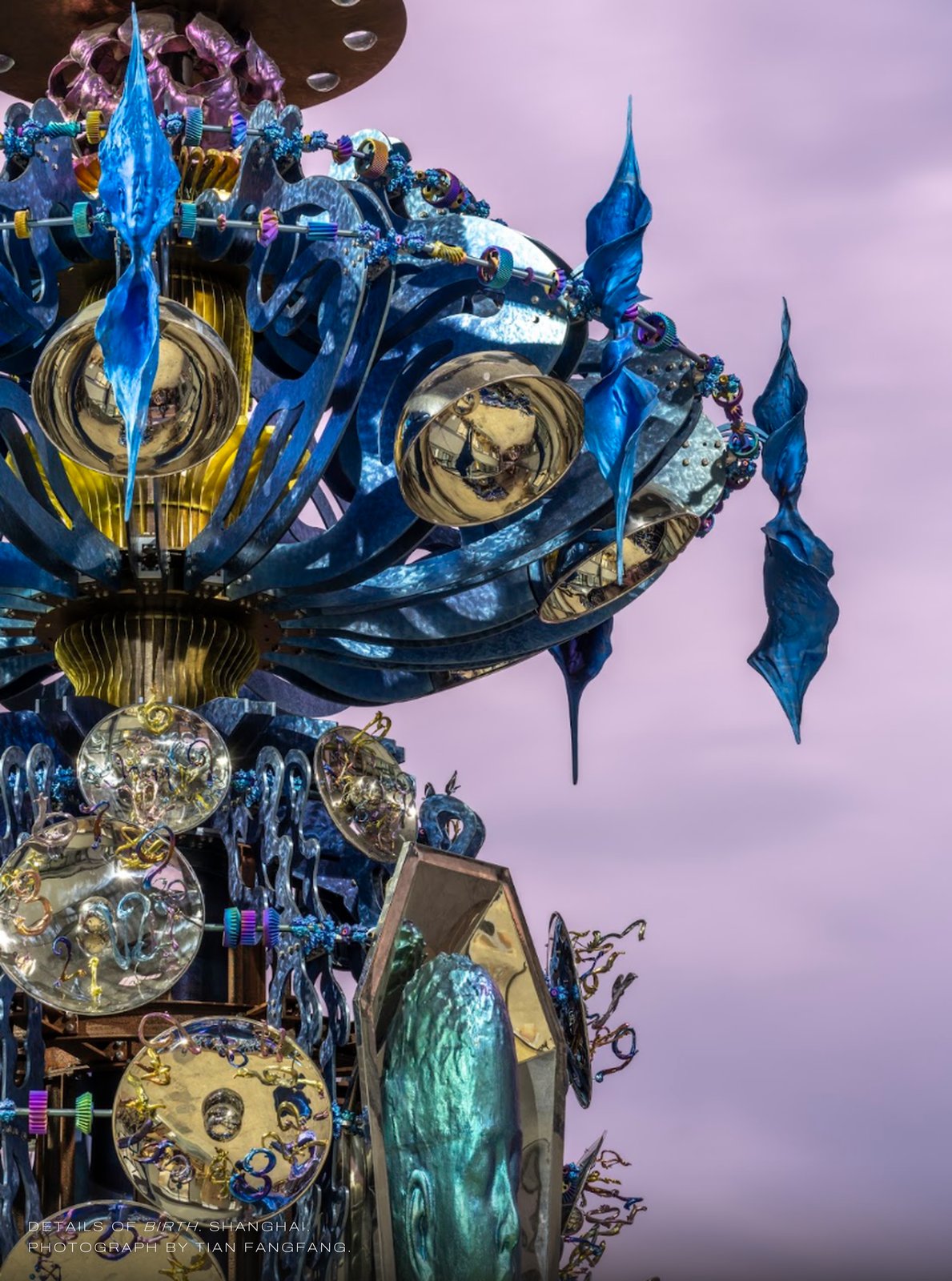
“Titanium is rigid. Even at its 1,700 degree Celsius melting point, it is reluctant to move. But with my sculptures, I strive to convey a sense of fluidity and rhythm with titanium, creating the illusion that shaping the metal is as easy as twisting a towel.” He says. The apparent ease of the finished sculpture conceals a long process of experimentation. Chan had to discover not only how titanium could be worked, but how far its properties could be pushed without losing the sense of movement he sought. “I shaped it into a dripping form in a solid state, in various scales and complexity, inviting viewers to experience the chemistry between opposing qualities of the material.”
Like Leonardo da Vinci, Chan refuses to confine his thinking to a single discipline. His practice moves between jewellery, sculpture, materials science and spirituality, bringing together different forms of knowledge that are rarely considered side by side. Perhaps this is where the value of thinking beyond disciplines lies: human progress has always depended on ideas crossing boundaries, with discoveries emerging where different ways of seeing meet. In Chan’s hands, art becomes one such meeting ground: a place where a question about a material can open into a question about life itself.
Building the Monumental
Chan’s sustained dialogue with titanium has assumed monumental form. Titanium jewellery expands into sculpture, and the intimate object begins to acquire an architectural imagination. He says at the opening in Shanghai, “Perhaps many people feel that what I want to do is too distant, even a little exaggerated. But today, standing here and seeing these works with your own eyes, you can see that by the standards of art, they are indeed quite extraordinary. Yet however extraordinary they may be, I have made them step by step.” He adds, “This is also the will of human beings. I really want to know just how much human hands, the human mind, human endurance and human creativity are capable of.”
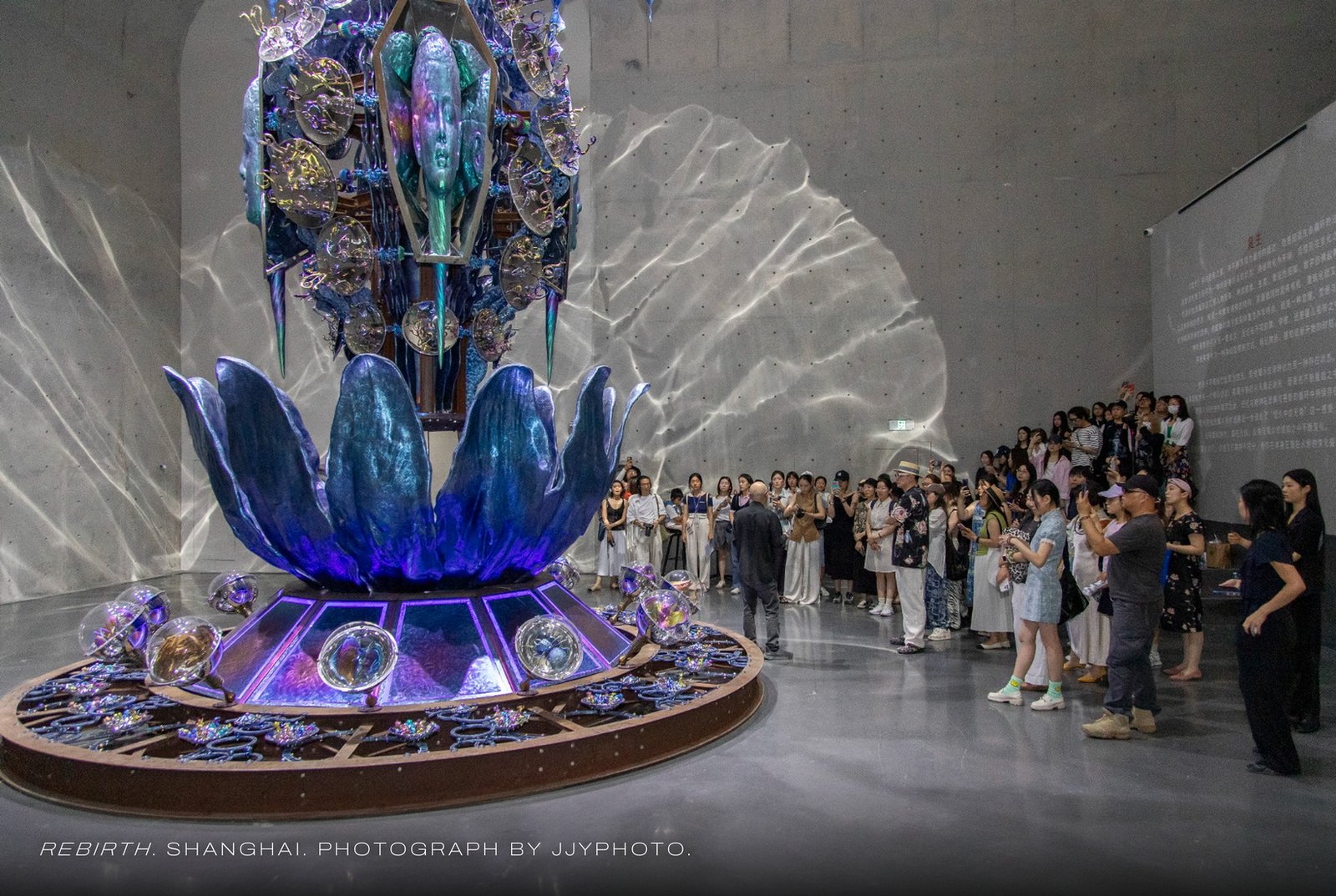
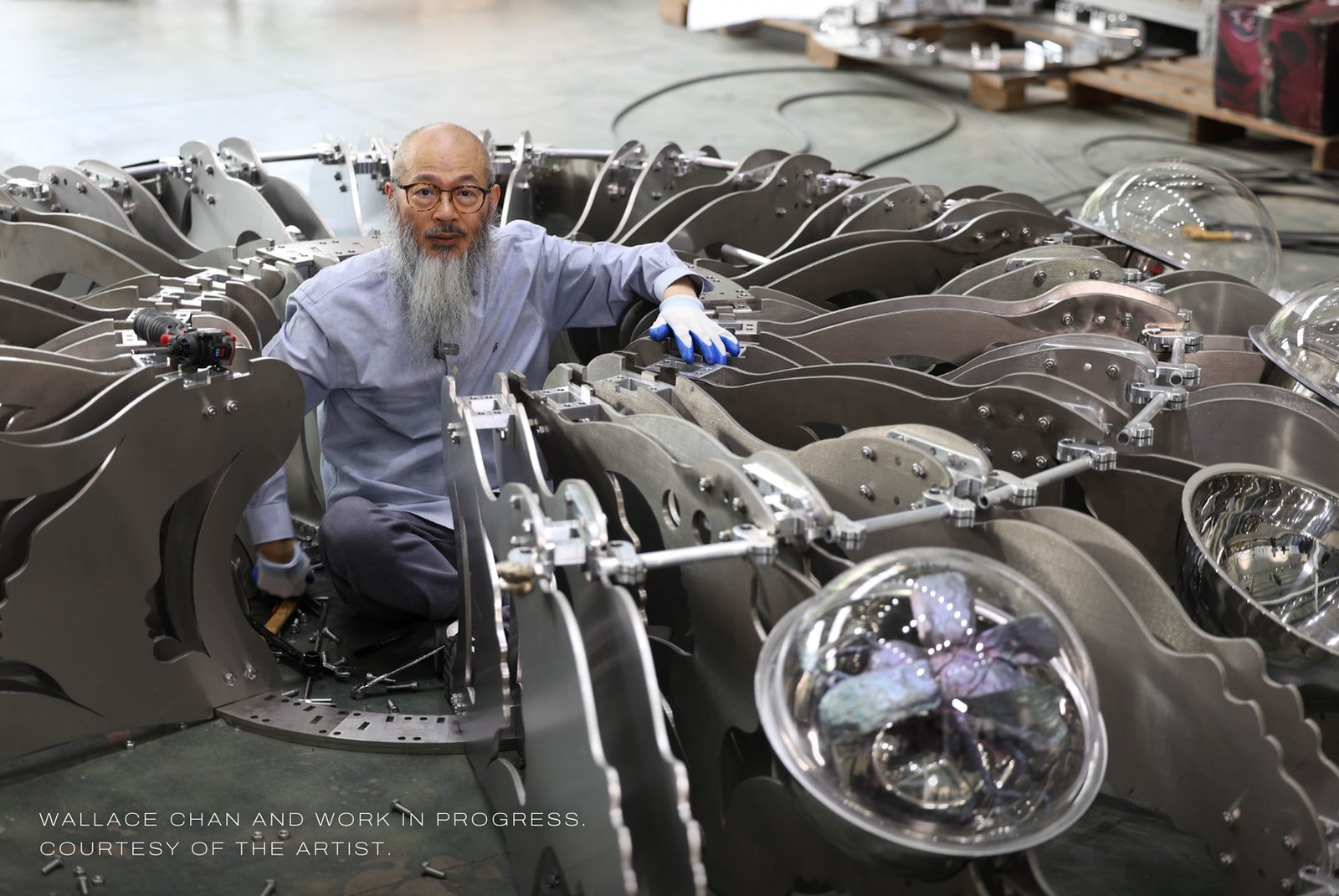
This determination is evident in the making of Rebirth. Initially conceived as nine metres high, the work evolved through a process of continual testing and reconfiguration. It ultimately reached ten metres — surpassing its original design. “I built the monumental from the microscopic. To me, this is how the universe takes form: vast presences arise from the unseen and the minute. Stars are born from particles; mountains and rivers gather from dust; life grows from cells. My works, too, are slowly built into something greater than myself.”
Perhaps this is also why Before Birth (2026), the artwork chosen for our cover of the inaugural issue, is such a powerful image. Before any of us became the person we are now, we too existed at a scale too small to suggest the life that might follow. A beginning gives little indication of its eventual magnitude. A monument, likewise, does not form without the memory of the microscopic from which it emerged.
The progression from gemstone to titanium, from jewellery to sculpture, therefore is a continuation of the same impulse. The carver has not disappeared inside the sculptor; he has simply found a larger surface upon which to continue carving. “The main difference between my jewellery and my sculptures are simply just the materials and scales. I work on each piece of work with the same level of thought and dedication.” He adds, “Whether on a grand scale or in minute details, my pursuit is always “infinity”. In life, there is an unending journey of discovery and exploration awaiting us at all scales.”
The Butterfly Effect
Chan’s artistic journey has never been shaped by materials alone. Nature, art history and mythology continually enter his work, just as his own creations have begun to leave their mark on the world around him.
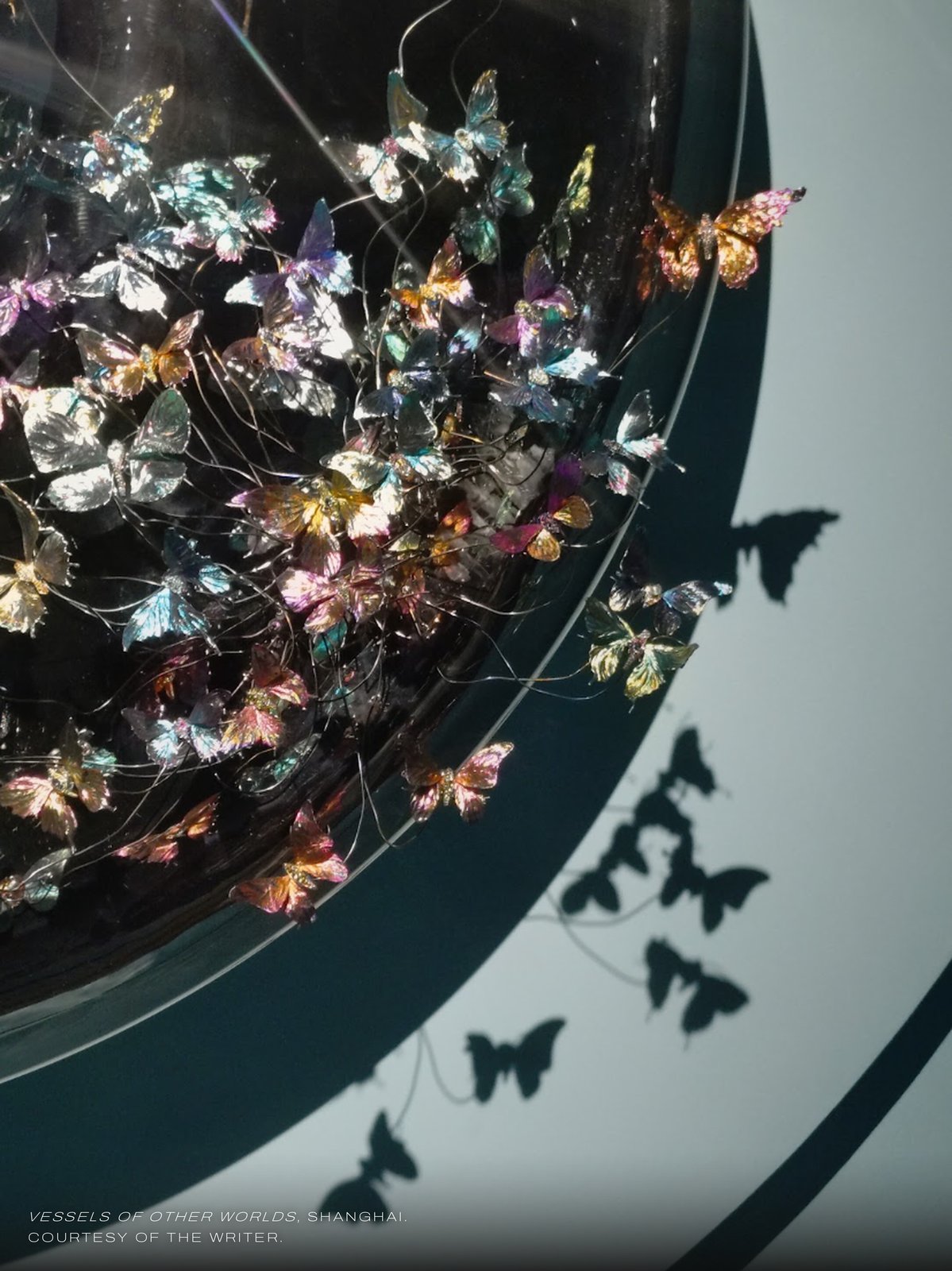
Over his career, Chan has created hundreds of butterflies. For him, the butterfly remains an inexhaustible source of fascination. He once heard a story of a butterfly flying from Wakayama to Hong Kong, a journey that resonates and stays with him. For him, some journeys, like his pilgrimage in art, are worth giving a lifetime to. The butterfly inevitably evokes Chinese philosopher Zhuangzi's famous dream, in which the boundary between the dreamer and the dreamed dissolves. For Chan, too, transformation is never simply a change of form; it reflects on identity, consciousness and the porous boundary between the individual and the world.
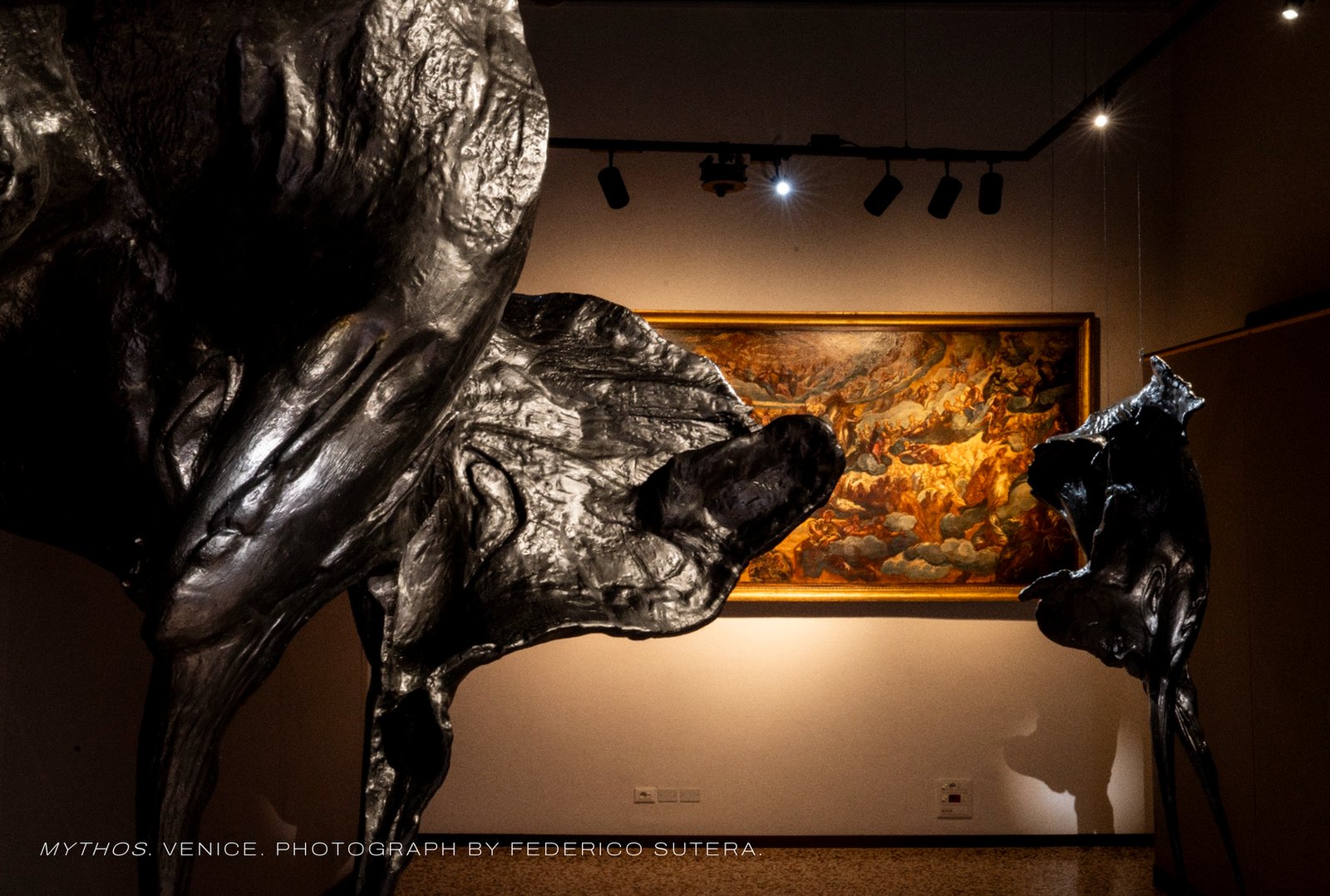
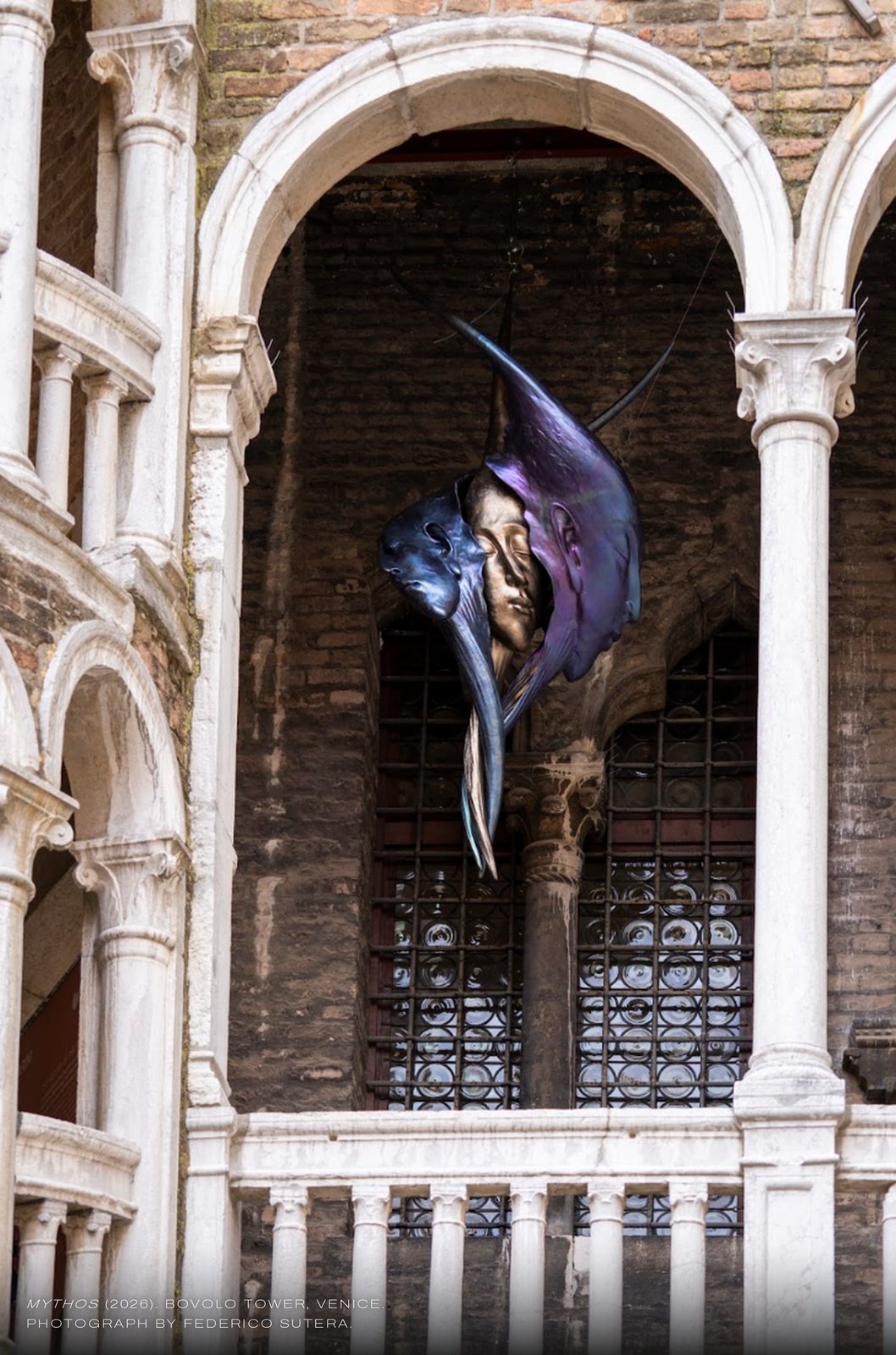
The encounters with old master paintings have also left their impact on his works. In conceptualising his Venice exhibition Mythos (2026), Chan referred to an image that first caught his imagination when he encountered Western art history as a young man in China: Jacopo Tintoretto's The Three Graces and Mercury. He transforms them into three abstract faces within a suspended titanium sculpture, appearing to chase one another in an endless movement. Here, the 16th century oil painting and a 21st century titanium sculpture are bridged by a shared meditation on beauty and transformation
Chan has drawn from the world around him as much as he has influenced those who encounter his work. Javier Ideami, who created a short film to accompany Chan’s sculpture exhibition during the 2022 Venice Biennale of Art, recalls their time working together, “Chan inspires me not only through his extraordinary creations, but also through his way of being: his patience, craftsmanship and pursuit of depth defy our culture of immediacy. Like the titanium he shapes, his meaning endures.”
Wang Wei, Director of the Long Museum, first came to know Chan through his jewellery. She describes how his sculptural practice eventually revealed the continuity between the two disciplines and the profound impact of his titanium sculptures, “Within these monumental works, he seamlessly integrates his pioneering gemstone carving technique, the Wallace Cut, dissolving the traditional boundaries between jewellery and sculpture.” She also speaks of the discipline of the artist she witnessed, “In preparation for Vessels of Other Worlds, Chan devoted extraordinary dedication and energy, while maintaining his characteristic humility and rigour.”
What flows into Chan's work also flows back into the world. His practice absorbs, transforms and returns: nature becomes form, history becomes invention, craftsmanship becomes sculpture, and curiosity becomes an invitation for others to look at the world differently.
The Pilgrimage Continues
Like the spirit behind his sculpture Rebirth, Chan’s pilgrimage keeps going: art as a practice means beginning again, looking again, making again. In his own words, “I believe there are cycles in everything.” He continues, “My experiences and memories in the past will always appear in my creative process and become part of my work. But once an artwork leaves the studio, it takes on a life of its own. It’s a constant process of giving all of yourself to your work, letting it all go at the end, and doing it all over again.” This is perhaps the deepest meaning of Chan's pilgrimage. The artist gives himself completely to the work, then sets it free. What remains is not possession but continuation: another work, another innovation, another encounter.
For all their scale, Chan’s sculptures ultimately ask for a very human response: to pause, to look, and to encounter something within ourselves. Beyond its height and weight, beyond the technical feat of titanium, its purpose is ultimately contemplative. “The art I consider most ideal is art that can help people become calm, help them see themselves anew, and begin a dialogue with themselves again. If my work can give everyone a little light, a little strength, then my wish is fulfilled.”
For all that he has achieved over half a century, Chan remains in motion. He keeps reinventing himself and his practice in cycles of curiosity and making, across time, space and possibilities. “Time does not wait. It only goes faster every day as we age. I live to create and create to live. To me, the creative process is no different from food and oxygen.” The young carver has become a maker of monuments, but the pilgrimage remains the same: to look closely, to keep making, and to discover how much more the human hand, mind, heart and spirit might create.