Exhibition Digest 2026-2027
The season when the leaves start to turn always marks a new wave of art exhibitions around the world, offering plenty of reasons to visit museums, galleries and other art venues. This period will bring together a variety of themes in the fields of art and culture, ranging from cultural memory and history to fashion, design and pressing social issues.
Six cities, exhibitions to suit every taste, and plenty of reasons to visit each one, broadening your perspective on contemporary art within the coming months.
London
London’s cultural diversity is complemented by an equally vibrant arts scene. This autumn, the city’s galleries and museums are offering a rich array of perspectives, from established masters to emerging talents.
Tate Modern — Ana Mendieta Exhibition
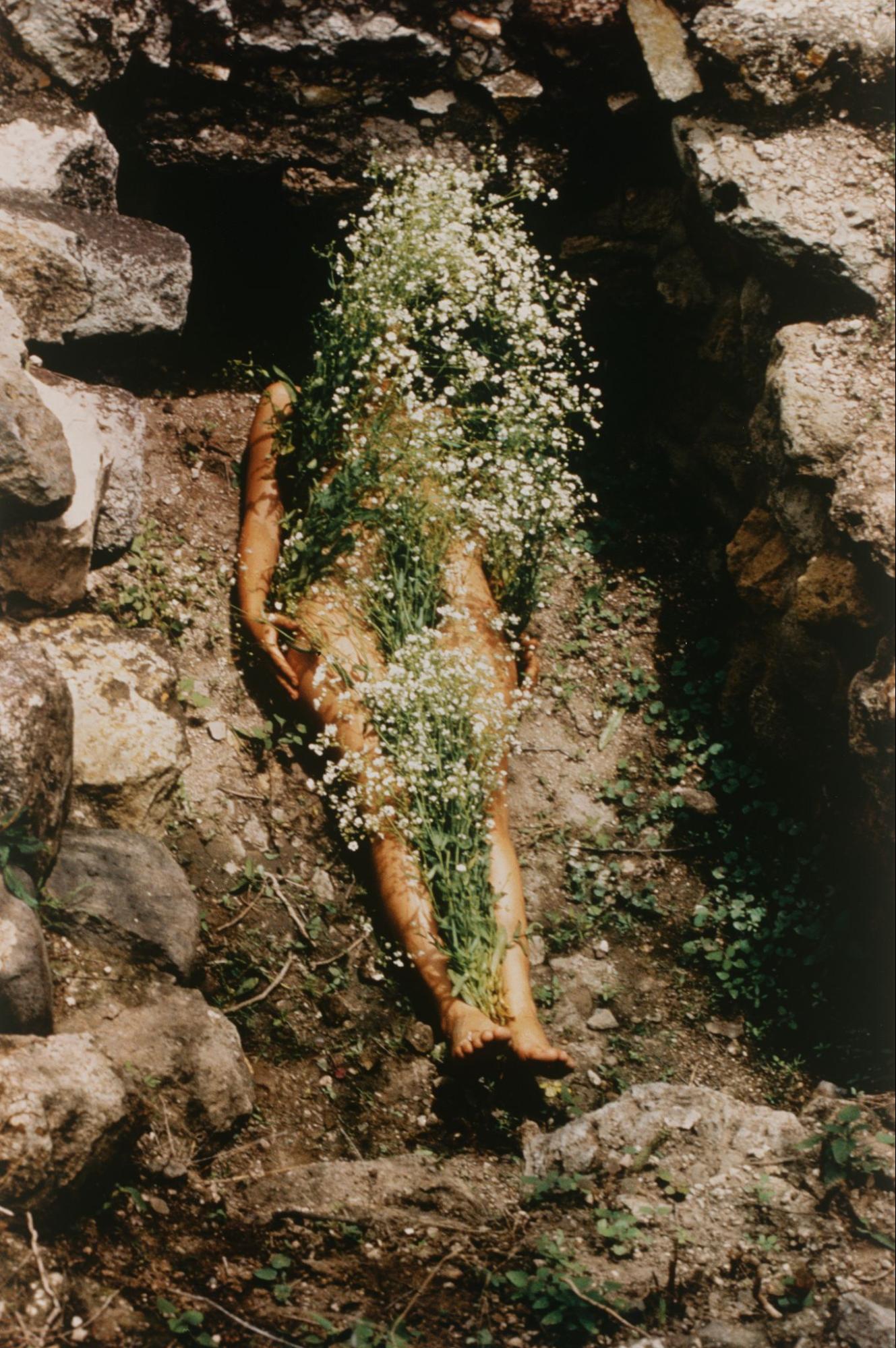
Organised by Tate Modern in collaboration with the Estate of Ana Mendieta, the first in-depth UK exhibition dedicated to the artist in over ten years presents her works where nature becomes both canvas and collaborator, until 17th January 2027. This major exhibition brings together more than 120 works, including photography, film, sculpture, painting and performance, and offers an opportunity to acknowledge Mendieta’s remarkable artistic practice.
Being a Cuban-born American artist, Mendieta explores the relationship between the human body, identity and earth, mostly known for her Silueta Series, making the natural world a part of her artistic language with the use of natural materials like fire, water and flowers. In her works, Ana Mendieta raised profound questions around identity and displacement, presence and absence, which remain essential at all times. Many of her iconic ephemeral works were never shown in the UK before. The exhibition shines a light on Mendieta’s trailblazing practice, reinforcing her as one of the most outstanding artists of the 20th century.
The V&A Museum — Rising Voices: Asia Pacific Art Exhibition
The V&A Museum features an exhibition that brings together more than 40 artists from across Asia, Australia and the Pacific, offering a vivid portrait of a region shaped by diverse histories, beliefs and cultural traditions.
Organised in collaboration with the Queensland Art Gallery and Gallery of Modern Art (QAGOMA) and running until 10th January 2027, the exhibition draws on more than thirty years of experience staging the Asia-Pacific Triennial of Contemporary Art. More than 70 works, spanning art forms such as sculpture, photography, painting, ceramics, weaving and body adornment, bring together both established artists and emerging talents. The exhibition places particular emphasis on the perspectives of First Nations people and on how cultural knowledge is preserved, developed and passed down from generation to generation. Rather than presenting the Asia-Pacific region as a single cultural entity, the exhibition reveals its diversity through a multitude of individual stories and the artistic languages through which they are told. For anyone interested in art as a point of convergence between tradition and contemporary life, this exhibition is an essential part of any cultural route during a stay in London.
Kew Gardens — Henry Moore: Monumental Nature.
At Kew Gardens, amongst the centuries-old trees, botanical collections and historic landscapes, a variety of monumental sculptures by Henry Moore add to the beauty of the grounds. Monumental Nature presents 30 sculptures situated throughout the gardens, blending art and nature in a unique way and blurring the boundaries between the sculptures and the living environment around them.
The exhibition, spanning nearly seventy years of the artist’s career, includes some of Moore’s most famous works. Alongside the sculptures, the Shirley Sherwood Gallery is exhibiting over 90 smaller works, including drawings and models that are rarely on public display, offering a closer insight into the artist’s creative process and philosophy. The arrangement of the works allows Moore’s sculptures and the natural surroundings to become part of a single visual language: the trees echo his organic forms, whilst the changing landscapes help visitors to perceive each sculpture in a different light. The result is not so much a traditional gallery exhibition as a journey through art, landscape and the eternal connection between the human form and the natural world.
The National Gallery — Van Eyck: The Portraits
Opening on 21st November 2026 and running until 11th April 2027, the National Gallery’s exhibition brings back to life, after 600 years, the faces painted by Jan van Eyck. The Portraits offers a rare chance to encounter all nine of the artist’s surviving works from across Europe, presenting his captured subjects in all their intimate details in a single exhibition.
Known for his unique attention to detail, van Eyck transformed portraiture in the 15th century, capturing everything from the fabric and skin texture to the smallest character’s expressions. The exhibition allows us to meet those the artist spent his days with: successful craftsmen, merchants and the artist’s relatives. Among the highlights is the Arnolfini Portrait, shown for the first time alongside another portrait, Portrait of a Man, depicting the same sitter. This is not only the story of talent; this is the story of people, where portraiture is moving beyond the aristocratic elite.The exhibition invites us to consider how the faces captured centuries ago can still remain remarkably present.
Berlin
Berlin’s museums and galleries open their doors for this season to continue the conversation of infinite history and reinvention, bringing together contemporary voices, rediscovered stories and perspectives from across the world.
Gemäldegalerie — Portraits! Surprising Encounters from Botticelli to Lempicka
Berlin’s Gemäldegalerie continues to breathe new life into old portraits, revealing them beyond the faces they depict. From October 2026, the Portraits! exhibition brings together around 80 masterpieces spanning five centuries, combining unexpected encounters between artists who never shared the same era, from Botticelli to Lempicka.
The exhibition invites visitors to view the portraits not in the traditional chronological order, with each one displayed individually, but instead groups them into striking pairs and clusters, encouraging the audience to reflect on how character, beauty and status have been depicted over the centuries. A Renaissance portrait may suddenly find its counterpart in a 20th-century work, revealing surprising similarities hidden beneath stylistic differences.
Portraits! goes beyond the art-historical exhibition. It holds a psychological mirror to our current world, our images and the perceptions we build of our surroundings. The exhibition raises questions that seem particularly relevant in an age of media and constant self-presentation: how do we choose how we are seen, and what does an image reveal about the person behind it?
By placing familiar masterpieces in unfamiliar settings, the exhibition transforms the act of contemplation into a dialogue across time, in which the past seems unexpectedly close to our image-driven present.
Neue Nationalgalerie — Extreme Tension. Art between Politics and Society
Berlin’s remarkable history provides the perfect setting for an exhibition exploring the interplay between art and society. Through its exhibition Extreme Tension, the Neue Nationalgalerie offers an in-depth exploration of post-war art, bringing together works from East and West Germany, Western Europe, the USA and the former socialist countries.
The clue is in the name: taking Günter Brus’s radical performance Zerreißprobe (Stress-Test) as its starting point, the exhibition traces the tensions that shaped both society and artistic practice after 1945, from the Cold War and the division of Germany to emancipation, feminism and the fall of the Berlin Wall.
Fourteen thematic sections bring together different styles: realism meets abstraction, and pop art meets minimalism. Together, they weave a common thread of questions concerning identity, politics, public life and ecology throughout the exhibition.
Among those featured are diverse artists such as Francis Bacon, Joseph Beuys, Marina Abramović, Bridget Riley, Rebecca Horn, Valie Export and many others, whose works demonstrate how art can simultaneously be a response to its historical moment and a space for its reflection and interpretation.
The Alte Nationalgalerie — About Times.Gursky, Lucas, Miró, Warhol and the Art of the Long 19th Century
What happens when works of art from different centuries are placed within a single space without any strict chronological order? With the exhibition About Times, the Alte Nationalgalerie offers visitors the opportunity to encounter this experience, bringing together works from the 19th, 20th and 21st centuries. Artists such as Andreas Gursky, Georg Baselitz, Paula Rego, Joan Miró and Andy Warhol will be featured, alongside pieces from the museum’s 19th-century art collection.
Rather than presenting art history in a linear sequence, the exhibition invites visitors to immerse themselves in an associative viewing experience, allowing them to discover thematic and visual connections between works from different periods.
This project is particularly fitting for the Alte Nationalgalerie, which originally opened in 1876 as a venue for contemporary art and is now part of Berlin’s National Gallery. By re-establishing a dialogue between contemporary works and the art of the ‘long 19th century’, the exhibition About Times temporarily blurs the boundaries between past and present and makes it clear that artistic ideas rarely belong to just one era.
Copenhagen
Next on the list for cultural getaways is Copenhagen. Despite its understated charm, the city’s artistic scene is anything but subdued. From historic collections to experimental contemporary spaces, Copenhagen offers a unique Scandinavian perspective on art, where tradition, nature and innovation intertwine.
ARKEN Museum of Modern Art — Thomas Dambo: The Garbage Man
At the ARKEN Museum of Modern Art, visitors can see how even a discarded object can be transformed into a work of art. Danish artist Thomas Dambo skillfully transforms discarded materials into playful, monumental sculptures, turning waste into objects that cannot be ignored, provoking not only curiosity but also reflection in visitors. Known for his large-scale works made from recycled materials, Dambo has been exploring the relationship between art, sustainability and public space for several years, a theme that is particularly relevant at a time when discussions about environmental issues are intensifying across the world. The Garbage Man project brings this practice into the museum, where the familiar language of waste recycling unexpectedly takes on a sculptural character. In contrast to the usual approach to addressing environmental issues, the exhibition examines them through the prism of humour and a sense of play, allowing visitors to reimagine the value of discarded objects through their imagination. Moreover, ARKEN’s distinctive architecture and layout emphasise the blurring of boundaries between art and the environment. Here, Dambo’s creations transcend the confines of exhibits, reminding us that creativity can be found even in something considered waste.
Cisternerne — Seven Deaths Installation by Marina Abramović
This year Marina Abramović takes over Copenhagen’s most unusual and fascinating exhibition space: Cisternerne, a former underground water reservoir where darkness and echoes are part of her monumental cinematic opera installation Seven Deaths that runs until 30th November 2026. The atmospheric setting brings one of the contemporary art’s most iconic figures into a space that feels almost otherworldly. The exhibition is based on Abramovic’s film Seven Deaths, in which the artist experience seven cinematic deaths inspired by operatic heroines. Shown alongside works spanning her career, the installation explores the themes of morality, love, performance and the line between art and life.
In Cisternerne it encounter the audiences with visceral experience: due to the absence of natural light, unique architecture and the acoustics, it becomes an immersive experience rather than a regular encounter with artworks. Abramović’s exploration of the limits of the body meets a place shaped by water, time and breakdown, creating an exhibition not only to observe but to experience.
Copenhagen Contemporary — Kengo Kuma ‘Earth|Tree’ & Camilla Enro ‘Paper Planes’ Installations
At Copenhagen Contemporary, architecture and contemporary art intersect through two entirely
different approaches to the space, material and perception. Japanese architect Kengo Kuma transforms the exhibition hall into the installation Earth | Tree. An immersive composition
inspired by the sensation of sheltering beneath a tree. Meanwhile, Camilla Enro, in her work
Paper Planes, explores everyday life through a playful combination of film, sculpture and
installation.
Kuma’s Earth | Tree project focuses particularly on sensory perception: wood, brick, light, air
and shadow become materials in their own right, reflecting his philosophy of ‘soft architecture’
and creating an environment that can be experienced with the whole body. The installation also
brings together Japanese and Scandinavian perceptions of nature, making this work particularly
relevant to Copenhagen. Enro, for her part, brings a more restless and playful energy, using
familiar objects and situations to explore the complexities of modern life. Together, these two
exhibitions make Copenhagen Contemporary a place where art challanges how our surroundings shape the way we see and feel.
Paper Planes is on until end of December 2026, Earth | Tree until 21st February
New York
New York’s art scene this season is just as vibrant as the city itself. Visitors can also look forward to exhibitions featuring both icons of contemporary art and artists who are making their presence felt once again.
New Museum — Arrivederci, Piggies! by Diego Marcon
One of the main upcoming exhibitions, starting from 25th September 2026, is Diego Marcon’s first solo museum exhibition in New York City, Arrivederci, Piggies!, which will be held at the New Museum and will bring together three of the artist’s recent films alongside the newly commissioned work Krapfen (2025), combining choreography, computer graphics and sound.
Marcon’s meticulously crafted films explore the familiar worlds of childhood, cinema and fairy tales by borrowing elements from horror films, slapstick comedy, melodramas and cartoons, whilst subverting familiar genre clichés and transforming them into an unconventional narrative. Behind the playful imagery lie questions about memory, desire, vulnerability and the ambiguous boundary between innocence and fear.
Thanks to the moving images, sound and architecture, the films can be experienced not as separate stories, but as a single immersive installation. The work Krapfen adds yet another layer to Marcon’s cinematic universe, following a child whose family is symbolised by items of clothing floating in the air. The installation is both touching and unsettling, emphasising a dream-like space where childhood memories, inner fears and familiar genres intersect.
MoMA — The Surrealist Book: Tomorrow Lives in Mirrors
Surrealism always leaves room for reflection and interpretation, and a book placed within a surrealist context cannot simply be an object. The Surrealist Book: Tomorrow Lives in Mirrors at MoMA explores how a group of artists and writers transformed the traditional book into an experimental art form. The exhibition features rare editions created by some of the most inventive figures of Surrealism, including André Breton, Claude Cahun, Salvador Dalí, Paul Éluard, Max Ernst and Toyen.
The works on display blur the boundaries between literature and the visual arts: pages become a canvas for drawings and collages, texts sit alongside unexpected images, and the very physical structure of the book becomes part of the artwork.
From books that utilise unusual materials to collaborative poetic projects that challenge traditional notions of authorship, the exhibition reveals the printed page as a space for artistic rebellion. In the hands of the Surrealists, the book became a magical object, revealing an idea that seems remarkably relevant in the age of digital imagery. The Surrealist Book exhibition invites us to take a fresh look at traditional book pages, discovering the radical possibilities hidden within them.
Solomon R. Guggenheim Museum — Group Exhibition: Guggenheim Pop: 1960 to Now
In June 2026, New York’s Solomon R. Guggenheim Museum brought in the exhibition Guggenheim Pop: 1960 to Now, featuring the Pop Art movement throughout the decades, tracing its history from its 1960s origins to contemporary works exploring identity, mass media and consumer culture and reinterpreting visual language nowadays.
The exhibition showcases a collection of works by 29 artists, including major works by John Chamberlain, Chryssa, Richard Hamilton, Yayoi Kusama, Roy Lichtenstein and Andy Warhol, as well as more contemporary works by such artists as Mohamed Ahmed Ibrahim, Farah Al Qasimi, Maurizio Cattelan, Alex Da Corte and others.
Together, they show how Pop Art transformed everyday images into subjects worth being presented in a museum. The exhibition also revisits the Guggenheim’s own role in the history of the art movement: in 1963, the British curator and critic Lawrence Alloway introduced Pop Art to an American audience through the museum’s exhibition Sixteen Artists and the Object. From Warhol to artists who have recently emerged on the art scene, responding to internet culture and rising questions of identity, Guggenheim Pop: 1960 to Now demonstrates how Pop continues to turn the familiar into the strange and present everyday images as spectacular.
Amsterdam
To finish the cultural journey, we arrive in Amsterdam, where art seems to follow you beyond museums. There is something effortlessly artistic about this city that has inspired generations of artists. This season offers plenty of reasons to make the city worth a stop for a little longer.
H’ART Museum — Chez Matisse
Henri Matisse is one of the few artists who radically changed the understanding of the possibilities of colour and form. From October 2026 to 14th February 2027, Chez Matisse at the H’ART Museum showcases works by the French master and the artists who surrounded him, challenging his talent and developing his ideas across generations. Organised in collaboration with the Parisian Centre Pompidou, this exhibition brings together more than 30 paintings, sculptures and engravings by Matisse, covering his entire creative path, from early pieces to the iconic collages of his final years.
Complementing the works of the headliner are pieces by contemporaries such as Georges Braque, Pablo Picasso, Sonia Delaunay and Le Corbusier, as well as later artists such as Barnett Newman, Ellsworth Kelly and Mark Rothko. Chez Matisse not only presents Matisse’s work separately but also allows us to trace the influence of artists who sought simplicity, freedom and new forms of expression. Among the exhibits is a work from the Centre Pompidou’s collection, La Blouse Roumaine (1940), which is rarely displayed. As a result, we see not only Matisse as the artist, but also the artistic world in which he existed and created, and which he helped to change.
Van Gogh Museum — Whistler: Dandy and Disruptor
James McNeill Whistler, an American-born artist, had a talent for transforming both art and himself into something significant.
The Whistler: Dandy and Disruptor exhibition at the Van Gogh Museum tells the story of his provocative role in European art of the late 19th century and his influence on the emergence of modernism.
A large-scale exhibition of Whistler’s works has already taken place in London and has now moved to Amsterdam. The Van Gogh Museum focuses primarily on Whistler’s innovative approach to portrait painting, as well as on conveying mood and atmosphere. The artist sought not so much to reproduce reality as to create a special visual and emotional experience for the viewer.
Despite their deceptive restraint, Whistler’s paintings are filled with a muted palette, unusual compositions and enigmatic figures that defy the standards of the Victorian era. The artist’s interest in fashion, urban life and creative independence made his public image a defining factor in his work. He cultivated the image of a refined dandy, deliberately violating the generally accepted ideas about what art should look like and how an artist should behave. If we consider the exhibition in the context of the Amsterdam art scene as a whole, we can say that Whistler emerges as a remarkably modern figure who understood that style in itself could become a form of artistic protest.