FEAR (OF) AND INTIMACY: Between the urge and the fear of losing it
Can the urge for intimacy be separated from the fear of losing it, especially when under the influence of a disrupted sense of belonging? That question inspired Fear (of) and Intimacy, a group exhibition, curated by Anastasia Shulman at the Candid Arts Trust in London from 3 to 5 October 2026.
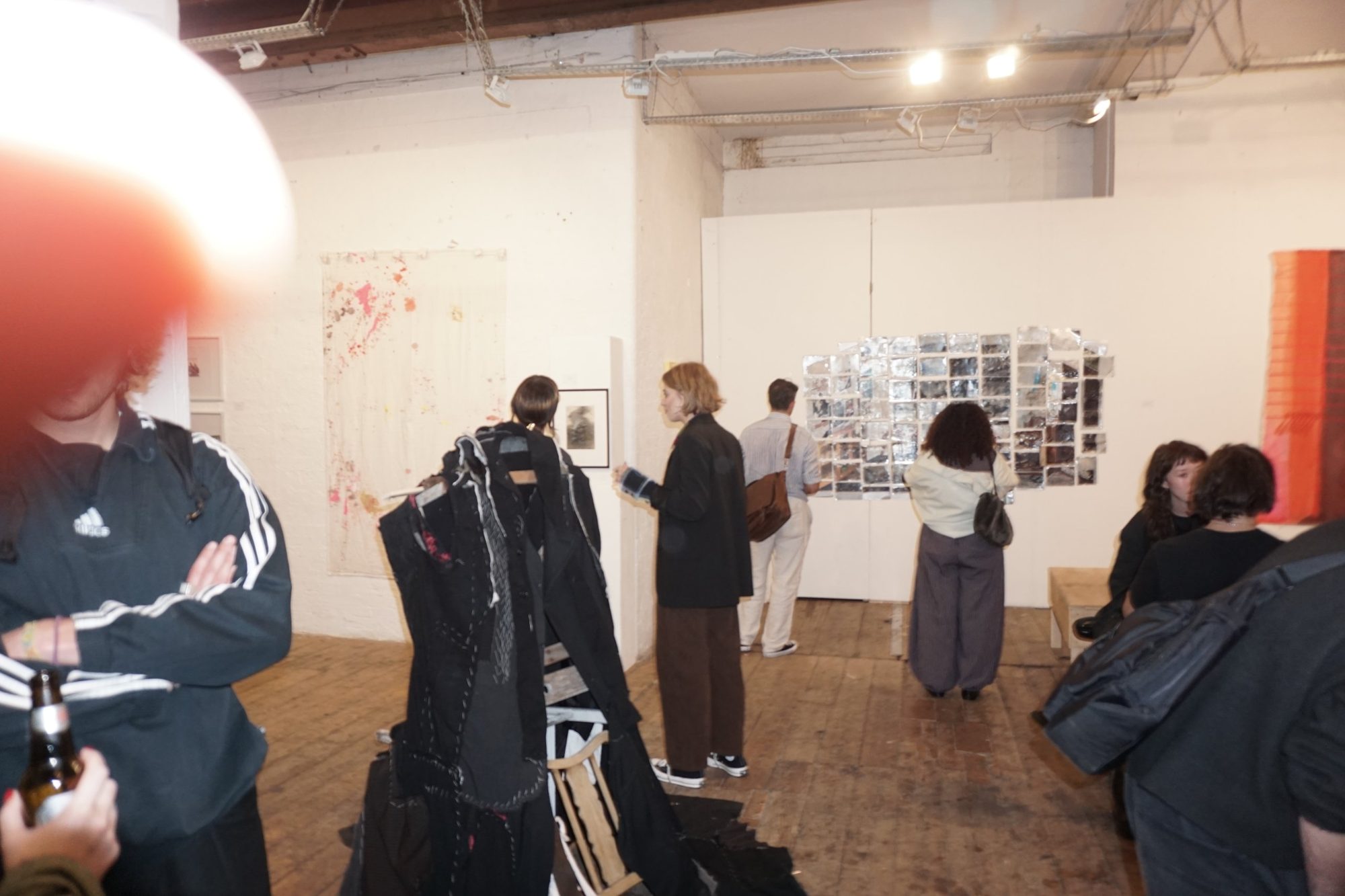
Twenty-five artists were found through an open call circulated in immigrant community groups and chats in several languages. Their work deals with the emotional struggles of finding new social circles post immigration: the hope of building a ‘chosen family’ who will become part of our lives beyond what used to be ‘home’, and the fear that it might not last. Fear and Intimacy addresses immigration not simply as socio-geographic displacement but rather highlights its emotional and personal aspect.
The exhibition's title mirrors its wider logic. Word-play sets the philosophic direction of the theme: the crossed out ‘of’ in the original title transforms the familiar phrase into two distinct sensations that seem unlike at first but prove closely linked. They are not opposites but interconnected states. This recalls Jacques Derrida’s philosophical and textual device, sous rature (‘under erasure’), in which the crossed-out word is deemed insufficient in meaning but remains legible. In the same way, fear is embedded in closeness, remaining an integral part of it. “They are not simply opposites; they turn out to be bound up with each other,” confirms Anastasia. “The stronger the need for contact, the more exposed that contact leaves you”.
The curatorial approach treats immigration as a shared but deeply personal experience. “Immigration is not one experience”, says Anastasia. “So much depends on how you came, where you came from, your legal status, your language and whether you are able to feel safe”. Each work is therefore unique, and the way they interact in the space allows visitors to read the show as a conversation between experiences.
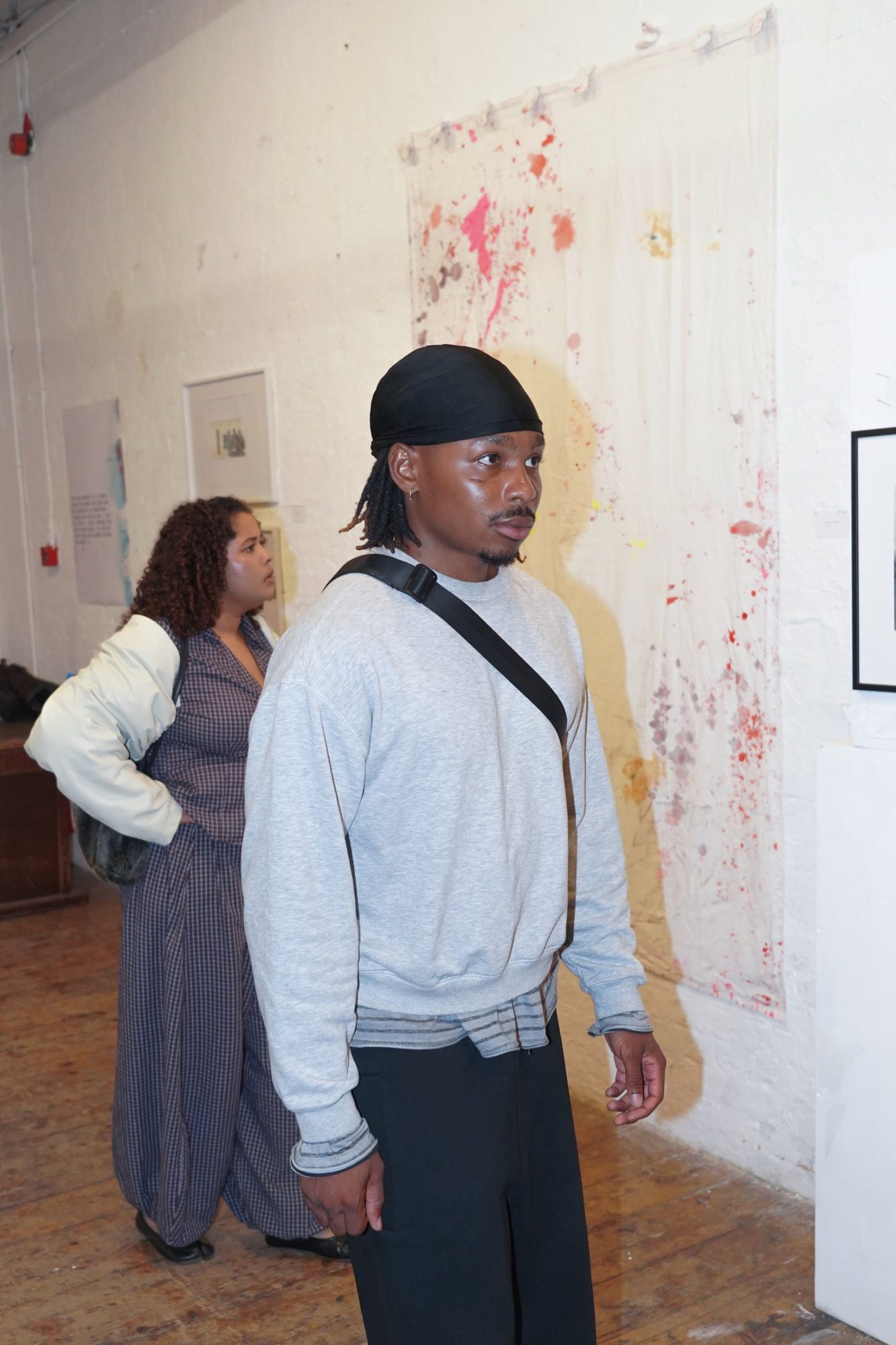
Exhibitors include Julia Borysenko, Elina Igelska, Katya Shikhova, and Daniel Khatz, alongside Anastasia Shulman herself with two large pieces, Recto and Verso. The title points to duality: ‘front’ and ‘back’, embodying the two-sided nature of experience: that which a person is able to express openly, and that which remains hidden. Both works are mixed media on fabric, mounted on the wall without traditional stretcher frames. They resemble enlarged sheets of a school notebook full of unfinished drafts: fine lines, as if smudges with a finger, patches of colours, splashes of paint, and fragments of disjointed writing.
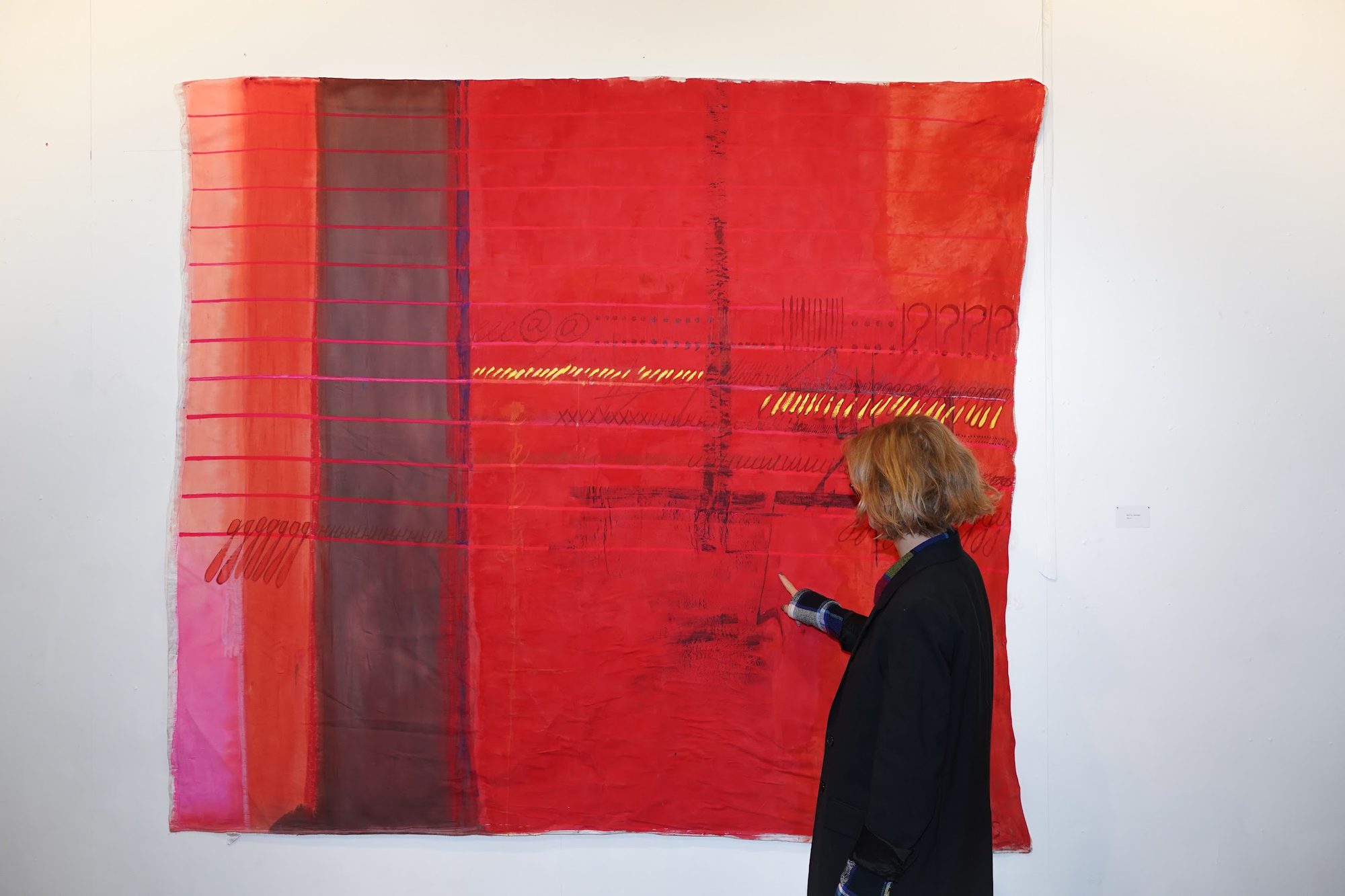
They recall Rauschenberg’s Bed, a quilt and pillow hung on the wall and splashed with paint,** and echo Cy Twombly’s Blackboard paintings with their looping, chalk-like scrawl, as well as the practice of Mira Schendel. Each deals with the notion of private objects being brought into public view, finding continuation in the dialogue with the audience. The works scale supports the overall curatorial approach representing vulnerability at full site, not from a distance.
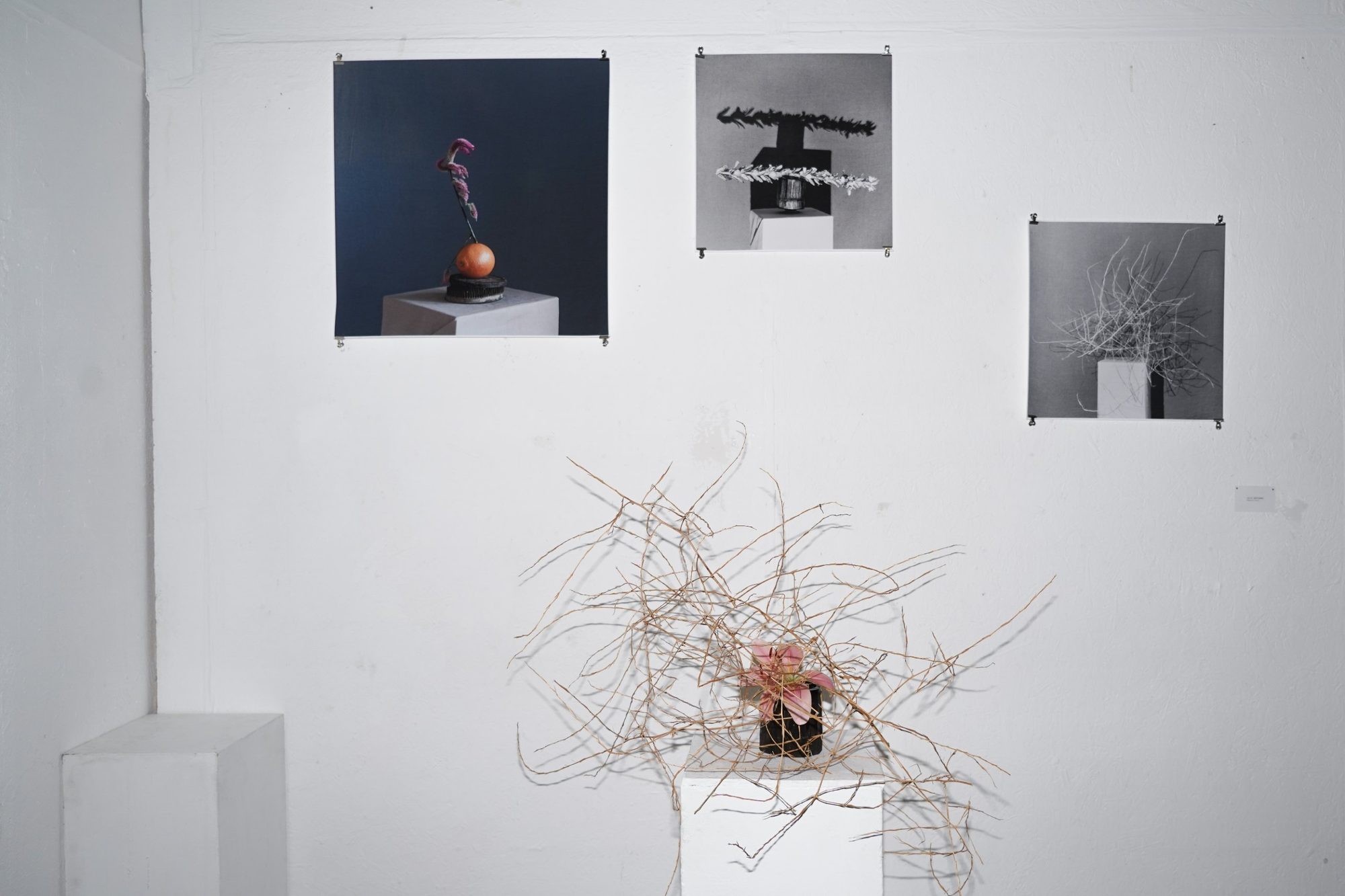
Another standout is Julia Borysenko’s Beneath the Fear, done in Japanese non-traditional ikebana style. A delicate pink lily, geometrically precise, is surrounded by interlaced dry branches emerging from a black cube. Again, the motif of duality is present: in the contrast of colours (pink and black), and the branches which simultaneously resemble a protective barrier and a cage. The flower, like a fragile, vulnerable soul, finds itself isolated from the outside world; yet the very structure that protects it deprives it of the ability to exist freely beyond its own space. The installation becomes a metaphor for the emotional barrier that inevitably arises in unfamiliar surroundings in an attempt to hide from discomfort. Echoing artists such as Louise Bourgeois or Mona Hatoum, who also explored the creative representation of barriers, the boundary between protection and isolation becomes almost invisible here.
The displayed artworks are distinguished by the distinctiveness in their artistic presentation of the theme. Despite the diversity of approaches, they are united by the traces left behind after lived experience. The exhibition transforms what might seem to be purely personal emotions into tangible artistic forms: paintings, installations, photographs that invite us to reflect on our own experiences of belonging, separation and vulnerability. At the same time, the works do not impose clear explanations. On the contrary, they offer viewers space for their own interpretation. The modest exhibition space enhances this reverent sense of intimacy, allowing visitors to perceive the works closer and turn them into fragments of broader conversation.
List of images :
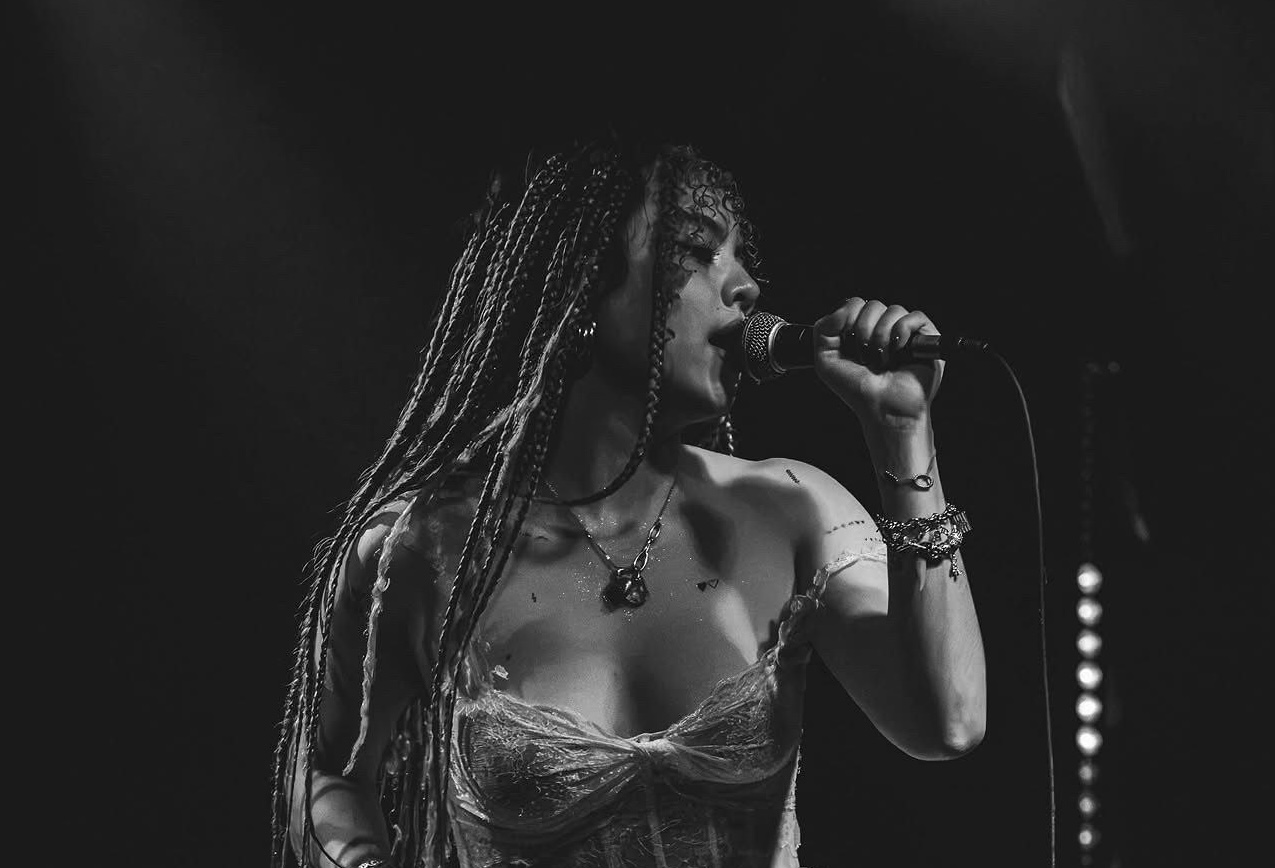
A photo from the opening night of Fear (of) and Intimacy.
Anastasia Shulman with her work Recto.
Julia Borysenko, Beneath the Fear.
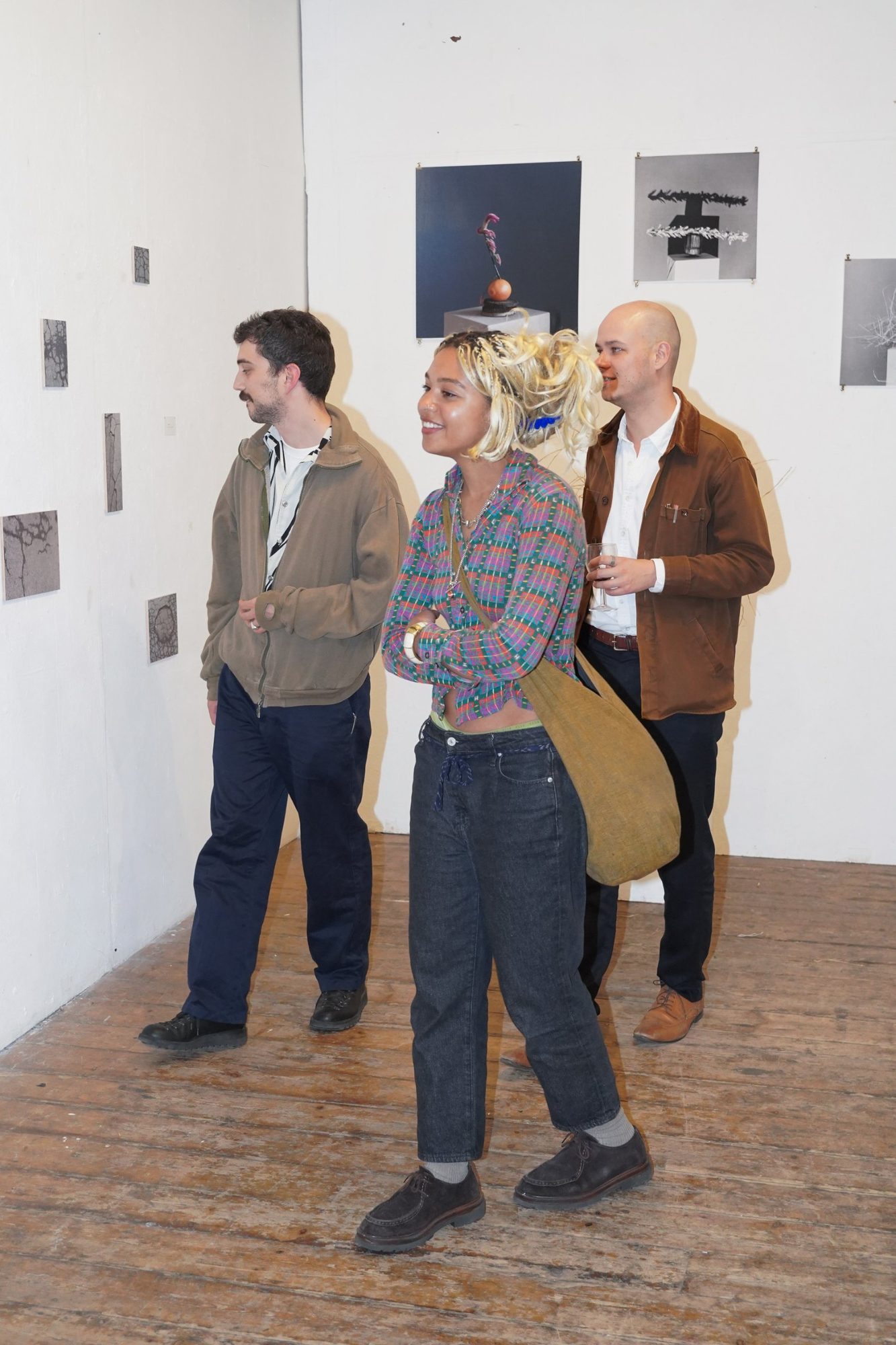
The crowd at the opening night of Fear (of) and Intimacy.
All image courtesy of Katya Shikhova