The Inward Turn
Venice this year is full of interiors, and none of them are a retreat.
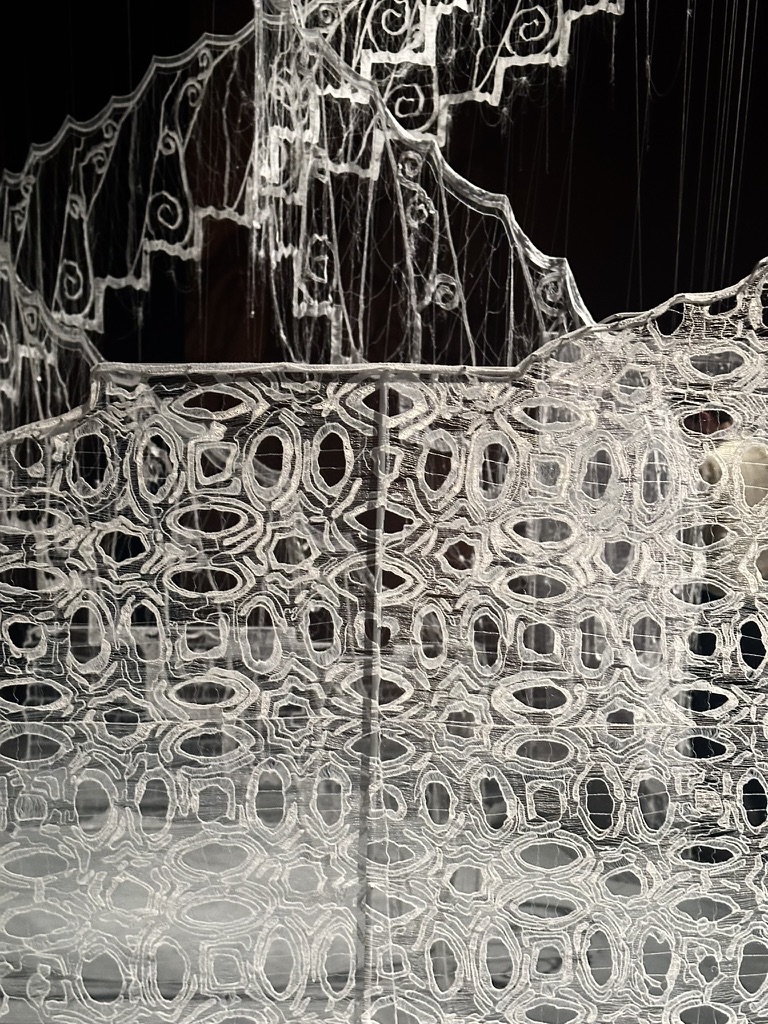
I walked in through the wall of a house made of lace. In the darkened room, translucent fragments floated around me, appearing and disappearing as I moved between them. It is less a reconstruction than a fragile recollection rendered in material form: rooms and thresholds resurfacing from the past in suspended embroidery.
This is Permanent Address, by Sumakshi Singh, at the Indian pavilion in Venice this year. Her demolished childhood home is brought back to full scale through a loose constellation of remembered spaces and textures.
Her grandparents built the house themselves after arriving in Delhi as refugees of the 1947 Partition of India. It remained the family home for seventy-four years. On Singh's official documents, 33 Link Road stayed her permanent address long after the building was demolished.
She stitches onto a fabric that dissolves in water. Once the embroidery is complete, the support is washed away, and what remains is the thread alone, weightless and exposed.
India returns to the Biennale for the first time since 2019 with Geographies of Distance: remembering home. The pavilion is curated by Amin Jaffer, whose own family left India for Africa six generations ago. As a scholar and curator, his work has focused on decorative arts and material culture. Across the pavilion, the artists approach questions of memory and belonging through material rather than narrative.
Thread, earth, paper, bamboo, cotton; not a map or a document among them. Here, home is something that can outlast a house, surviving in textures, smells and fragments of recognition that travel with us.
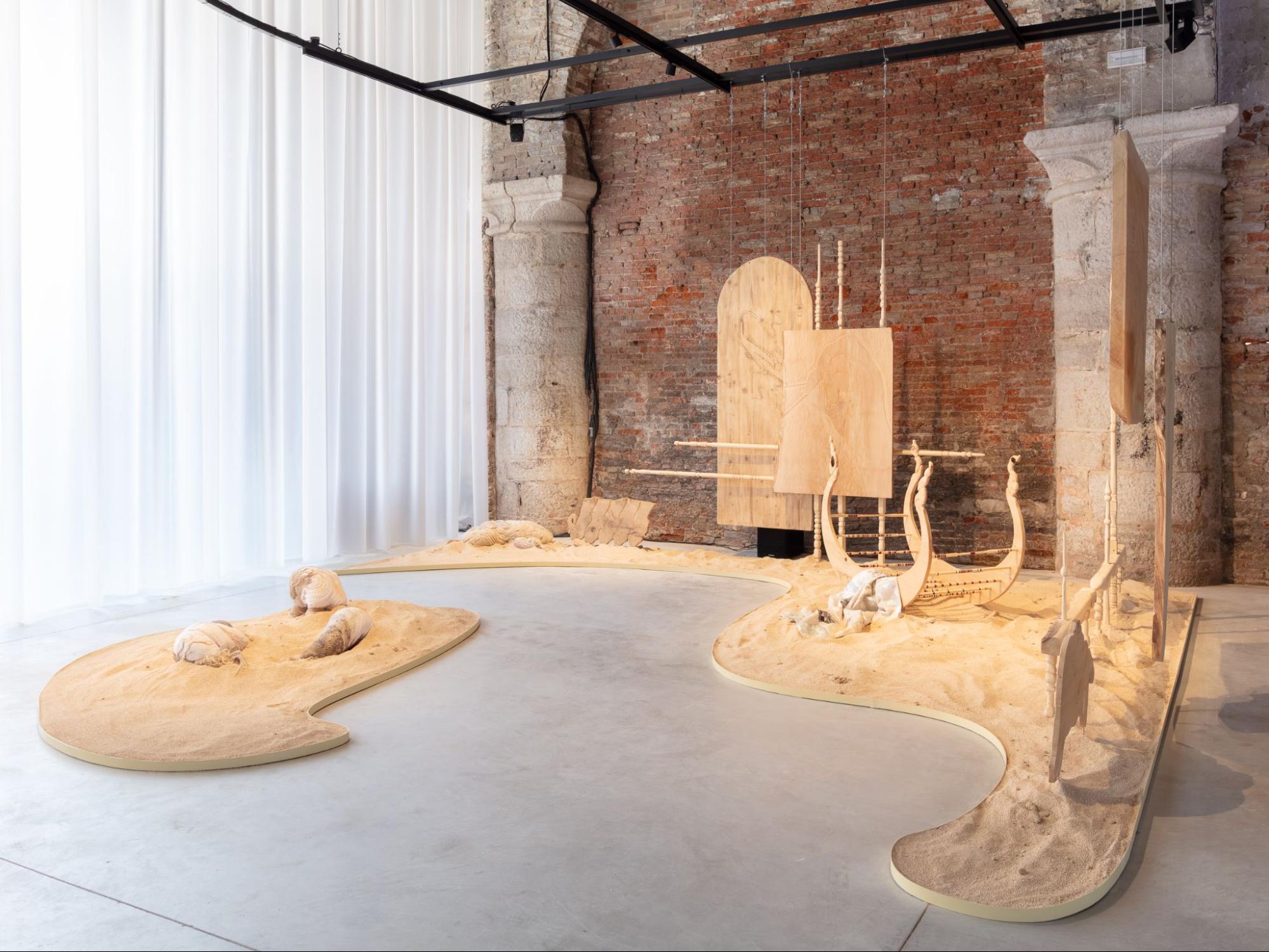
A few halls along, in the Uzbekistan pavilion, The Aural Sea, Zulfiya Spowart has installed Beshik: carved wooden forms and textile creatures set into sand and suspended above it. A beshik is the Central Asian cradle, the first dwelling a human being inhabits, if only temporarily, and one that is passed on through generations. The pavilion around it concerns the Aral Sea, drained to a fraction of itself within a lifetime. The sand is not a plinth. It is what the water left behind. Of all the works in the pavilion, Beshik is the only one with a soundscape, lending this corner a comforting intimacy.
Once noticed, the domestic room begins to appear throughout this year's Venice Biennale. Koyo Kouoh, who conceived the curatorial direction for this Biennale before her death in May 2025, called for an exhibition tuned to the minor keys: quieter, more interior, more concerned with feeling than with commentary.
Across very different contexts, artists return to homes, belonging and familiar spaces at a time when the structures around them feel increasingly unstable. The domestic is the scale at which these forces become tangible: displacement, ecological change and political upheaval are felt through rooms, materials and everyday things. In this way, the turn towards the interior becomes an act of attention to the world outside.
In Mladen Bundalo's Domus Diasporica for Bosnia and Herzegovina, home exists permanently in transit; in Ásta Fanney Sigurðardóttir's Icelandic pavilion, a lagoon buoy floats tethered in place, marking the way home.
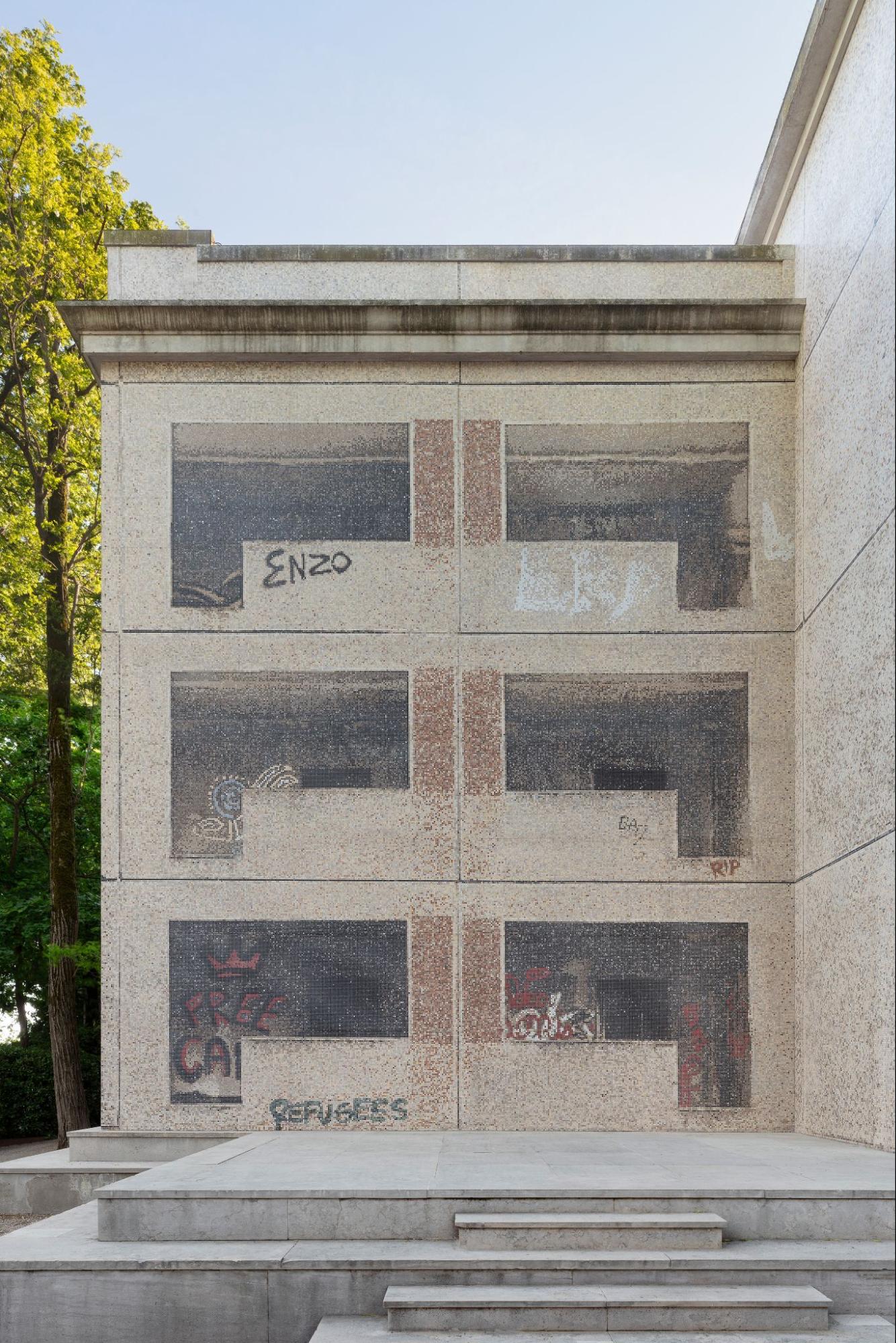
In the Giardini, Sung Tieu has wrapped the German pavilion's façade in a trompe l'oeil mosaic at one-to-one scale, reconstructing the East Berlin Plattenbau where she lived with her mother after arriving as an asylum seeker. Built for Vietnamese contract workers brought to the German Democratic Republic, the housing complex is now being demolished while the Biennale runs. More than three million pieces of marble were cut and laid outside Ravenna in the Italian mosaic tradition. Prefabricated concrete, the cheapest housing a state could put up, remade in stone. She has titled it Human Dignity Shall Be Inviolable, after the first article of the German constitution.
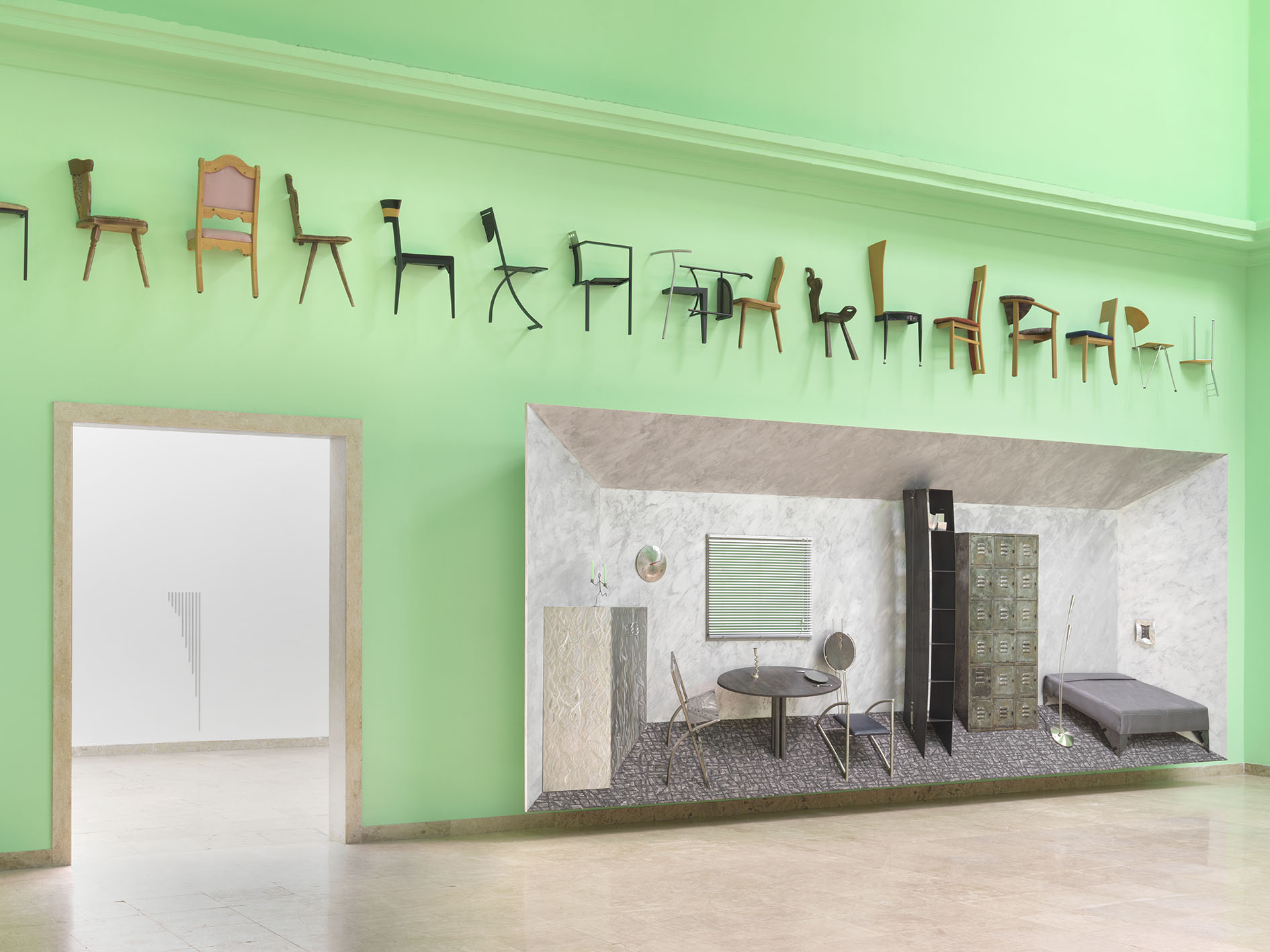
Inside is Henrike Naumann's The Home Front: an interior built from the residues of a vanished social order. The walls are the mint green of abandoned Soviet Army barracks in East Germany; faded curtains hang alongside an axe, a hoe, chairs cut in half and mounted as a frieze.
Ideology, Naumann spent her career arguing, outlives the institutions that produce it. It survives in the interiors people find comfortable, in the objects they surround themselves with, in the colours they were never asked to choose and never thought to question, which is to say, it survives at home.
The German pavilion was redesigned in 1938 and artists have confronted its history for decades. Naumann's response was not to attack the building but to make it comfortable, and in doing so, to make comfort itself unsettling. Soft furnishings become an act of aggression: one of the strangest ideas in Venice this year. The result is a domestic interior where comfort and familiarity become a site of historical tension.
Presented after Naumann's death in February at the age of forty-one, The Home Front leaves behind a final, unsettling proposition: home is not only where we seek refuge, but where the past stubbornly persists beneath the surface of everyday life.
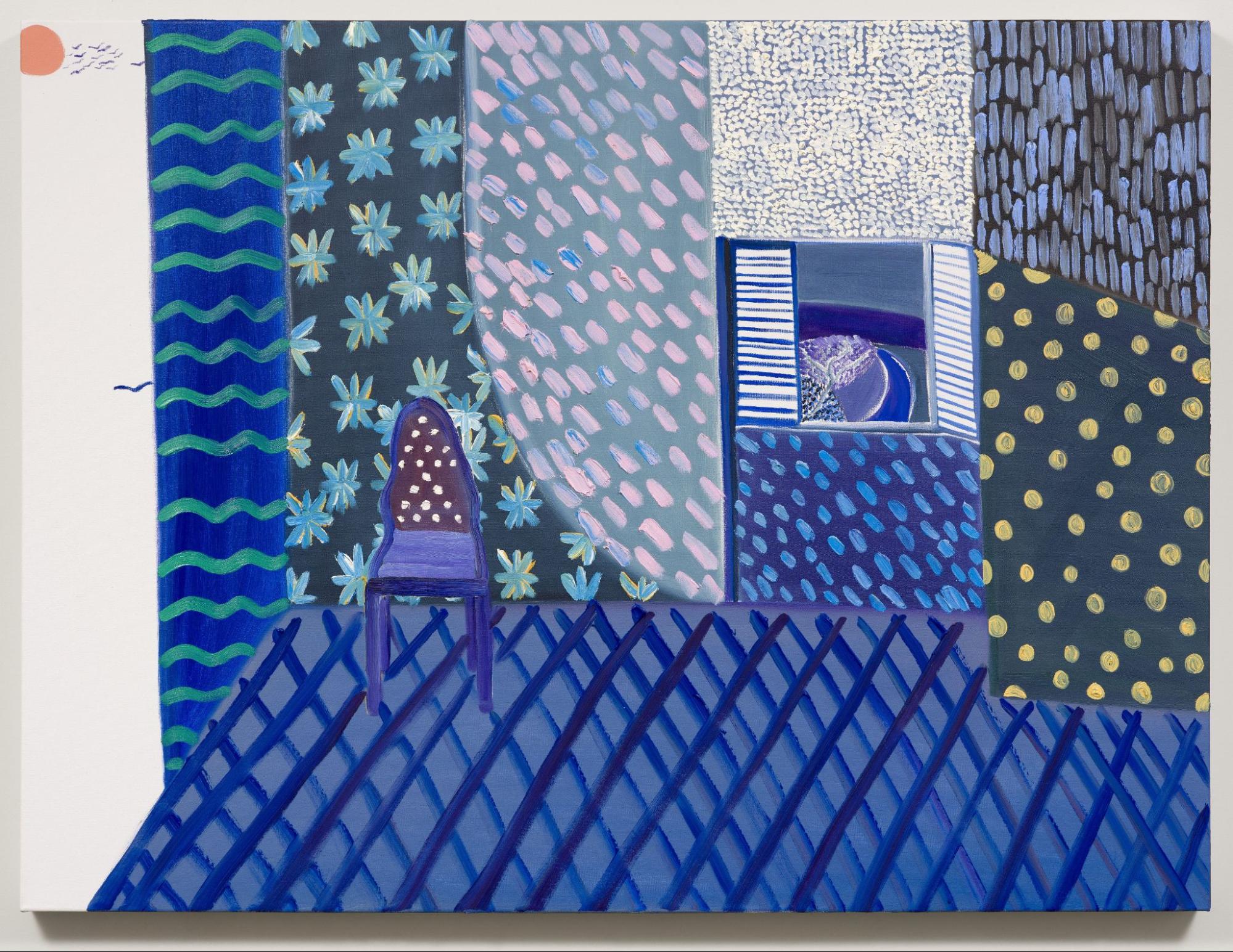
The theme takes on its most personal form not in the Biennale itself, but across the water in San Polo, where Matthew Wong: Interiors is on view at Palazzo Tiepolo Passi. Nearly forty paintings and works on paper from the final years of Wong's life fill the palazzo's domestic rooms. Many have never been exhibited before. In almost every work, the viewer occupies the position of someone inside: looking through a doorway, towards a window, into another room. The outside world is rarely given directly. A door opens onto orange light; a window appears only as a reflection caught in a mirror. Wong's interiors are places of anticipation without arrival, thresholds without departure.
Wong is best known for his landscapes, exuberant worlds of colour that made the outside world feel almost overwhelming. These interiors turn that attention inward. After a Biennale of performance and immersion, Wong's paintings lead us towards something quieter: the intimate relationship between interior space and interior life.