The Refusal to Be Read
Why Gen Z's obsession with aesthetic clarity is flattening identity, and what it means to resist it
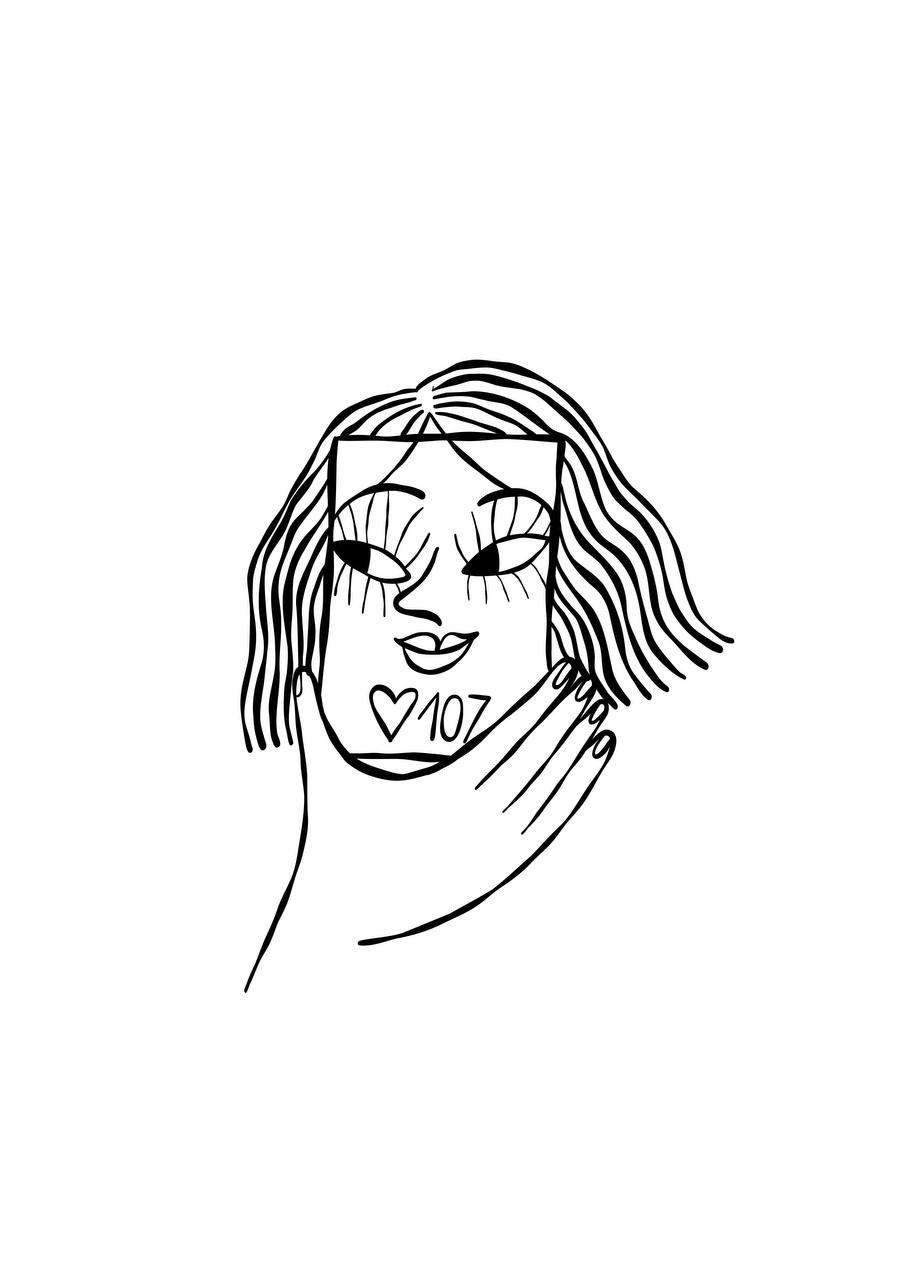
Within the visual culture of the generation born between the late 1990s and early 21st century, also known as Gen Z, there has been a clear rise in what could be described as the aestheticisation of the self. Identity is increasingly expected to be instantly legible. Clarity is celebrated, while ambiguity is condemned. Put simply, people tend to fear what they do not understand, and comfort often lies in what feels familiar and accommodating.
AI noticed over the years a certain rise towards individualism, with the idea of identity being celebrated rather than reduced to what society would see as a norm. Young people started growing fonder of the concept of being their authentic selves. This set our generation on a wild-goose chase to try to figure out our authentic selves while staying within the safe zone of what's acceptable. The desire to be yourself, yet a lack of confidence to embrace it pushes many towards anxiety and confusion, making them adapt easily digestible, pre-packaged personalities and aesthetics. It shifted from a movement aimed at becoming our true selves to an economy of its own.
M“What aesthetic is this?” appears quickly under images that resist immediate placement, as a way of fixing them. The question bears the assumption that what is being presented must belong somewhere. That it should be nameable and thereby legible. Aesthetics used to be ascribed retrospectively, terms like “minimalist” or “boho” describing rather than prescribing. What feels distinct about the current cultural moment is the inversion of that logic: aesthetics once followed experience, as a way of accounting for it after the fact. Now they tend to arrive in media res, before anything has fully formed.
AEspecially across digital spaces, the self is streamlined and organised into recognisable, marketable aesthetics. Effectively, style and identity become less about self-expression and more about a system of classification. These are shaped by circulating “ready-made” identities (e.g., the “Carolyn Bessette-Kennedy aesthetic”) that are absorbed into algorithmic circulation as aesthetic types to be replicated. People are presented with the idea that they must align themselves with certain public figures, aesthetics, and trends to express who they are, yet in the process, they actually lose their sense of self to the desire to be understood. Ready-made identities provide an easy way to become readable and thereby seen, albeit as a product rather than an authentic self.
MShared aesthetics are not inherently problematic. Style has always involved forms of affinity and identification, and some degree of readability is inevitable. What has shifted is the expectation for identity to arrive fully pre-articulated rather than gradually assembled and discovered, and ultimately created. For Henri Bergson, as articulated in Creative Evolution (1907), that process of formation is inseparable from duration, where “to exist is to change, to change is to mature, to mature is to go on creating oneself endlessly”. The work of life, auto-creation, consists of a self taking shape through continuous change. What circulates most easily, however, is an easily articulated, coherent 'aestheticised self', a ready-made version that does not require time to become.
AThere is a clear economic logic behind this shift. Defined aesthetics are easy to package and sell within markets that circulate trends and entice fans to consume endlessly. The trends and identities in question are easily produced and scale efficiently because of their appeal to timelessness and simplicity. So, when identity becomes easily recognisable, brands can create products around these identities that align with precision, driving large profits. Under these conditions, ambiguity in self-expression feels inconvenient as contradictions can be read as inconsistency.
MWhen identity is legible, it becomes easier to anticipate. Markets need not guess who you are once the self has been aestheticised, which makes producing accordingly far more straightforward. There is a tight feedback loop which emerges where aesthetics circulate, are adopted and then reinforced through catered products.
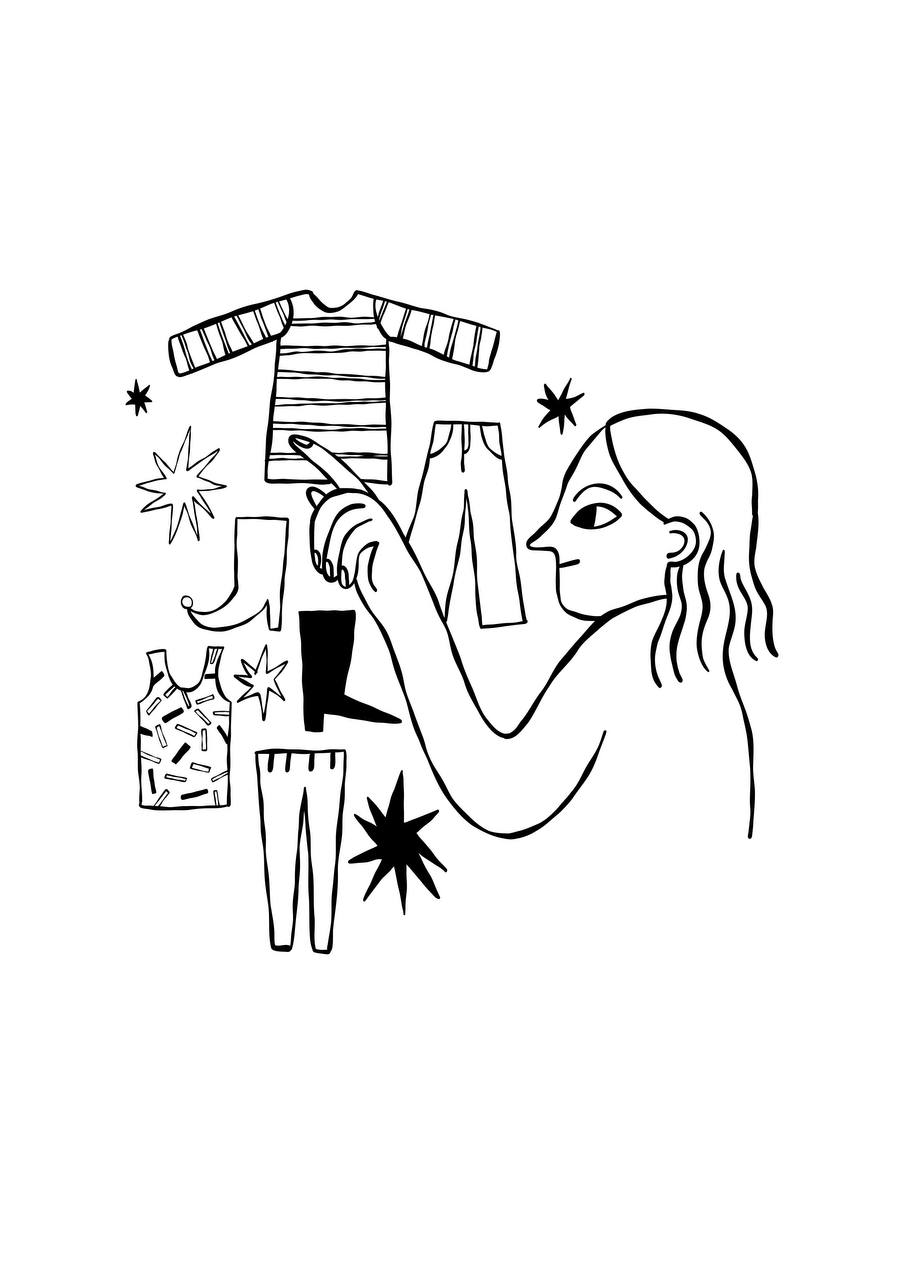
AAnd the fashion industry feeds into this issue! Fast fashion, and ultra-fast fashion in particular, has scaled at a pace that flattens identity into ready-made roles: looks tied to public figures and influencers, built around narrow beauty standards. Brands promote these looks and design to fit them, making it easier to manufacture new desires and keep trends moving. The faster they can produce something consumers can identify with, the faster it sells. At the same time, the sheer volume of content people consume daily has shortened attention spans, pushing brands to move faster and chase micro-trends with increasing precision. The more we align with pre-made identities, the more readable we become, and the easier it is for brands to anticipate what we will want next. In trying to be understood, we begin to market ourselves. Identity becomes something performed, shaped by an awareness of how it will be read. Social media reinforces this pressure to stay consistent, to present a coherent self across every context. People gravitate toward aesthetics that are easy to replicate and easy to place. And slowly, the aesthetic framework stops expressing the person. It starts replacing them.
Manufactory of desires
MThe notion of legible replicas extends beyond fashion into broader visual culture. Film, for instance, has long relied on archetypes where figures are legible through a combination of styling, behaviour and narrative function. Thus, Gen Z's self-aestheticisation differs not in the existence of readable aesthetics themselves but the scope of their circulation. What used to be contained within the frame is now widely distributed across platforms, in a way, detached from narrative. The 'character' becomes performable via a collection of signifiers rather than an ever-changing, maturing, auto-creating subject.
AAt the same time, the discourse around these “ready-mades” has become somewhat familiar, almost normalised. There is already widespread awareness of micro-trends and the pressure to produce coherent identities. While this condition is widely recognised, it is rarely resolved.
MInvoking French writer and philosopher Édouard Glissant offers a fruitful perspective. His concept of opacity proposes the right to remain irreducible, asserting the right to refuse becoming fully known or categorised into a type or a fixed identity. Opacity pushes back against the idea that the self must be reduced into a singular, communicable image. His related idea of errantry (the practice of wandering) amplifies opacity further, framing identity not as something settled, but as an ongoing journey, one that mirrors the evolving creative existence Bergson identifies.
AThis perspective allows for contradiction, change, and experimentation. This feels especially relevant for a generation still in the process of forming itself! We tend to look back at past decades and assign them neat aesthetics, but these are labels applied in retrospect, reducing entire cultures to tidy boxes. Imposing the same logic on the present only limits how identity can be lived. Identity does not need to be fixed or consistent, as, by nature, it shifts and evolves.
MOpacity and errantry, particularly in conjunction, feel acutely relevant now, offering an achievable strategy against the limits of self-aestheticisation. In a culture shaped by hyper-visibility and the demand for legibility, the boldest gesture against conformity may be the refusal to be entirely read and understood: an open commitment to 'creating oneself endlessly'.
-1.jpg)
.jpg)