Why We Travel for One Thing
I had always wanted to cry at the opera.
Not because I wanted to belong to a certain circle, or because I had anything to prove. I finally wanted to understand an art form I admired so much, deeply enough for it to move something within me. I could already admire the voices, the performance and the ceremony. What I wanted was to truly hear the opera and feel it.
If you are holding this magazine, or reading it online, perhaps you recognise a similar longing.
Perhaps you have longed to cross the Kazakh steppe on horseback, drawn to its history of nomadic life. Or perhaps you have been so captivated by Matisse’s colours that travelling to Vence to step inside the chapel he designed would be a dream come true.
Or maybe Skulptur Projekte has been on your radar for years, and you are already planning to cycle around Münster when it returns for its sixth edition in 2027.
A landscape, an artist, a view, a story. So many things can become the reason for a journey. The one thing to go for. It does not need to occupy the whole itinerary. It only needs to be powerful enough to set the journey in motion.
The idea is ancient, really. Think of pilgrimage. By the twelfth century, the Camino de Santiago already had something remarkably close to a travel guide. Book V of the Codex Calixtinus described its stages, sanctuaries, hospitality and dangers. The practical information was there, but it followed the purpose. First, people had a reason to go. Then the road followed.
Cultural pilgrimage still works in much the same way. In the twentieth century, hearing Maria Callas live meant being in a particular theatre on a particular evening. Her recordings could travel around the world, but the live encounter belonged only to those who were present. For an admirer, her voice could be magical enough to cross a border for. It shaped the road.
This magic, it seems, is getting lost. The order is very often reversed. There are the ‘must-see’ posts, the identical ‘48 hours in…’ reels, the saved articles, the folders containing more places than I could possibly visit. I am shown destinations before I have even decided why I want to visit them. And I get caught up in it far too often, perhaps more often than I care to admit.
Instagram turns a city into a sequence of instructions and obligations. Each new recommendation suggests that something else cannot be missed, until everything feels essential. The lists become checklists, the journey becomes an unconscious marathon, and the holiday begins to feel like work. Travelling starts to resemble a test with a correct answer, and somehow I seem to fail it, time after time.
Then I stop.
Is this what I want?
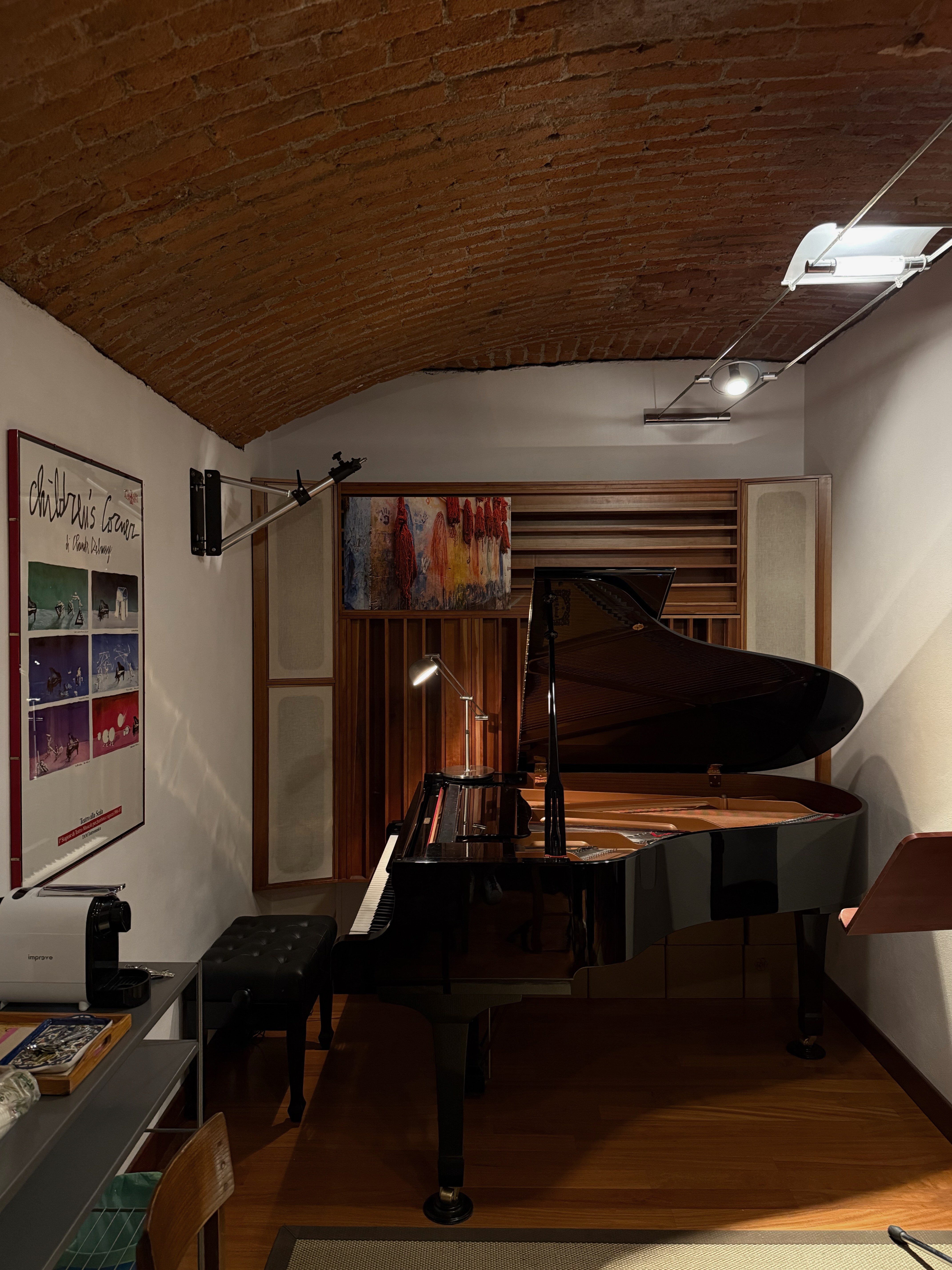
A borrowed aspiration can quietly become indistinguishable from a genuine desire. So I have to ask: how well do I know myself? Well enough to recognise what I truly want to see? Scratch that. What I truly want to feel on a journey?
And then there are algorithms, of course. They are not the villains. In my work, I rely on them to connect two dots on a map, provide an overview and optimise a route. They can tell me how to get somewhere. They cannot decide whether that place deserves to matter to me.
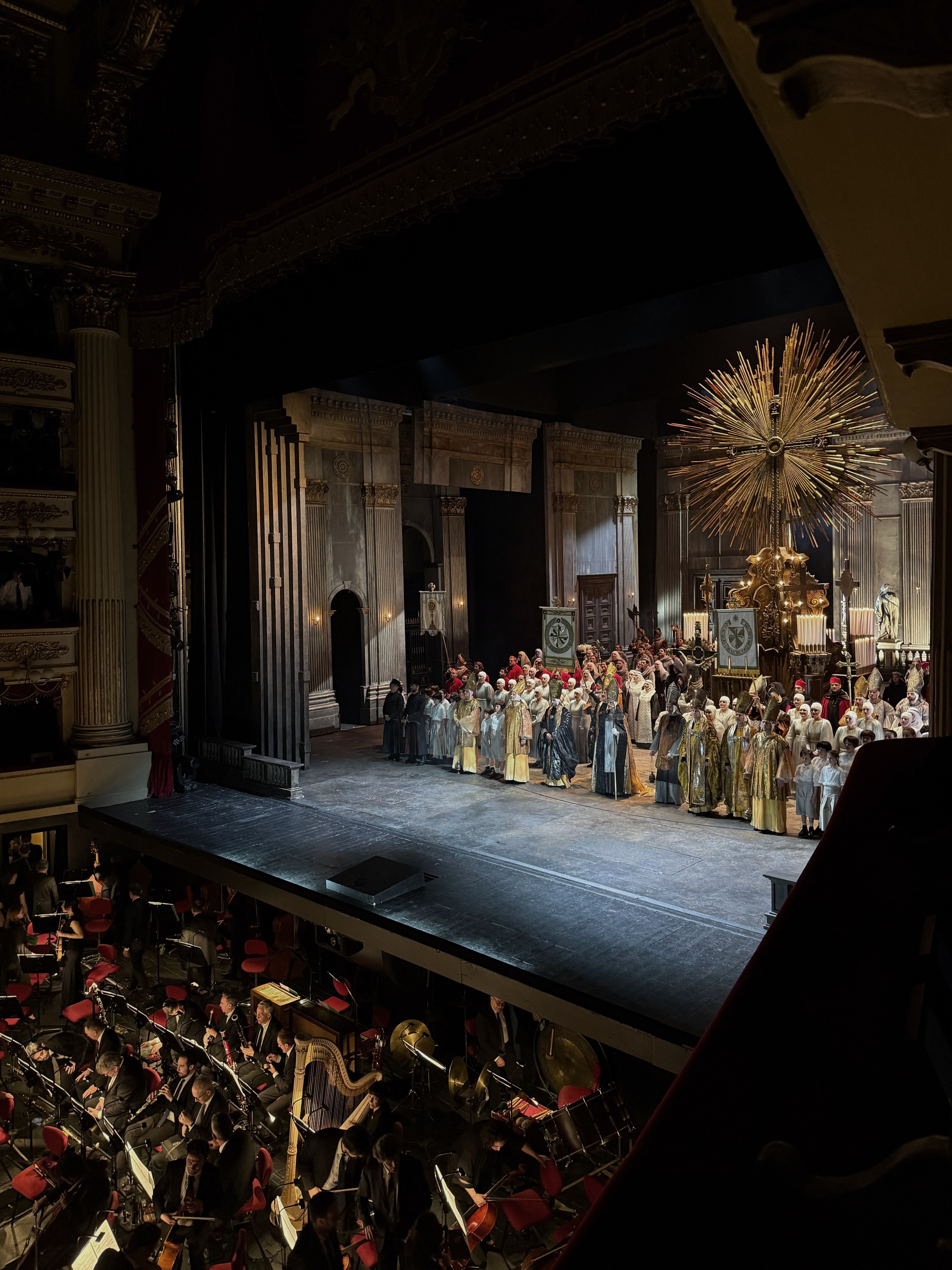
La Scala could be a long-held dream or simply another ‘must’ on an overwhelmingly full itinerary. The building itself has not changed. What changes is the desire behind the decision.
The one thing gives a journey its centre of gravity. Once that centre is clear, the surrounding choices take their proper place: where to stay, how slowly to move, what deserves preparation and what can be left out without regret.
This idea shapes the journeys I design through Dreamers Travel Club. Last year, I gathered a group of women to hear Puccini’s Tosca at La Scala. The opera occupied one evening. It shaped everything that came before it.
That meant preparing for it. I did not want the ticket to carry the whole weight of the experience. If I hoped to be moved rather than merely impressed, I needed to arrive differently. More open, perhaps. More able to listen.
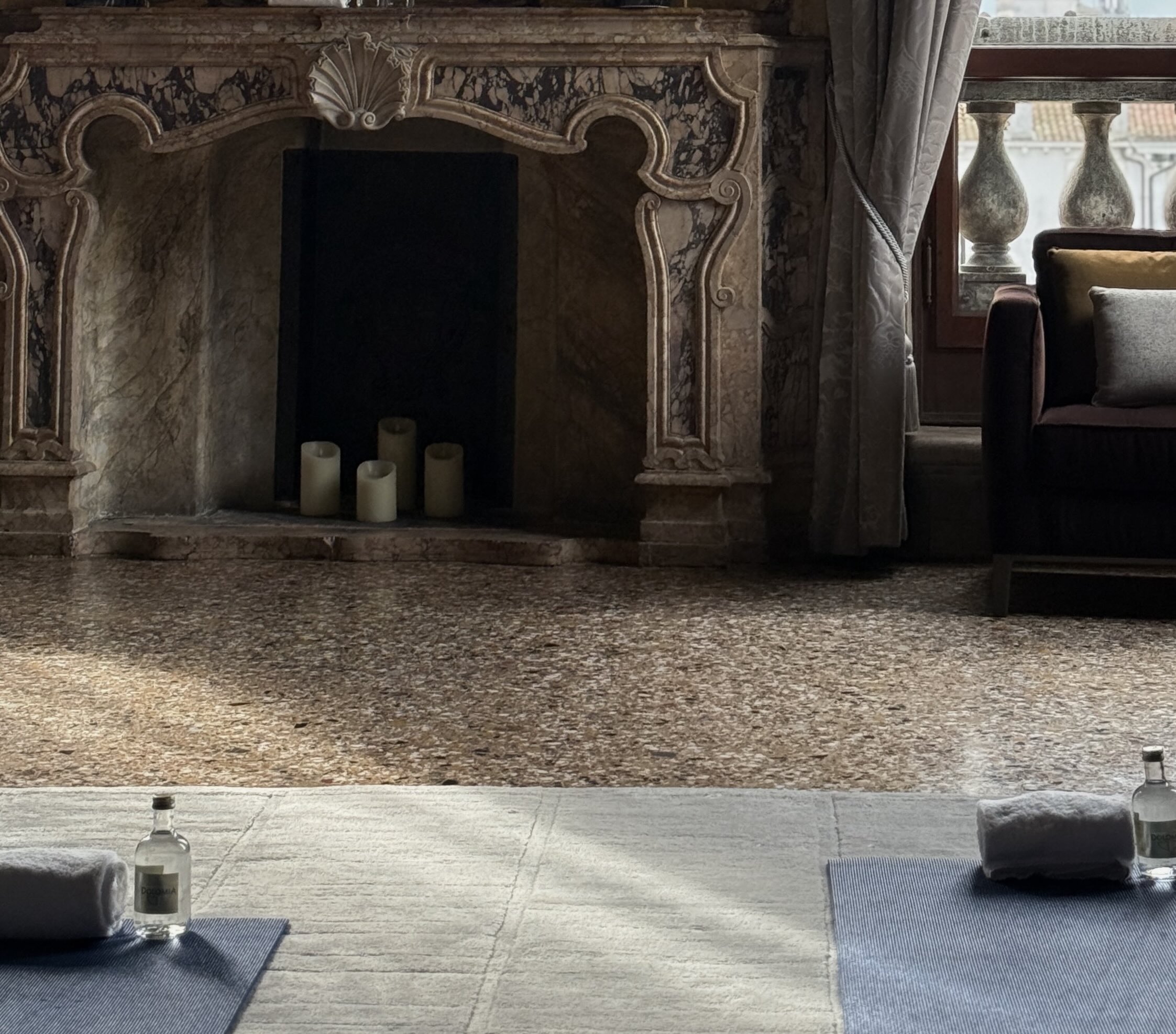
In Venice, the preparation began not with Tosca, but with breath. During a private yoga practice at Aman Venice, inside Palazzo Papadopoli, we were guided back towards the body and the breath moving through it. Above us were frescoed ceilings. Within, the constant motion of the mind began to quieten. An opera asks the body to do extraordinary things. Perhaps it made sense that our journey towards it began by noticing our own.
It was a pause before the explanations arrived. A way to clear the palate before asking it to receive something new.
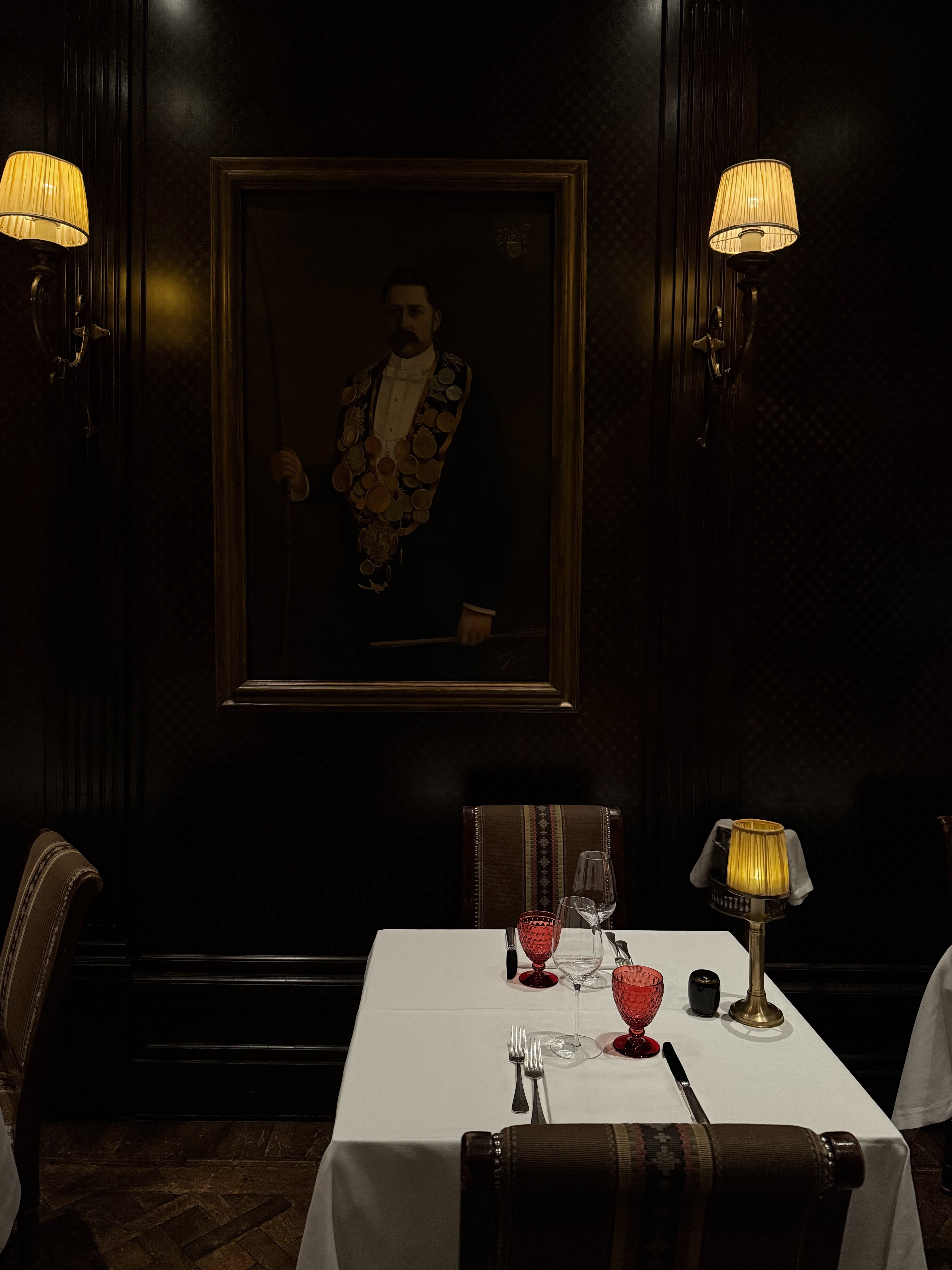
By Milan, the world around Tosca had begun to deepen into red. On the night before the performance, we had dinner at Giacomo Bistrot, in its dim, intimate rooms. The interiors were created by Studio Peregalli, whose founders both worked with Renzo Mongiardino. Mongiardino had designed the sets for Zeffirelli’s 1964 Covent Garden production of Tosca with Maria Callas. The connection did not announce itself. It was simply there, quietly drawing the evening closer to the opera.
Later, Ludmila Ignatova gave us a private lecture on Tosca. She explained its story, the characters’ struggles, the voices and the particular production we were about to see. Then she showed us Callas singing Vissi d’arte. In the aria, Tosca asks why a life devoted to art, love and faith has brought her to such suffering.
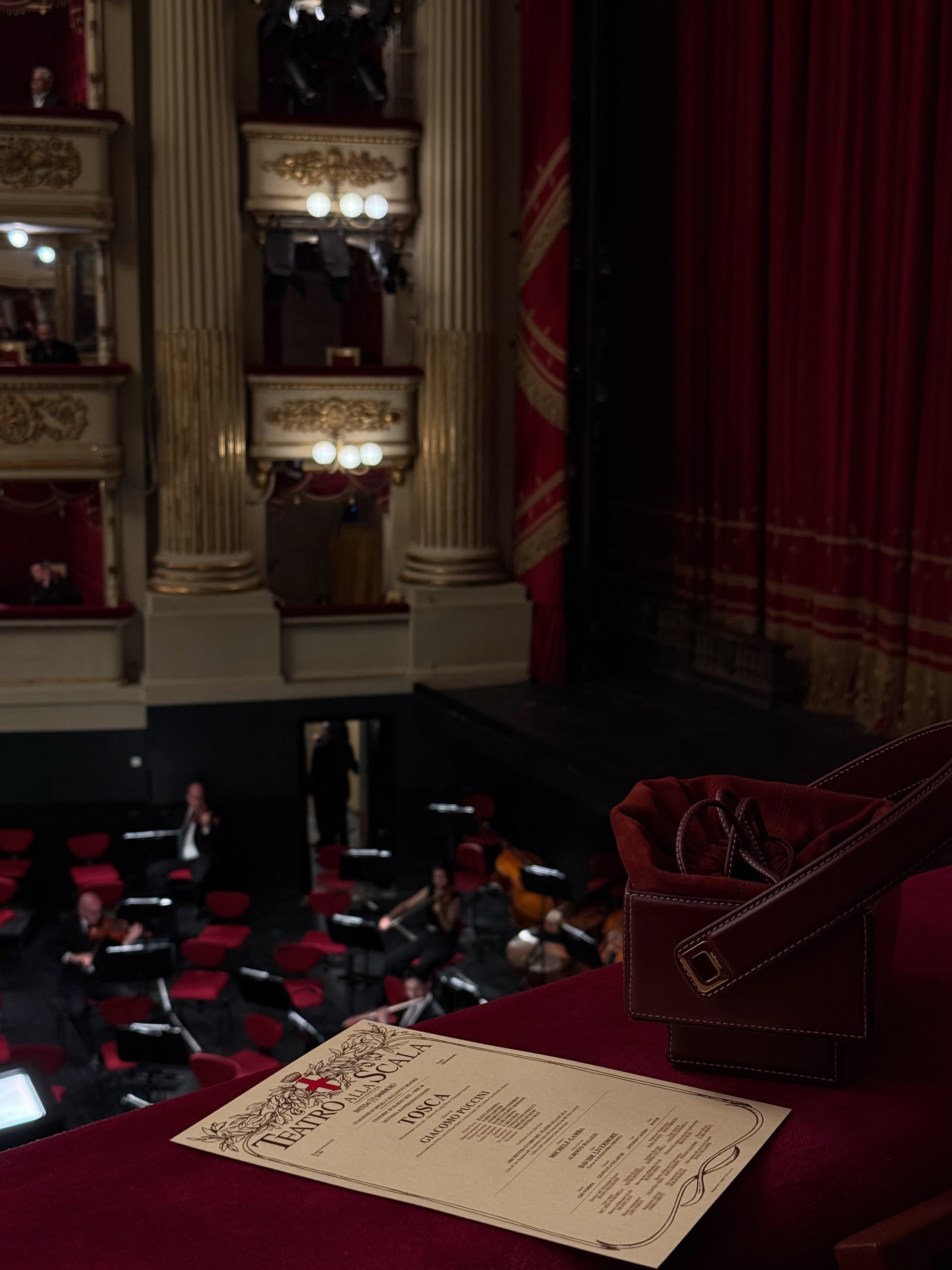
The following day, the aria moved from the screen into the room.
This was precisely why I had invited Ludmila, a former opera singer and vocal coach from Italy, to join the journey. I wanted her to help us understand the opera more deeply and, most importantly, to guide us as we tried to sing it ourselves.
And so a group of women with no operatic training found themselves being asked to sing Vissi d’arte, the aria at the dramatic centre of Tosca. The night before, we had watched Callas sing it on screen. Now Ludmila took us through it, line by line. We looked at one another, intimidated. The same question seemed to hang in the room: how could any of us possibly repeat that?
The answer, Ludmila explained, was to let go. To attempt notes like these required an almost childlike freedom: the willingness to make the sound before judging it, without being afraid of singing it incorrectly.
When my turn came, I remembered the yoga practice in Venice. The breath. The release of control. I let go and began to sing. For those few lines, I was simply there, completely inside the moment.
And then I heard applause.
When I turned towards the other women, they told me that I had sounded like an opera singer. Ludmila smiled approvingly. I had managed it, however briefly, because I had stopped being afraid of getting it wrong.
At La Scala, the aria returned once more. This time, it was Elena Stikhina singing it. I knew Tosca’s story and what was at stake inside those notes. I had watched Callas sing them. I had attempted several of them myself. My body now carried some small understanding of what they demanded from a voice.
For the first time, I was not watching other people understand opera. I was hearing it with them.
Then I cried.
The tears themselves proved nothing. That was never the point. What mattered was that the distance I had felt for years had closed. The performance lasted one evening. The attention it required had shaped the days before.
First came the reason. Then the road.
And this time, I heard it.