ARCHIVE D'ACCRO: Code of an Instinct
Designers operate on instinct: hours of experimentation, failure and success that eventually manifest as a tangible commodity.
This is the process behind every garment, embodied by every brand.
Buyers, like creatives, are driven by instinct too. We buy what we buy because there's a pull, a recognition of vocabulary, a shared language brand and buyers are in cahoots about.
That shared language is codification: the industry term for the process, largely hidden from the consumer, of “coding” a brand's substance. Signature details, cuts, colours, editorial presence: repeated, DNA-like elements that hold a collection together.
A code fuses the psychological (the ethos a wearer takes on) with the physical (colour, pattern, cut) that signals it consistently across every piece. Done well, it resonates because the same instinct that drives a designer exists in the buyer too, an innate sense of taste shaping what they buy and what they are saying by buying it. Instinct alone is intangible, but codification, built mostly behind the scenes, makes a brand stick.
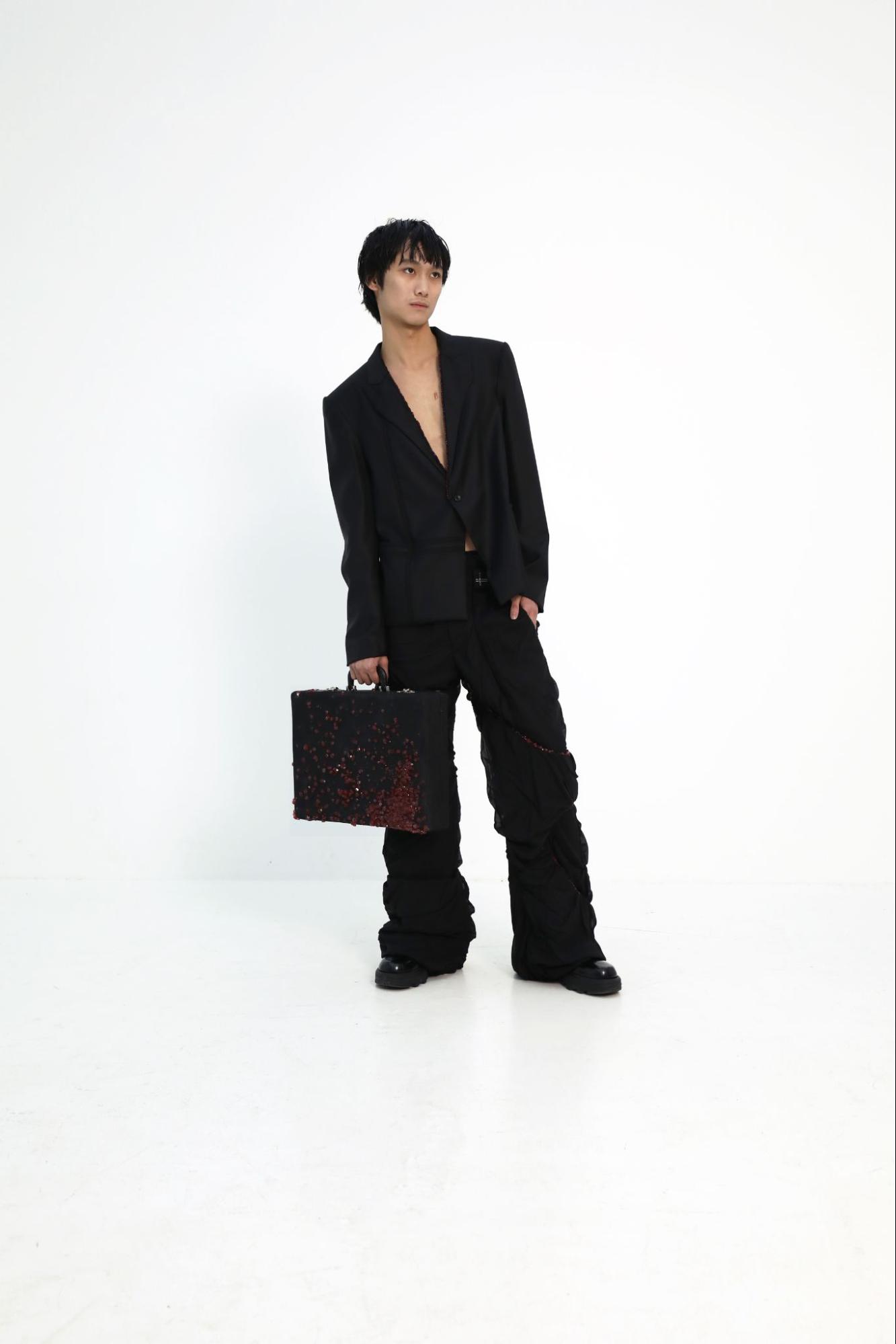
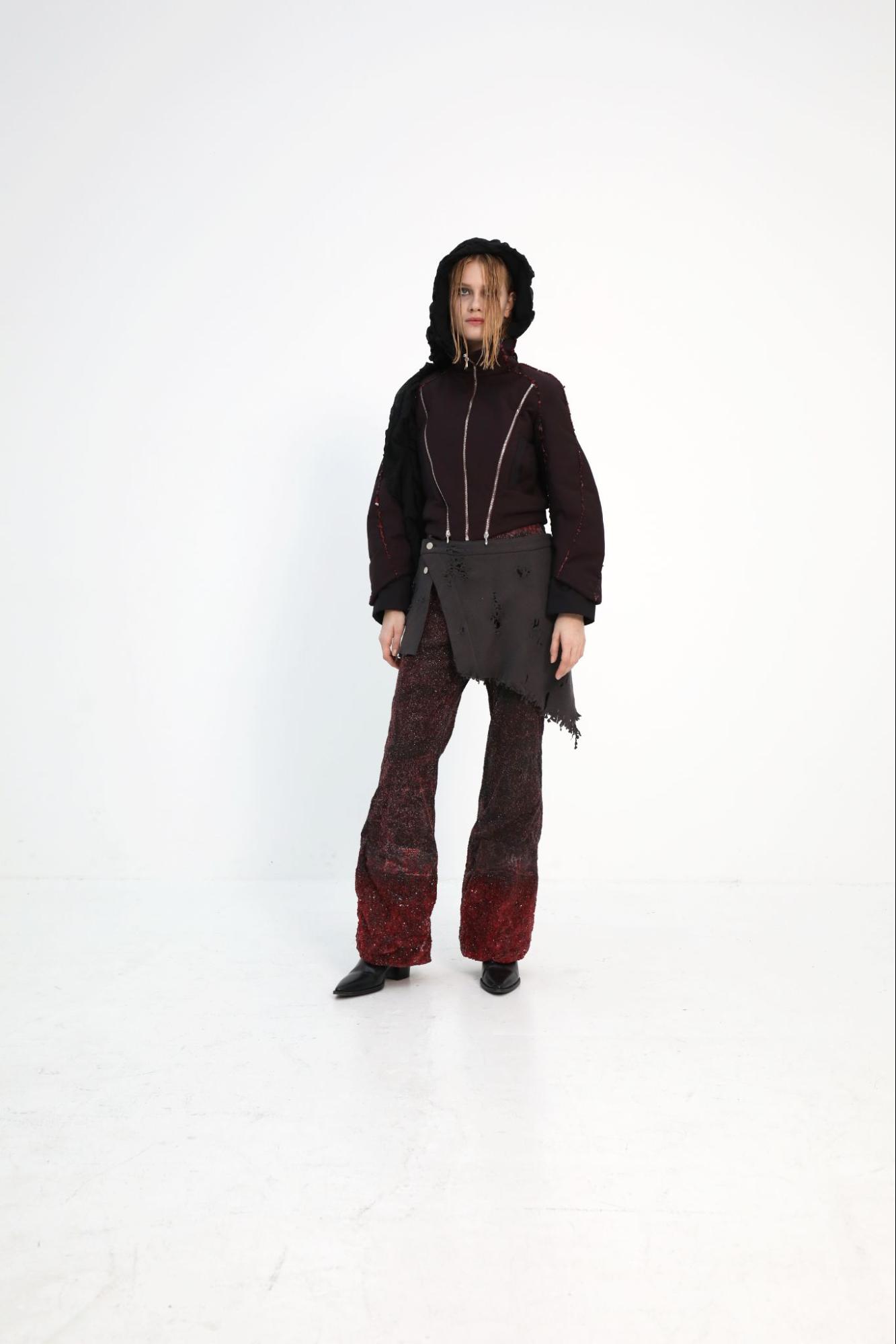
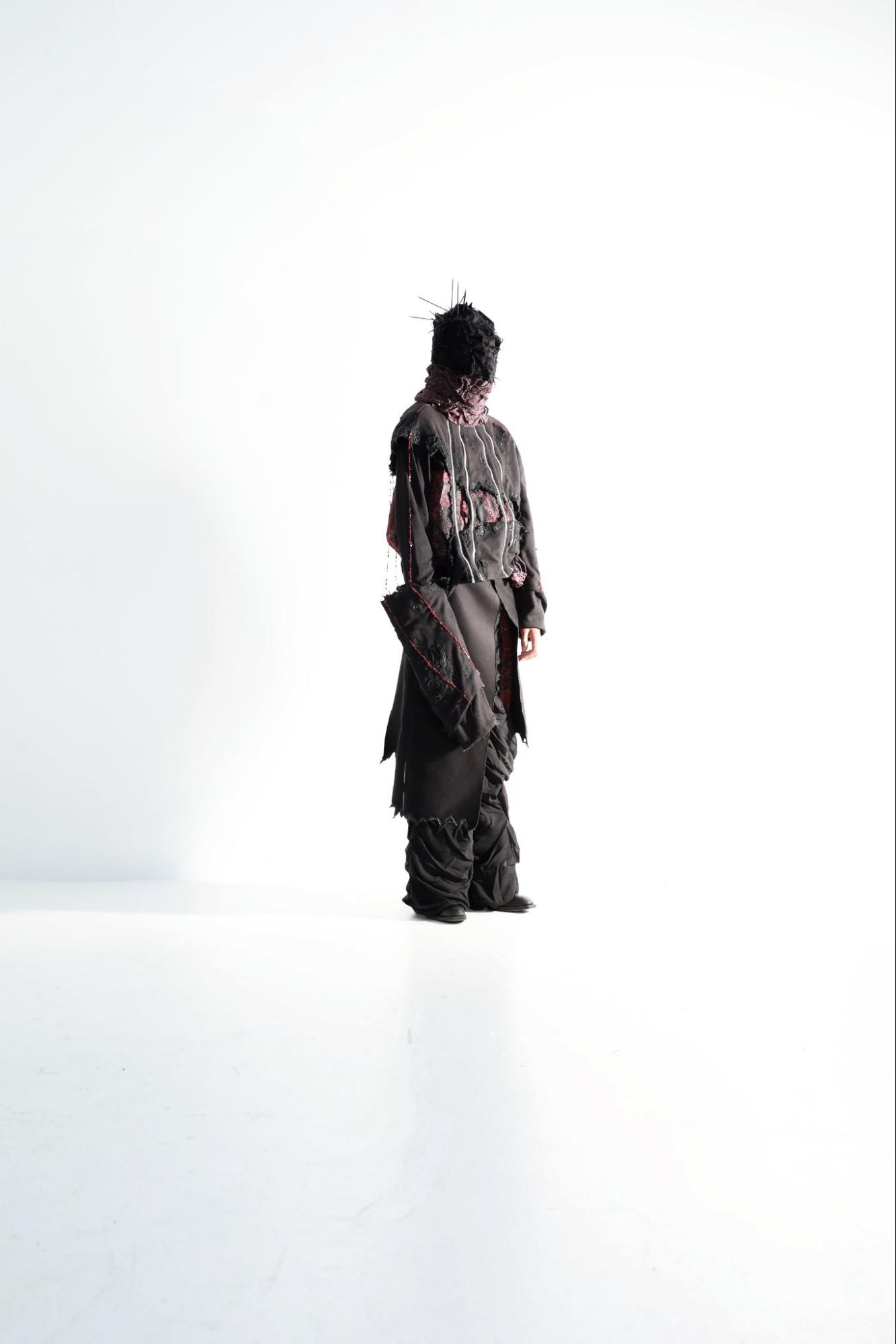
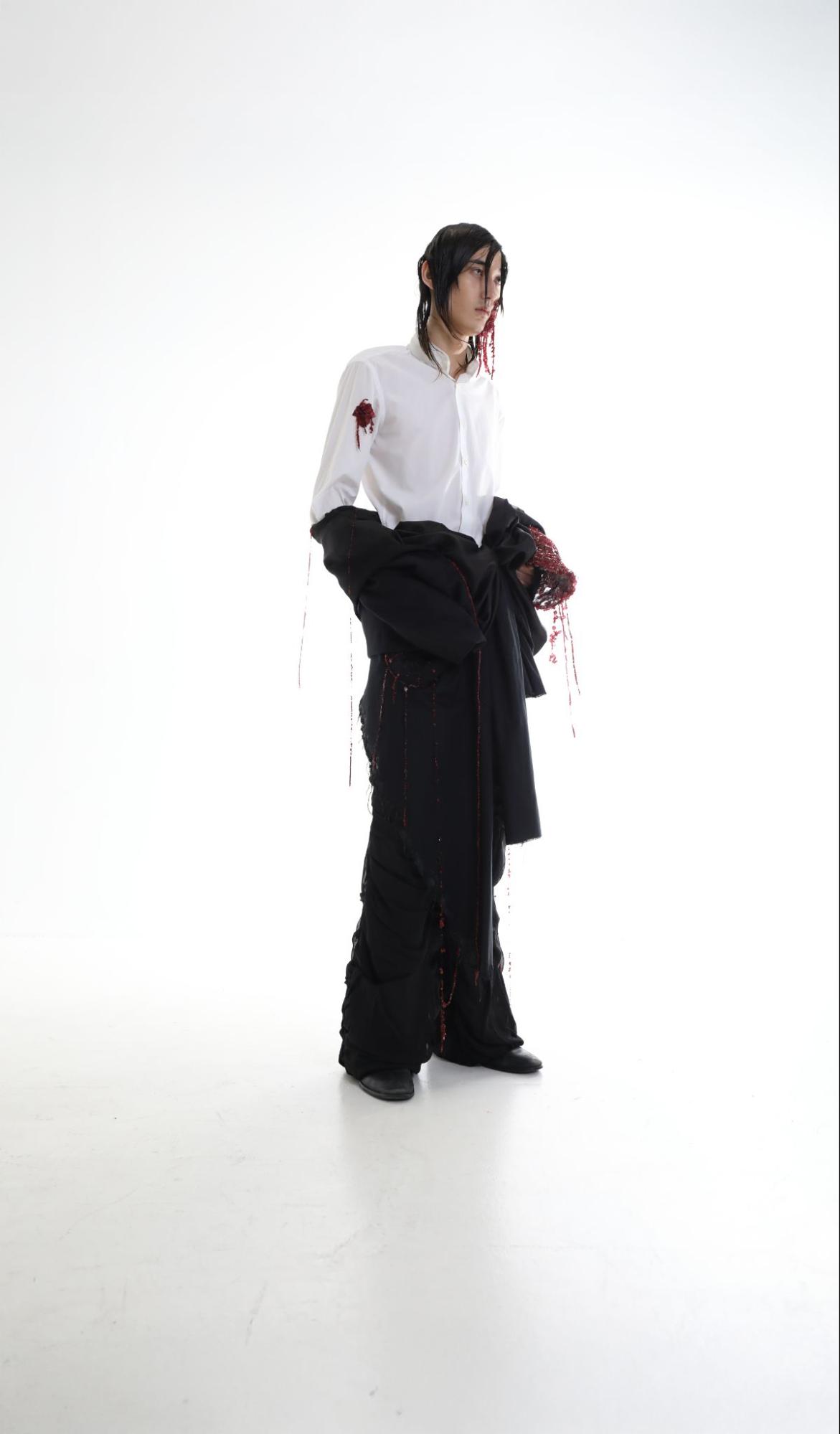
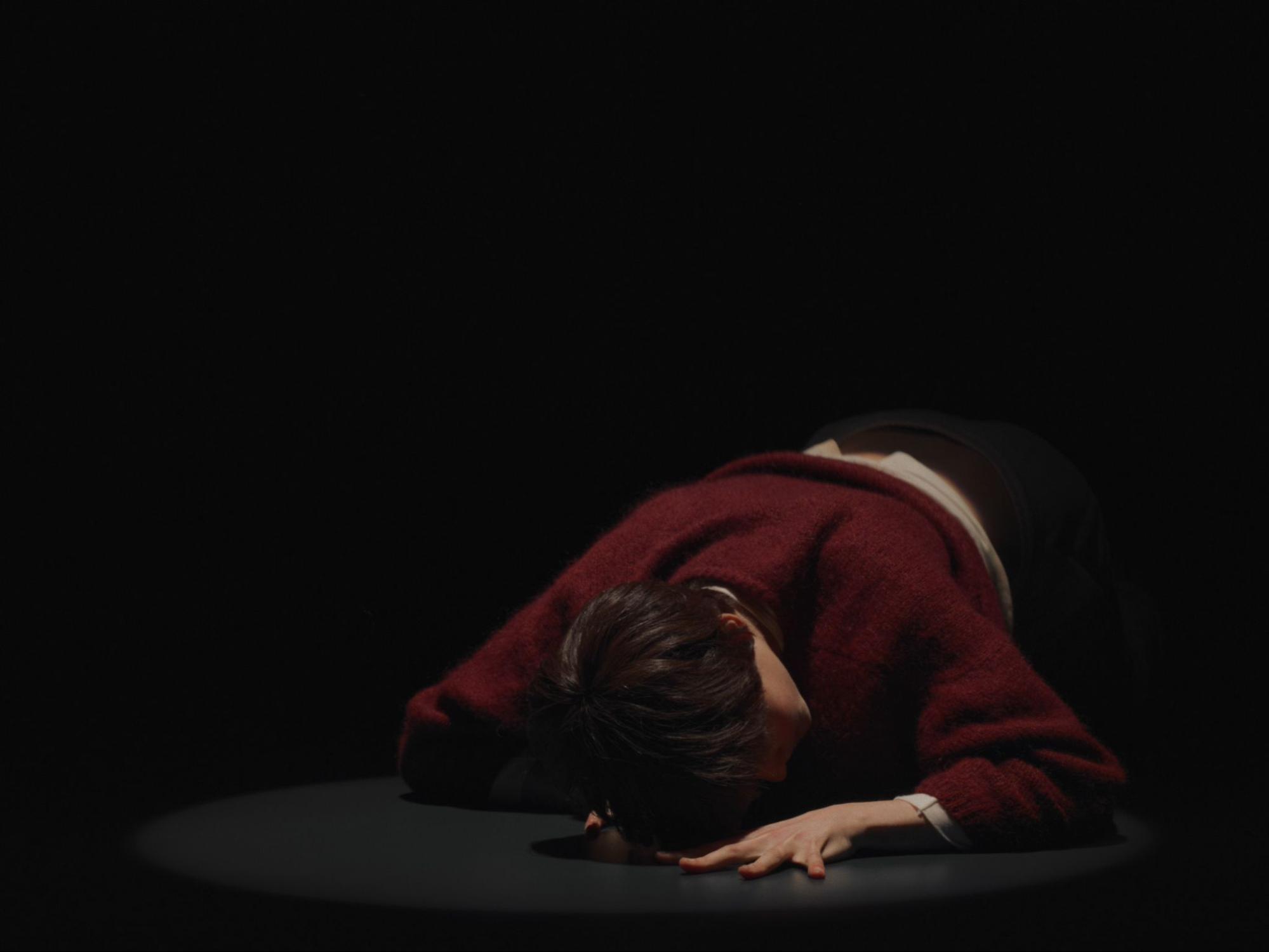
ARCHIVE D'ACCRO, founded by Kai Foitzick and Victor Novotny, offers a clear case of strong code. For their debut collection, OUROBOROS, sixteen-hour days became the norm: pattern pieces submerged in tanks of potassium aluminium sulphate, crystals grown and then sealed by hand, one coat carrying twelve kilos of crystal formation across its back. The collection won Best of Stage in Munich and was presented at Neo.Fashion during Berlin Fashion Week and at Graduate Fashion Week in London.
Where does the name ARCHIVE D'ACCRO come from?
“Archive” describes an imagined space in which not only garments, but designs, objects, ideas and different stages of our creative development are collected. Each piece becomes part of this evolving archive, documenting a particular moment within our work.
“D’accro” derives from the French expression accro de, meaning “to be obsessed with something”. For us, it describes the inner drive to pursue a personal vision with conviction. ARCHIVE D'ACCRO therefore brings together two ideas that continue to define our work: building something of our own through which we can realise ourselves and create something lasting, while never losing curiosity for the next idea.
Who's behind the brand, and where do your ideas come from?
We, the founders, have known each other since school and began creating things together long before fashion became our medium, from working with wire to making music and films. Towards the end of school, this shared creative impulse increasingly shifted towards clothing, alongside the ambition to build an independent brand and make creative work the foundation of a self-determined life.
How did it start?
Our first garments were created with very little technical knowledge: screen-printing on blank T-shirts and sweaters, early sewing experiments on our parents' domestic machines, and a largely self-taught approach to pattern cutting, construction and finishing. We later both began studying fashion design. Victor started a year earlier, which allowed Kai to learn many of the fundamentals alongside him. After his second semester, Kai decided to leave university and instead invest the available time and resources into a shared studio, while Victor continued through to his bachelor's degree.
From that point, the work evolved quickly. Simple T-shirts developed into increasingly complex trousers, blazers and jackets; construction, material and craftsmanship became progressively more ambitious. Victor's bachelor semester ultimately provided the opportunity to condense this development into a complete collection. The prospect of presenting at Neo.Fashion, part of Berlin Fashion Week, became the starting point for our first MAINLINE.
How has Munich shaped the brand, and where do you see it heading?
Munich has shaped the development of ARCHIVE D'ACCRO in an unconventional way. Our immediate surroundings were never particularly fashion-driven, allowing the brand, especially in its early years, to develop relatively independently from an established local scene.
That distance made our process highly personal. Rather than responding continuously to external influences, the focus became our mutual ambition to make every new design more precise, more considered and more resolved than the one before it. Design, quality, pattern cutting and craftsmanship became part of an ongoing process of refinement.
Berlin, and later London, therefore represented more than simply presenting a collection. They were the first moments in which our work left the context of our own studio and entered a broader national and international fashion landscape.
Who do you design for?
ARCHIVE D'ACCRO is designed for people with an independent sense of self: people who consciously choose what they surround themselves with and who do not define individuality through loudness or deliberate opposition.
Our design language follows the same principle. Strong silhouettes meet elegance, structural complexity meets restraint, precision meets intuition. A piece can be unconventional without demanding to be immediately recognised as such. What interests us is a form of presence that feels inherent rather than performed.
At the core of this is an intense engagement with the things that genuinely matter to us. Here, the accro in our name gains another layer of meaning. Whether it is fashion, music, design, a material, an idea or a personal project, we are interested in the dedication with which someone pursues something and attempts to understand it in its smallest details.
We apply the same attitude to our garments. A complex construction, or a detail that requires considerably more time to realise, is not simply an expression of craftsmanship. It represents the degree of attention we are willing to give an idea.
Can you walk us through your design process, and how the brand is structured?
The structure of ARCHIVE D'ACCRO follows the concept of an archive. Not every design requires the same context, and not every idea should be subordinated to the requirements of scalable production. The brand is therefore divided into three lines: MAINLINE, UNIQUES and SECONDLINE.
The MAINLINE forms the conceptual and artistic core of the brand. Reproducibility and commercial requirements initially remain secondary. It is a space for developing new techniques, complex constructions and narratives that unfold across an entire collection, the place where our design language can be pushed furthest.
UNIQUES emerge from ideas whose construction, materiality or level of craftsmanship deliberately exclude conventional production. Made by us in one-off or extremely limited quantities, they allow concepts that would otherwise be rejected for their lack of scalability to exist somewhere between experiment, craftsmanship and wearable objects.
The SECONDLINE translates the same design principles into a more everyday and reproducible context. The intention is not to simplify the MAINLINE, but to distill individuality, construction and material quality into garments that remain wearable without losing their character. The three lines do not form a hierarchy. They are different expressions of the same creative world.
Tell us about OUROBOROS, and the crystals.
OUROBOROS emerged from an intense exploration of cycles, impermanence and recurring structures. Buddhist thought played a significant role, alongside questions about the position of the individual within larger social and natural systems.
At the same time, our perception of the future facing our generation was defined by uncertainty.Political situation, climate change and the rapid development of artificial intelligence were shaping a world whose direction seemed increasingly difficult to predict.
The collection, however, was less concerned with uncertainty itself than with the observation that change rarely moves in a straight line. Societies, political systems and cultural ideas pass through periods of growth, expansion, excess, collapse and reorganisation. In nature, this principle becomes even more immediate: growth and decay, summer and winter, ebb and flow, life and death.
From this idea came OUROBOROS: the serpent consuming its own tail, representing a state in which endings and beginnings become inseparable. As the human force through which we wanted to examine this cycle, we chose greed.
At first, greed appears desirable, almost ornamental. It enhances the human figure and presents itself as something valuable. As the looks progress, however, it occupies more and more space, develops its own parasitic dynamic and ultimately begins to assume control, obscuring the human beneath it.
To translate this transformation into something tangible, we searched for an unconventional material capable of embodying beauty and threat simultaneously. Through extensive experimentation, the idea emerged to grow real crystals directly onto textiles.
Initially, the concept bordered on the absurd: crystallising entire garments, or growing a twelve-kilogram crystal formation across the back of a coat, was far removed from anything we had previously attempted. It was precisely this uncertainty that made the technique compelling.
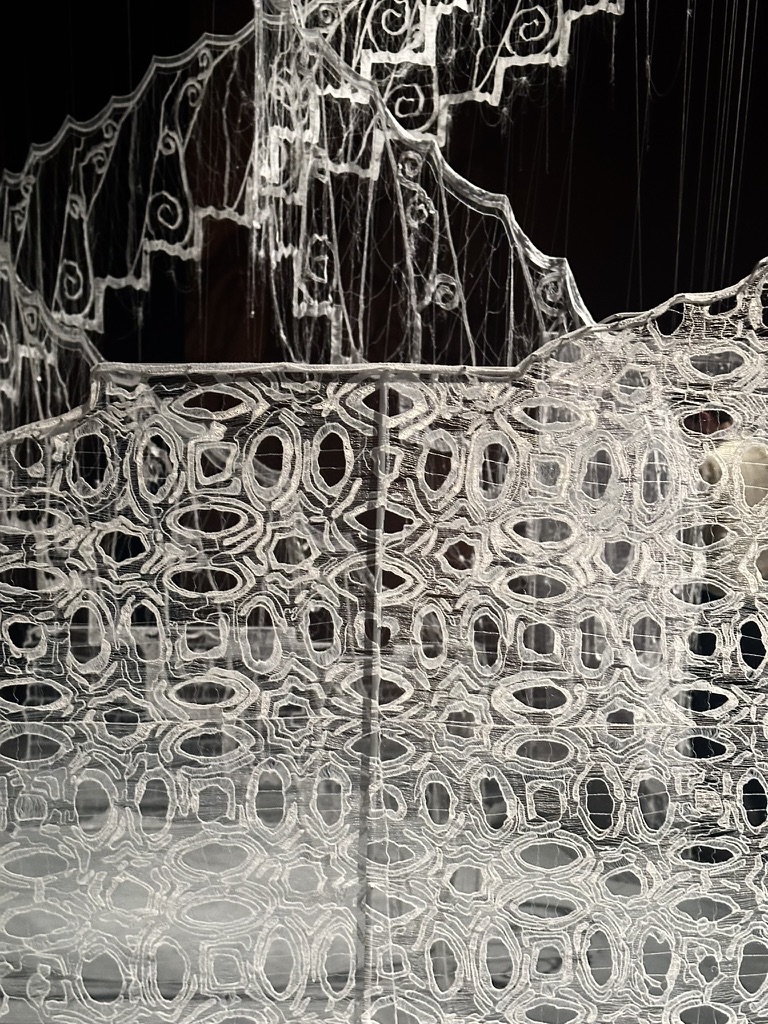
Alongside the development of the patterns, we began experimenting with potassium aluminium sulphate. The salt is dissolved in hot water and forms crystals on suitable surfaces as the solution cools. Small textile experiments began to work relatively quickly; translating the process to complete pattern pieces proved considerably more difficult.
Fibre composition, weave, temperature, concentration, cooling rate, the positioning of the fabric and the dimensions of the container all influenced the result. A small test piece could crystallise completely while a full pattern piece submerged in twenty litres of solution emerged almost unchanged. Meanwhile, the deadline was approaching: most patterns had been developed and the first garments completed, yet the central technique behind the collection was still not reliably reproducible.
Only after numerous experiments were we able to control the process with sufficient consistency. By that point, our studio had effectively become an improvised laboratory. Large containers of crystal solution stood between sewing machines and patterns; to crystallise complete trouser sections, we worked with tanks approximately one and a half metres long.
Growing the crystals was only one part of the process. To control their appearance and durability, every crystal surface was subsequently sealed by hand with a specially developed solution. For other looks, crystals were grown along cords, which were then individually integrated into seams and constructions. The twelve-kilogram crystal formation on one of the coats represents the most extreme expression of this principle. What initially appears as jewellery on the body has transformed into a physical burden. The individual becomes increasingly overwhelmed by the weight of their own greed until their humanity is almost entirely obscured by it.
The construction of the garments follows the same progression. At the beginning, silhouettes are precise, elegant and controlled. Seams are deliberately placed, surfaces remain calm and the human body retains control. As the crystals spread, the clothing begins to transform with them: constructions become denser, layers overlap, surfaces lose their clarity and silhouettes become heavier and darker. Greed therefore alters not only the surface of the garments, but the entire formal language of the collection.
With the support of Heilemann Fabrics, we were able to work with exceptionally high-quality wool fabrics, including particularly fine merino qualities. Their precision only heightened the demands placed on construction and finishing.
We also wanted the world of OUROBOROS to extend beyond the garments themselves. We created more looks than were required, produced an original runway track, wrote a poem for the opening of the show and documented the development of the collection in a film.
This level of commitment was also the greatest strain of the project. For several months, our lives consisted almost entirely of work, with sixteen-hour days becoming normal. In retrospect, we do not view that intensity as a sustainable way of working. What it did teach us, however, was what can happen when an idea is not limited by the original expectation, but pursued further across every aspect of its execution. Those months became the most demanding and formative period of our development so far, technically, creatively and personally.
Following the presentation of OUROBOROS in Munich, we received the Best of Stage Award. The collection was subsequently nominated and presented at Neo.Fashion in Berlin and Graduate Fashion Week in London, marking our national and international debut.
A recognisable code can start to feel like a cage. How do you keep evolving without losing what makes ARCHIVE D'ACCRO itself?
After OUROBOROS, the real definition of ARCHIVE D'ACCRO as an independent fashion label began. The collection had demonstrated how far we could push a conceptual idea; the more important question afterwards was which aesthetic and philosophical principles should remain beyond the runway. Outside the framework of university, the task was no longer simply to create a strong collection, but to build an autonomous world that people could understand, wear and ultimately become part of.
We therefore began developing products that translate the attitude of ARCHIVE D'ACCRO into a more wearable form without diluting it. Material quality and craftsmanship alone are not sufficient reasons for a garment to exist. Each piece should contain an independent design proposition: a construction, a shift in proportion or a functional intervention that subtly alters something familiar. We are less interested in immediate spectacle than in a second layer: garments that appear instinctive at first, but reveal their complexity through closer observation.
The Swirl Pants, for example, are constructed around entirely displaced seam lines and deliberately introduced volume. Combined with fine wool, the construction creates long folds that travel down the leg. The silhouette remains restrained, while its underlying architecture fundamentally departs from that of a conventional pair of trousers.
The NaVe Jacket follows a similar approach. Four Riri zips (Riri is the Swiss manufacturer known for high-end hardware) allow the jacket to be closed in six different configurations, each altering its silhouette, volume and character.
At the same time, the second MAINLINE of ARCHIVE D'ACCRO is already being developed behind the scenes. It continues the conceptual freedom of the first collection while shifting the focus towards materiality, craftsmanship and the question of how far familiar textile and construction principles can be transformed. It will also serve as the first comprehensive introduction to the visual world in which we see ARCHIVE D'ACCRO developing long term.
Crystals will deliberately not return. Instead, we are working with travertine integrated directly into garments, laser-cut leather, punched surface structures and new construction techniques through which materials are not simply processed, but reinterpreted.
Has the brand expanded beyond clothing itself?
Alongside the development of our clothing, we have increasingly begun translating the world of ARCHIVE D'ACCRO into physical spaces. In the period following the first MAINLINE, we organised pop-ups in Munich, Paris and Berlin, allowing the brand to be experienced beyond runway presentations and imagery.
In Berlin, we also took on the role of curators and organisers. Across approximately 1,100 square metres at Potsdamer Platz, we created a temporary concept store with an integrated art gallery, bringing selected fashion brands, art, interiors and objects together within a shared spatial concept. Beyond presenting ARCHIVE D'ACCRO, we were responsible for selecting and approaching participating brands as well as developing the overarching concept.
This increasingly reflects how we understand ARCHIVE D'ACCRO: not solely as a fashion label, but as a creative world in which clothing, objects, space and culture can exist in dialogue with one another.